Choquequirao in Cusco: how to get there, routes, and tours
Choquequirao is an Inca archaeological complex located in Cusco, also known as the ‘Sacred Sister of Machu Picchu’ due to the architectural and historical similarities between both sites. Currently, the only way to reach it is through a multi-day trekking route across mountainous landscapes and tropical zones. Learn how to get there, the best time to travel, and all the essential information you need to visit Choquequirao.
- Information about Choquequirao
- Trekking route to Choquequirao
- How to go to Choquequirao independently?
- Important information for visiting Choquequirao
- FAQs about traveling to Choquequirao
- Photo gallery
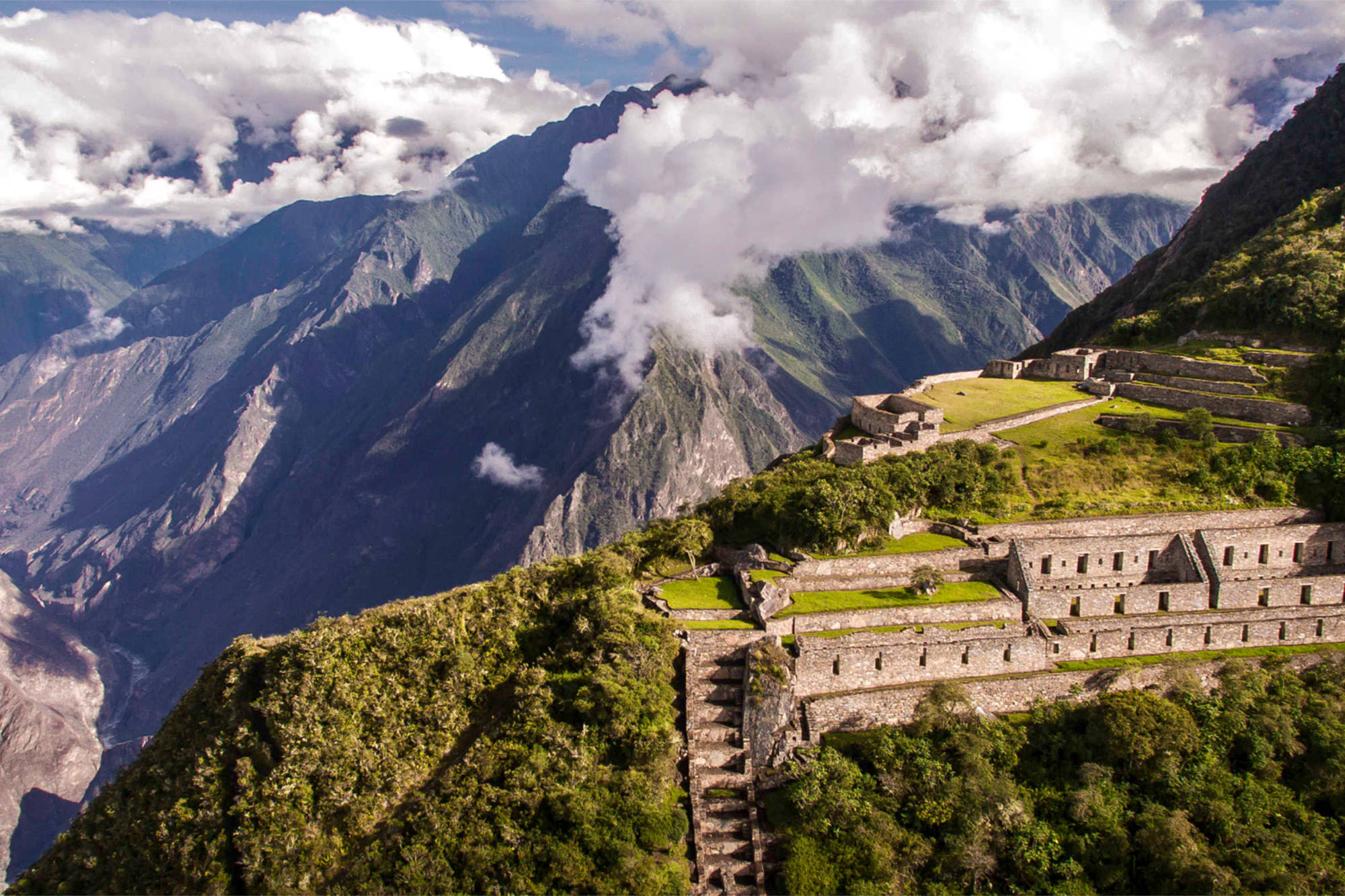
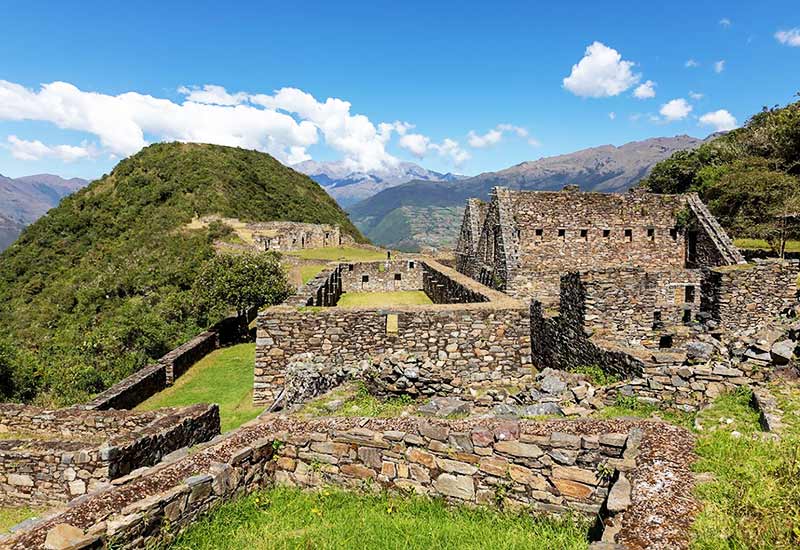
Landscape of the Inca city of Choquequirao
The Inca citadel of Choquequirao has not yet been fully explored; it is estimated that only 30% has been excavated and studied. Regarding its tourist accessibility (open sector), around 60% of the discovered architectural remains are currently open to visitors. Overall, Choquequirao is believed to be larger than Machu Picchu.
Choquequirao, basic information
What does Choquequirao mean?
Choquequirao is a Quechua word meaning ‘Cradle of Gold’. The name comes from a nearby mountain associated with the archaeological site.
In Inca times, mountains were considered apus, sacred spirits that protected cities, as well as places from which humans originated and to which they returned after death.
Where is it located?
Choquequirao is located on one of the slopes of the Salkantay snow-capped mountain, north of the Apurímac River. It is specifically located in the district of Santa Teresa, La Convención province, Cusco region, Peru.
At what altitude is it?
Choquequirao is located at 3,033 meters above sea level (m.a.s.l.). Due to its mountain-top location, it is believed to have served as an important control post, similar to other Inca sites such as Pisac, Ollantaytambo, and Machu Picchu.
What to see in Choquequirao?
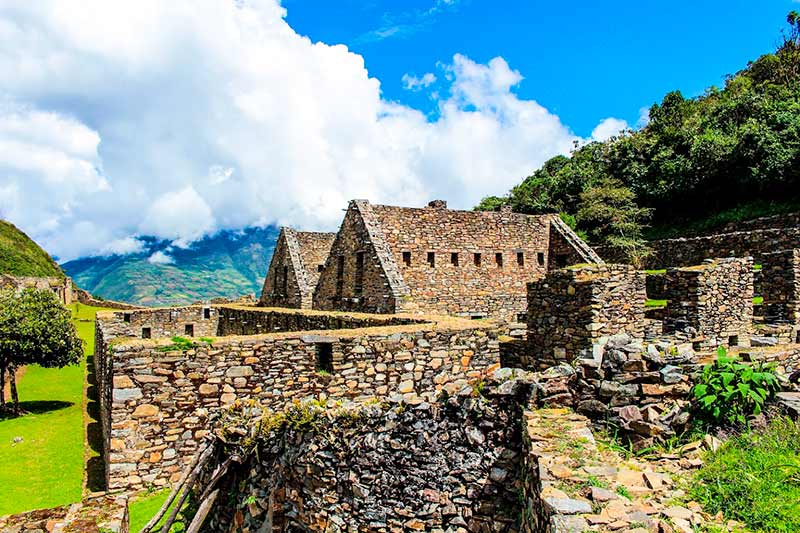
The archaeological complex of Choquequirao has only been excavated by about 30%. Despite this, it contains several important Inca constructions, including:
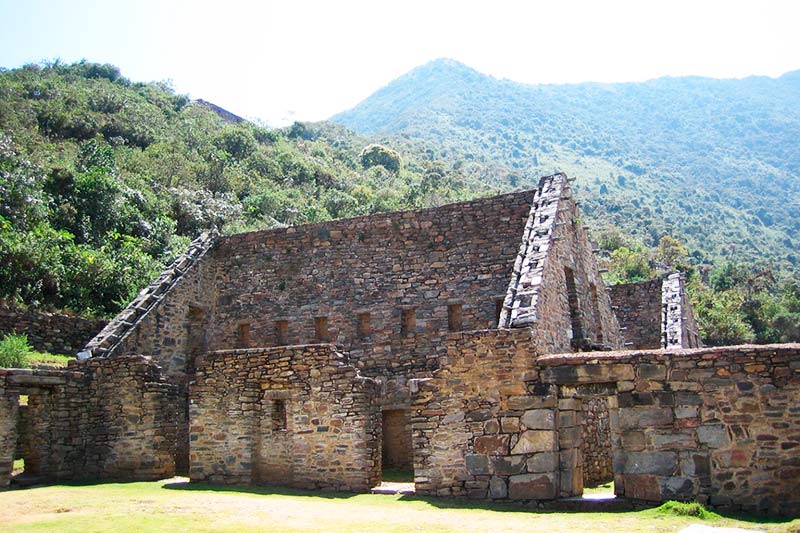
- Main Square – The main square (Haucaypata in Quechua) originally divided the site into two sectors. It is believed to be the central area of the complex, built as a two-story stone structure. Nearby, there are additional interconnected buildings forming part of the urban layout.
- Qolqas (Storage Buildings) – Typical structures found in major Inca centers. In Choquequirao, these platforms include internal subdivisions. Their purpose was to store food, clothing, and other essential supplies for the population and ceremonial activities.
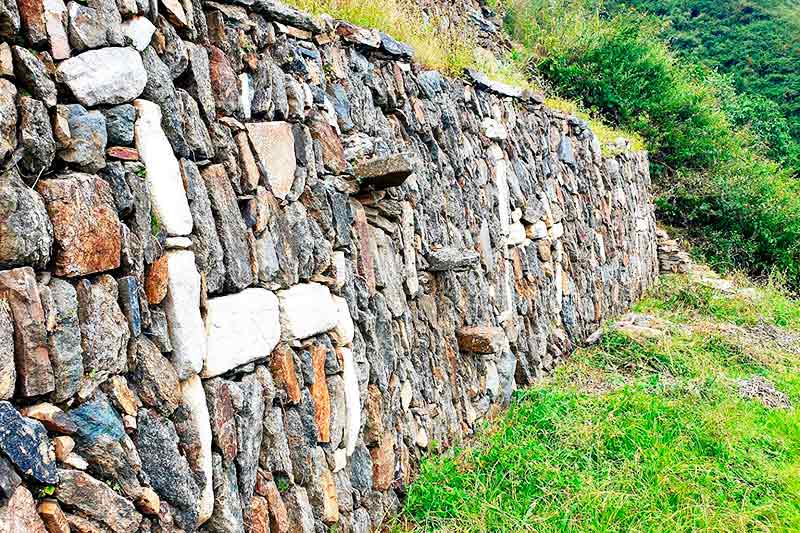
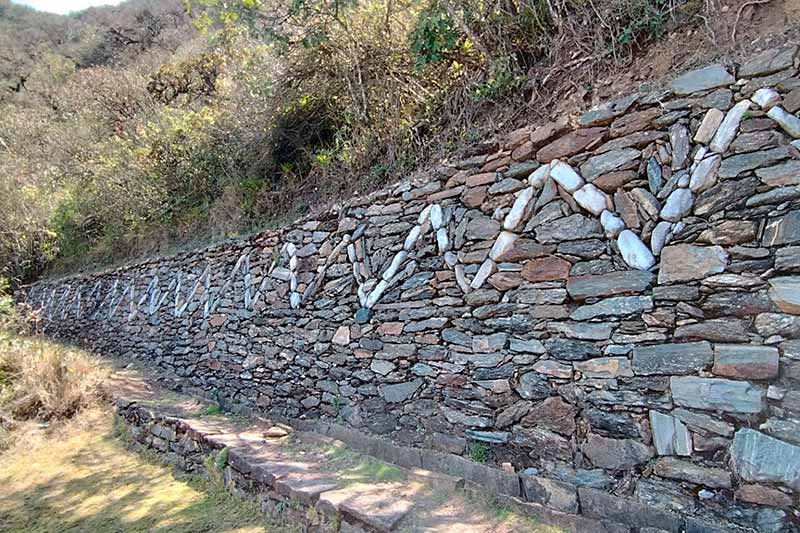
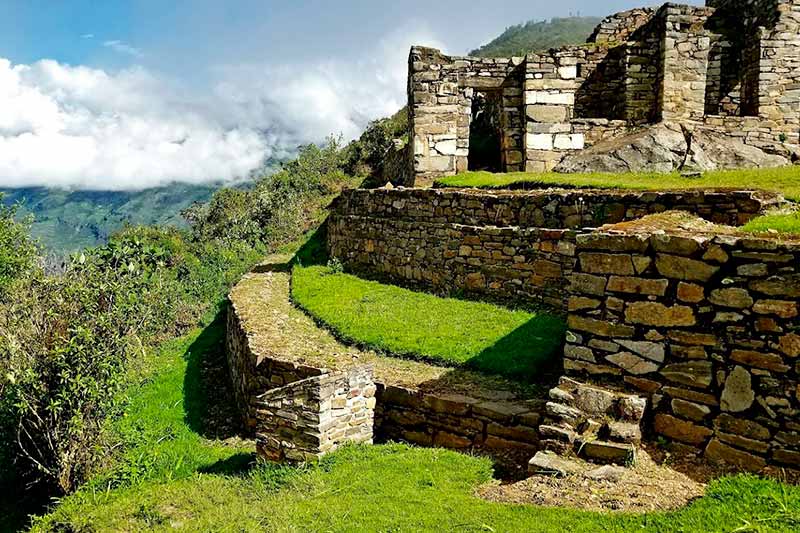
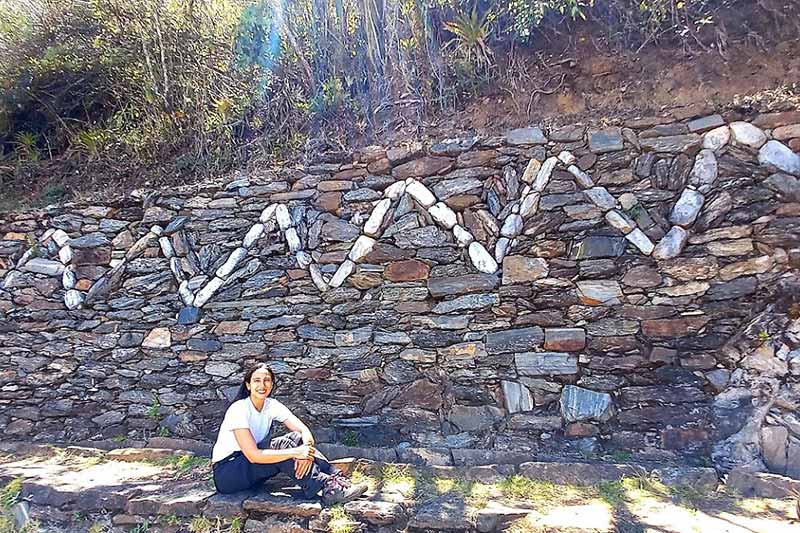
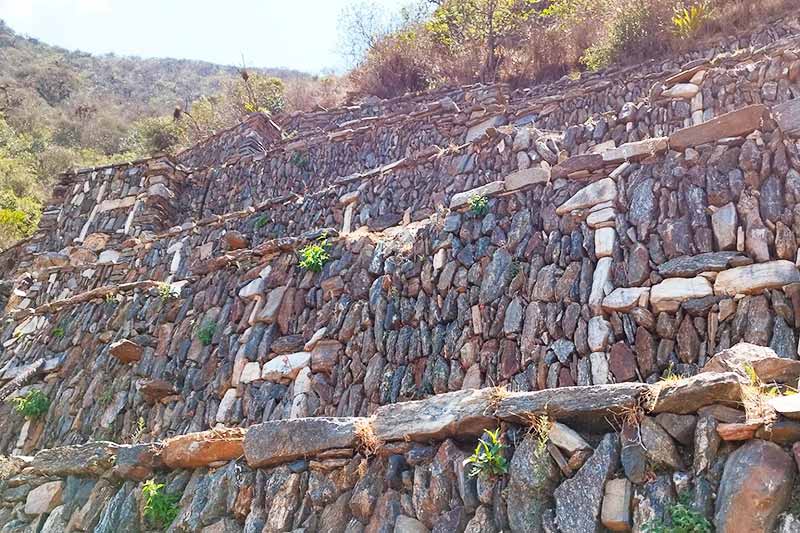
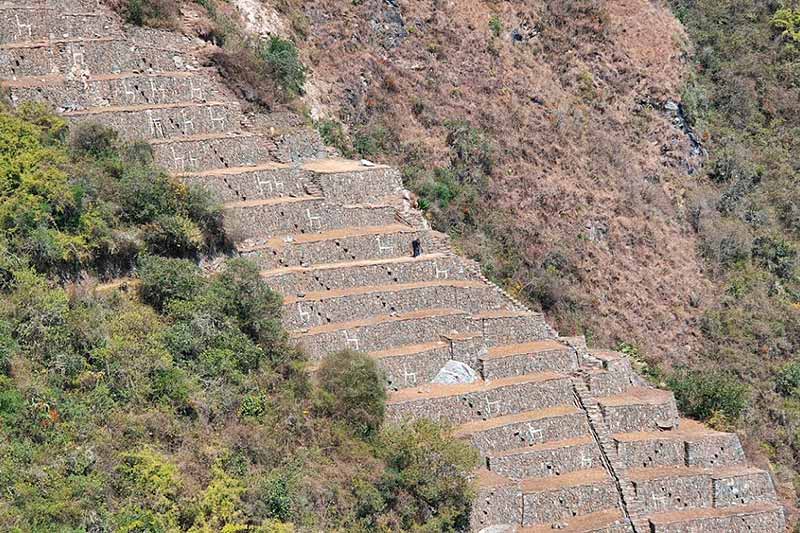
- Terraces (Andenes) – Choquequirao features a large number of agricultural terraces built along the mountain slopes, allowing crop experimentation across different microclimates. In the western sector, there are 22 carvings shaped like llamas distributed across 15 terraces. These figures are known as the ‘Llamas of the Sun’.
- Residential Structures – In the upper part of the Inca citadel, there are up to five buildings believed to have served as residences for priests. Choquequirao is also thought to have functioned as a ceremonial center dedicated to the Sun god, the Earth, and other Inca deities.
- Inca Cemetery – Also known as the ‘Triumphal Wall’. In the ancient burial area, 17 funerary bundles were found (textile-wrapped mummified remains), along with a water channel known as “The House of the Waterfall”.
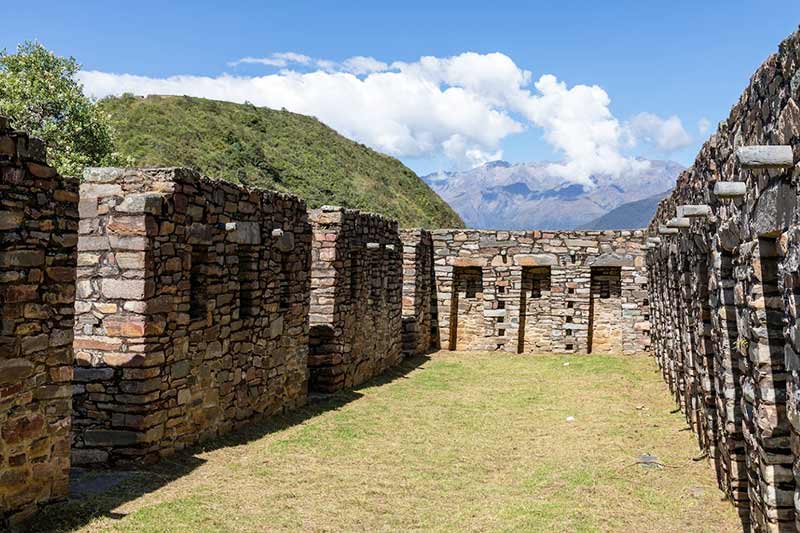
- Kallankas – Large rectangular buildings used for multiple purposes such as workshops, administrative centers, and meeting halls. Choquequirao features two prominent Kallankas with water channels integrated into their walls.
- Ushnu – A stepped, oval-shaped ceremonial platform located on top of a hill. It was used for rituals and ceremonies. Due to its surrounding wall and panoramic views of the citadel and landscape, it is also believed to have served as an observatory.
How to get to Choquequirao?
The only way to reach Choquequirao is by land. Currently, the main route starts from the town of Cachora, located about 4 hours by road from Cusco (and about 2 hours from Abancay). The trail becomes increasingly warm due to the proximity of the Apurímac Canyon and the dense tropical vegetation of the area. Temperatures at the archaeological site range between 5ºC and 25ºC.
The trek begins in Cachora and passes through key points such as Capuliyoc, Marampata, and Sunchupata. The one-way hike covers approximately 31 kilometers to reach Choquequirao. The total round trip is close to 60 kilometers following the same route back.
Climate
Choquequirao is located at approximately 3,033 meters above sea level in a tropical highland zone (cloud forest edge). Because of this, the climate is humid and mild, with cold nights. However, visitors typically do not remain at the site after sunset.
The trekking route is warmer due to the proximity of the Apurímac Canyon and dense vegetation. Temperatures at the archaeological site range between 5ºC and 25ºC.
In general, daytime conditions are moderate to warm, while nights can feel significantly colder due to altitude and humidity.
Flora and fauna in Choquequirao
Choquequirao is home to rich biodiversity. Notable wildlife includes the Andean condor, foxes, vizcachas, pumas, hummingbirds, spectacled bears, and the cock-of-the-rock. The surrounding cloud forest also hosts a wide variety of tropical orchids and plant species, similar in diversity to Machu Picchu.
4-Day Choquequirao Trek Map
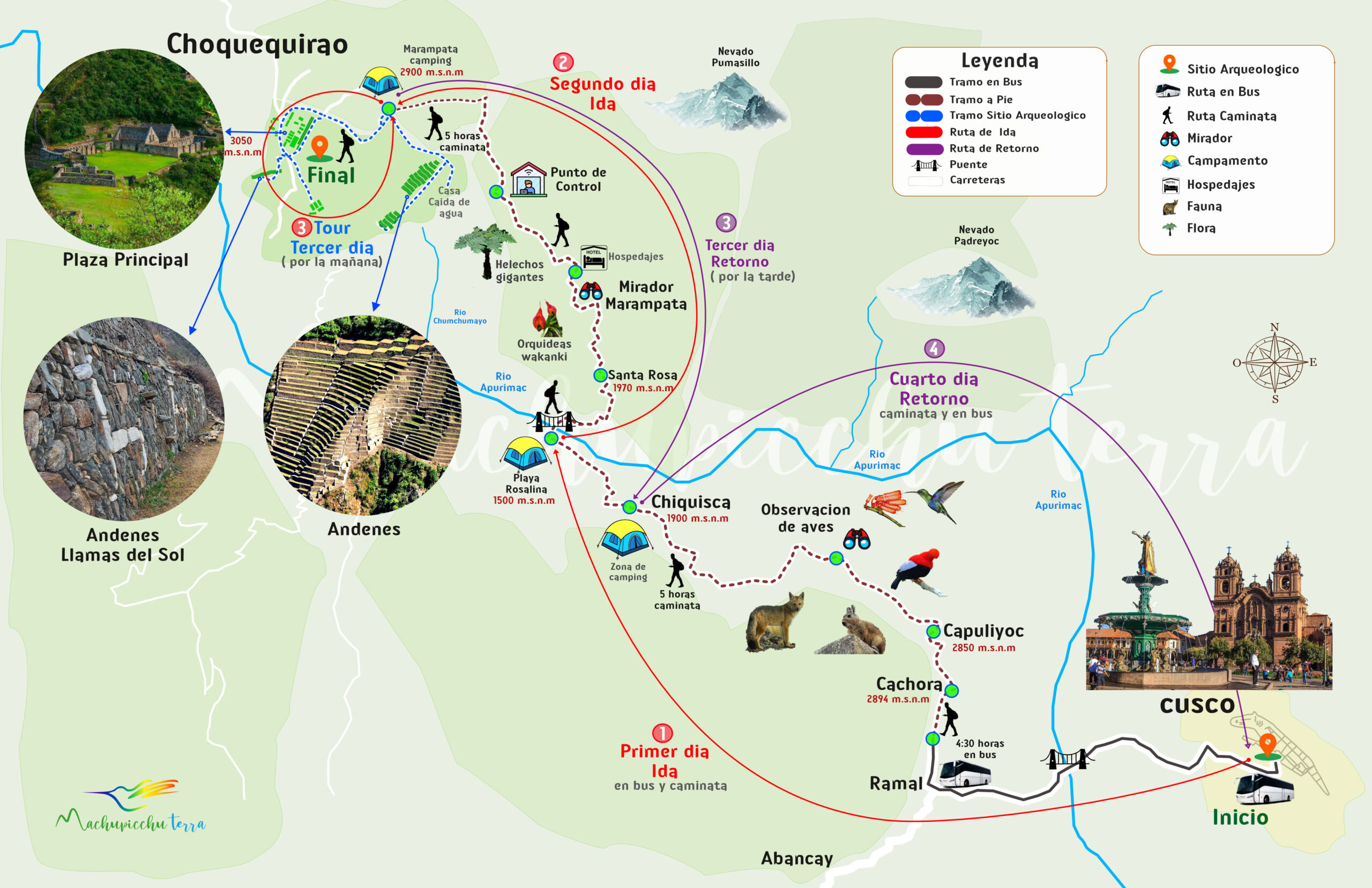
The hike from Cachora to Choquequirao takes two days, averaging around 7 hours of trekking per day. There is currently a proposed cable car project that would significantly reduce travel time, potentially transforming access to the site. Estimates suggest the journey could take just 15 minutes and transport up to 400 passengers per hour.
Choquequirao Trekking Route
4-Day Choquequirao Tour
The most common way to reach Choquequirao is through a 4-day, 3-night trekking route. This experience can be booked online or through travel agencies in Cusco. The 4-day Choquequirao tour is structured as follows:
- Day 1: Departure from Cusco – The tour begins between 5:00 a.m. and 6:00 a.m. A bus departs toward Cachora (approximately 4 hours). The first trekking section lasts around 6 hours, ending in a campsite near the Apurímac River.
- Day 2 – The hike continues early after breakfast. A demanding ascent leads to Marampata (3,000 m.a.s.l.), followed by a final stretch of approximately 10 km (about 6 hours) until reaching Choquequirao.
- Day 3 – After exploring the more remote sectors of the archaeological complex, the return journey begins along the same route. After about 5 hours, camping takes place in the Chiquisca area.
- Day 4 – The final day starts early. The route passes the Wayna Qali viewpoint, offering panoramic views of the Apurímac Canyon, considered one of the most impressive in South America. After roughly 4 hours, the group reaches Cachora, where transportation returns travelers to Cusco.
Cusco – Choquequirao – Machu Picchu Tour
There is another tour that connects Choquequirao with Machu Picchu in 8 days and 7 nights. This demanding adventure covers approximately 115 kilometers filled with history and natural landscapes.
- Day 1: The experience begins in Cusco and ends on the banks of the Apurímac River after a bus ride to the town of Cachora. From there, a 5-hour hike leads to the first campsite.
- Day 2: The day starts early with a steep and challenging ascent (4 to 5 hours) until reaching the Choquequirao archaeological site.
- Day 3: The trekking continues through sustained ascents (4 to 5 hours) across mountainous terrain, again arriving at the archaeological complex area.
- Day 4: The route crosses the Yanama pass, then continues to the so-called ‘Victoria Mine’, an old silver mining site. This is a less demanding day compared to previous stages.
- Day 5: A descent begins into tropical zones with dense vegetation. The route passes through the Totora area and the Collpa campsite. Moderate difficulty.
- Day 6: The trail crosses lush landscapes with banana plantations and coffee farms. The descent reaches ‘La Playa’, where a waterfall is located.
- Day 7: Early departure toward the Hydroelectric Station, followed by a hike to the town of Aguas Calientes, located at the base of Machu Picchu. Overnight stay in a hotel.
- Day 8: Arrival at Machu Picchu – The day begins with an ascent to Machu Picchu. The morning and part of the afternoon are dedicated to visiting the UNESCO World Heritage Site. Return to Cusco by train and bus.
How to Visit Choquequirao Independently
The journey typically begins with a bus ride to the town of Cachora from Cusco or Abancay. Public transport services operate frequently from both cities.
Key information for independent travel to Choquequirao:
- You can start the trip by bus to Cachora from Cusco or Abancay. Affordable public transport is available from both locations.
- From Cachora, the standard trekking route begins along well-marked paths.
- When hiking independently, backpack weight must be carefully managed. Carry only essential items and ensure food supplies for at least 4 days.
- The standard guided tour lasts 4 days and 3 nights. Independently, the itinerary can be adjusted depending on individual pace.
- An entrance fee must be paid upon arrival at Choquequirao (tours usually include it). The ticket also allows overnight stays in designated camping areas near the archaeological site.
What to Bring for a Trip to Choquequirao
Whether traveling with a tour or independently, certain essential items are required for all visitors to Choquequirao. The most important include:
- Sunscreen.
- Mosquito repellent.
- Hat or cap.
- Sunglasses.
- Trekking poles.
- Rain poncho (for possible rainfall).
- Sleeping bag and camping equipment (for independent travel).
- Trekking shoes.
- Trekking backpack.
- Food and beverages.
- Extra clothing.
- Personal hygiene kit.
Best Time to Visit Choquequirao
The best time to travel is between April and October, when rainfall is less frequent. Choquequirao has two main seasons:
- Rainy season (November to March): Characterized by frequent rainfall and greener landscapes. Temperatures are mild, but rain can make trekking more difficult.
- Dry season (April to October): Characterized by low rainfall and more stable weather. Days are generally clear and nights are cold. Trekking conditions are more favorable.
Tips for Visiting Choquequirao
- Although expert mountaineering skills are not required, basic physical preparation is recommended before the trek.
- Due to altitude, altitude sickness (soroche) may occur during the ascent. Acclimatization in Cusco or Abancay is recommended before starting the hike.
- Unlike Machu Picchu, Choquequirao receives very few visitors per day. Visitors are encouraged to experience the site responsibly and respectfully.
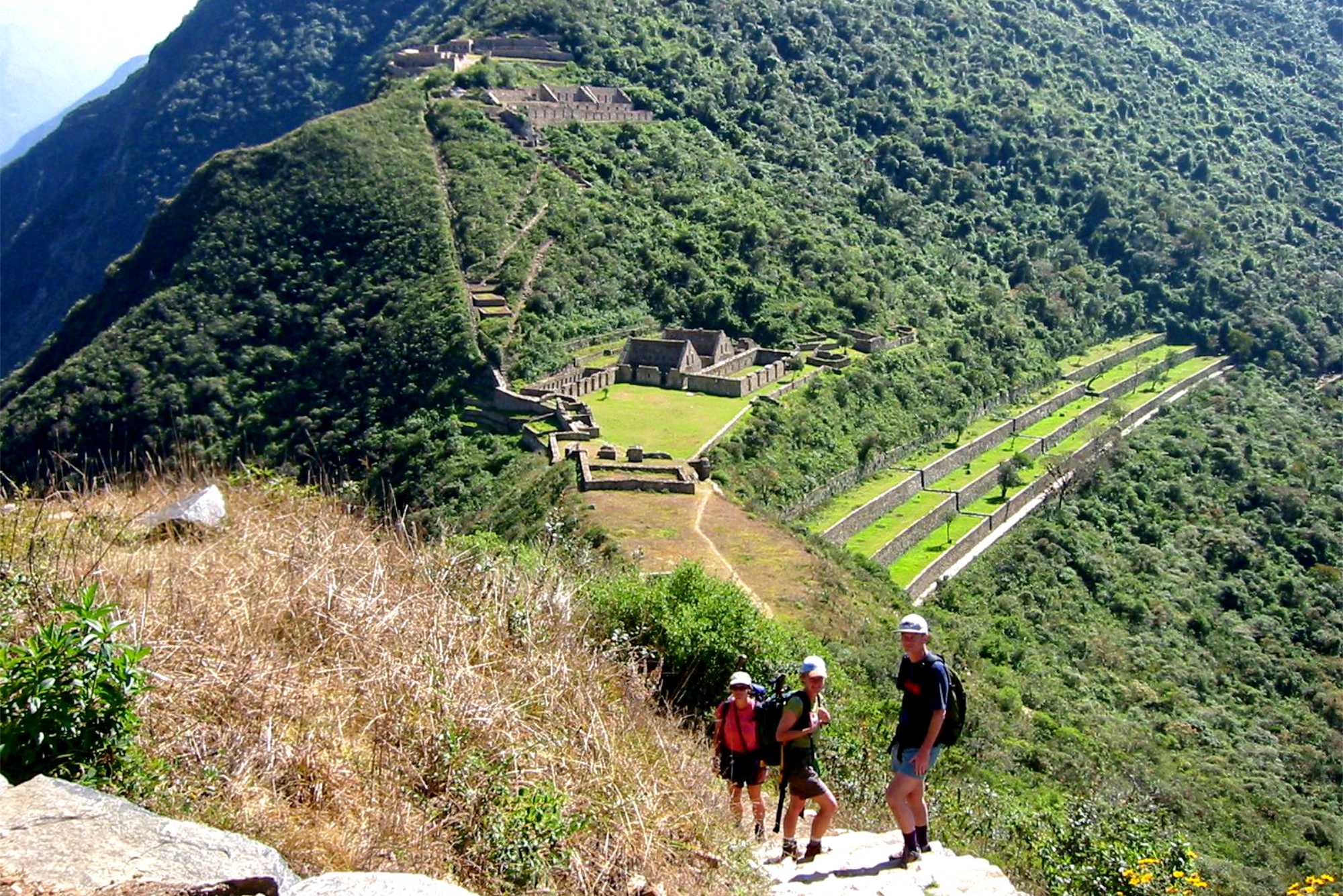
Entrance trail to Choquequirao
Key Information for Visiting Choquequirao
Differences Between Choquequirao and Machu Picchu
| Differences Between Choquequirao and Machu Picchu | ||
|---|---|---|
| Data | Choquequirao | Machu Picchu (City Site) |
| Quechua translated names | Cradle of gold | Old mountain |
| Location | La Convención Province – Santa Teresa, Cusco | Urubamba Province – Aguas Calientes, Cusco |
| Altitude | 3,033 meters above sea level | 2,430 meters above sea level |
| Area | 103,814 hectares | 37,302 hectares |
| Function | Citadel and religious center | Citadel and religious center |
| Construction period | 15th century | 15th century |
| Discovery date | 1909 (Hiram Bingham) | 1911 (Hiram Bingham) |
| Entrance fee | S/ 60 (general entry) | S/ 152 (Machu Picchu ticket) |
| How to get there | 4-day trek (round trip) | One-day train route (4-day Inca Trail optional) |
| Climate | Warm temperate (5°C to 25°C) | Warm temperate (13°C to 26°C) |
| Tour price | ~USD 690 for a 4-day tour | ~USD 340 for a 1-day tour |
Who Discovered Choquequirao?
As with Machu Picchu, the existence of Inca remains in Choquequirao was already known locally. However, it was Hiram Bingham (the discoverer of Machu Picchu) who officially reported the archaeological site in 1909.
Systematic excavation work began only in the 1970s. Today, it is estimated that only around 30% of Choquequirao has been excavated and made accessible to the public.
How Much Does the Entrance to Choquequirao Cost?
If you travel independently, you must pay the following entrance fees at the site entrance. If you book a tour, the entrance fee is usually included.
| How Much Does the Entrance to Choquequirao Cost? | ||
| Category | Price in Peruvian Soles (S/.) | Price in US Dollars (USD) |
| General adult | S/ 60 | USD 18 |
| University student | S/ 30 | USD 9 |
| Children | S/ 25 | USD 7 |
*The ticket allows stays longer than one day in Choquequirao.
How Much Does a Choquequirao Tour Cost?
The price of a 4-day, 3-night Choquequirao tour depends on group size.
Average tour costs:
| How Much Does a Choquequirao Tour Cost? | ||
| Group size | Price in Soles (S/.) | Price in USD |
| 2 people | S/ 2353 | USD 690 |
| 3 people | S/ 1910 | USD 560 |
| 4 people | S/ 1637 | USD 480 |
| 5 people | S/ 1466 | USD 430 |
Entrance Hours to Choquequirao
The Choquequirao archaeological site is open daily from 7:00 a.m. to 5:00 p.m.. The ticket also allows overnight stays in designated camps near the Inca complex.
Difficulty Level of the Choquequirao Trek
The Choquequirao trekking route is of medium-high difficulty. From Cachora to the archaeological site, hikers cover approximately 31 km one way and 31 km back. The route includes steep ascents and descents.
Due to the warm climate, the hike can feel more demanding, although the scenery and natural surroundings provide frequent rest opportunities.
What Does a Choquequirao Tour Include?
The services included in a Choquequirao tour vary depending on the travel agency. In general, most packages include:
- Transport from Cusco to the town of Cachora.
- Meals (breakfast, lunch, and dinner for the duration of the trek).
- Camping equipment.
- Pack mule transport for luggage.
- Entrance tickets to Choquequirao.
- Official tourism guide.
- Transport from Cachora back to Cusco.
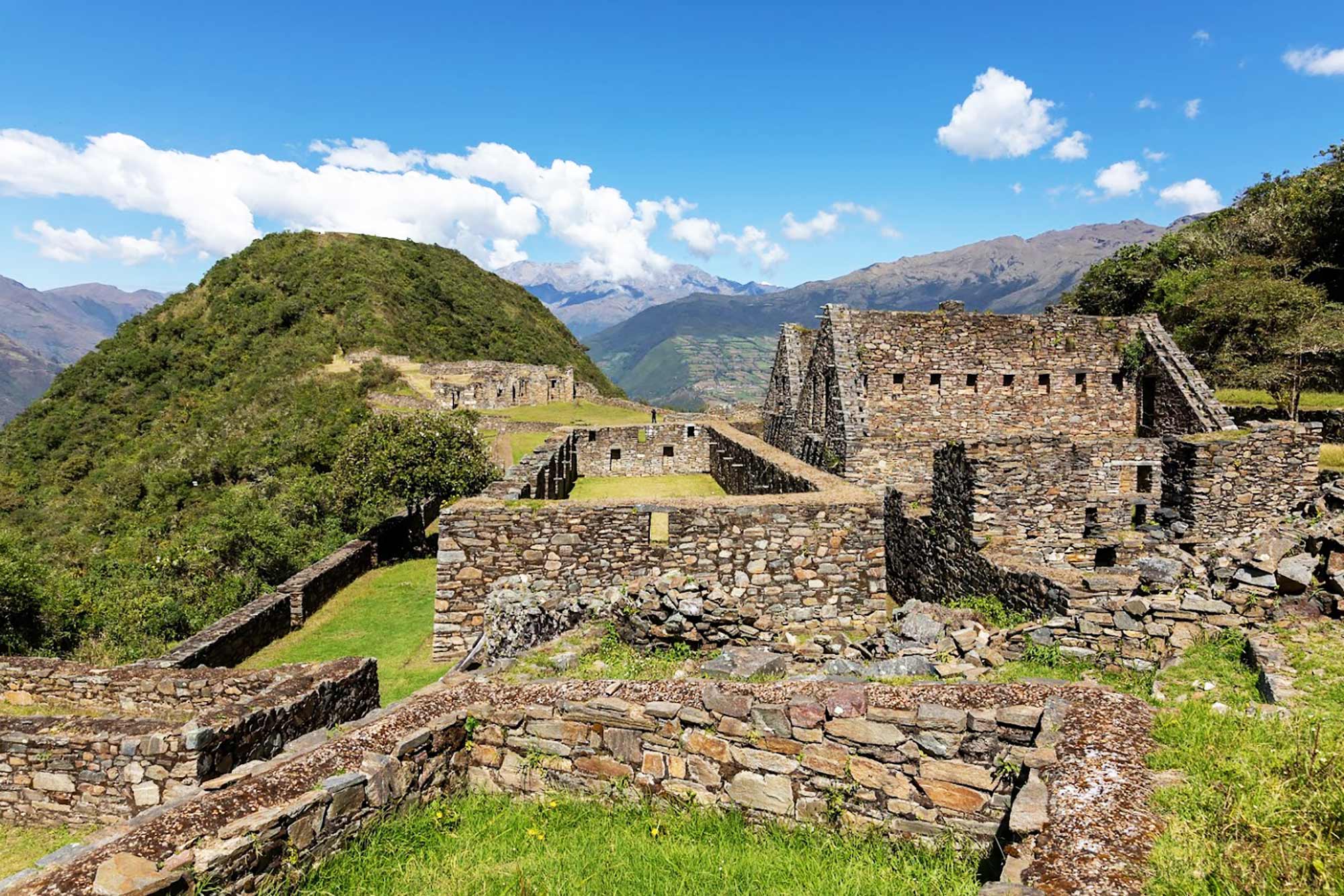
Views from Choquequirao
Choquequirao receives an average of 20 visitors per day, compared to nearly five thousand at Machu Picchu. With the proposed cable car project, this number is expected to increase significantly. This is why the 4-day trek is a unique opportunity to experience Choquequirao in a more immersive way. On the second night, campers even stay near the Inca site itself.
Questions and Answers About Traveling to Choquequirao
1) How can I get to Choquequirao?
The route to Choquequirao is done on foot starting from the town of Cachora (about 165 km from Cusco). The hike is demanding, covering approximately 31 km to reach the site. The return follows the same route.
2) Where are the Choquequirao ruins located?
The Choquequirao archaeological site is located on the slopes of the Vilcabamba mountain range. It belongs to the district of Santa Teresa, La Convención province, Cusco region. It is reached via a 31 km trek.
3) How much is the entrance fee to Choquequirao?
The entrance fee is 60 soles for foreign adults and 30 soles for university students.
4) What is the best time to visit Choquequirao?
According to tour guides, the best time is from April to November, when the weather is clearer and conditions are more suitable for trekking.
5) How much does a Choquequirao tour cost?
A Choquequirao tour typically costs between 650 and 750 USD per traveler, depending on the agency. The tour lasts 4 days.
6) Can I go to Choquequirao without a guide?
Yes, the route from Cachora is open to independent travelers. However, hiring a guide is recommended for safety and navigation.
7) Can I camp in Choquequirao?
Yes, the entrance ticket allows camping in designated areas near the archaeological site.
8) When is the worst time to visit Choquequirao?
The rainy season makes the trek more difficult due to frequent and unpredictable rainfall. The heaviest rains occur in January, February, and March.
9) Is the Choquequirao trip dangerous?
The route is generally safe. However, due to its difficulty, good physical condition is recommended to ensure a safe experience.
10) What clothes should I bring to Choquequirao?
Recommended items include lightweight clothing, sturdy trekking shoes, windproof jacket, sunscreen, mosquito repellent, comfortable backpack, rain poncho, snacks, rehydration drinks, documents, and cash.
Choquequirao Photos
Advice from people who have been there
 By: By: Mariana L.
“Amazing Choquequirao“
“I came with my husband and it was truly amazing to see llama figures in the terraces... a unique place“
By Ticket Machu Picchu – Last updated, May 28, 2026