Machu Picchu: history, facts and secrets of the sacred city
Machu Picchu is not just an archaeological citadel; it is a Historic Sanctuary where nature, Inca architecture, and Andean worldview merge in perfect harmony. Located at 2,470 meters above sea level, it is part of a protected area spanning over 37,000 hectares, home to remarkable biodiversity and interconnected historical monuments linked by ancient Inca trails.
- What Does Machu Picchu Represent?
- The Impressive Architecture of Machu Picchu
- Historical Legacy of Machu Picchu
- Inca Worldview at Machu Picchu
- Key Facts About Machu Picchu
- Frequently Asked Questions
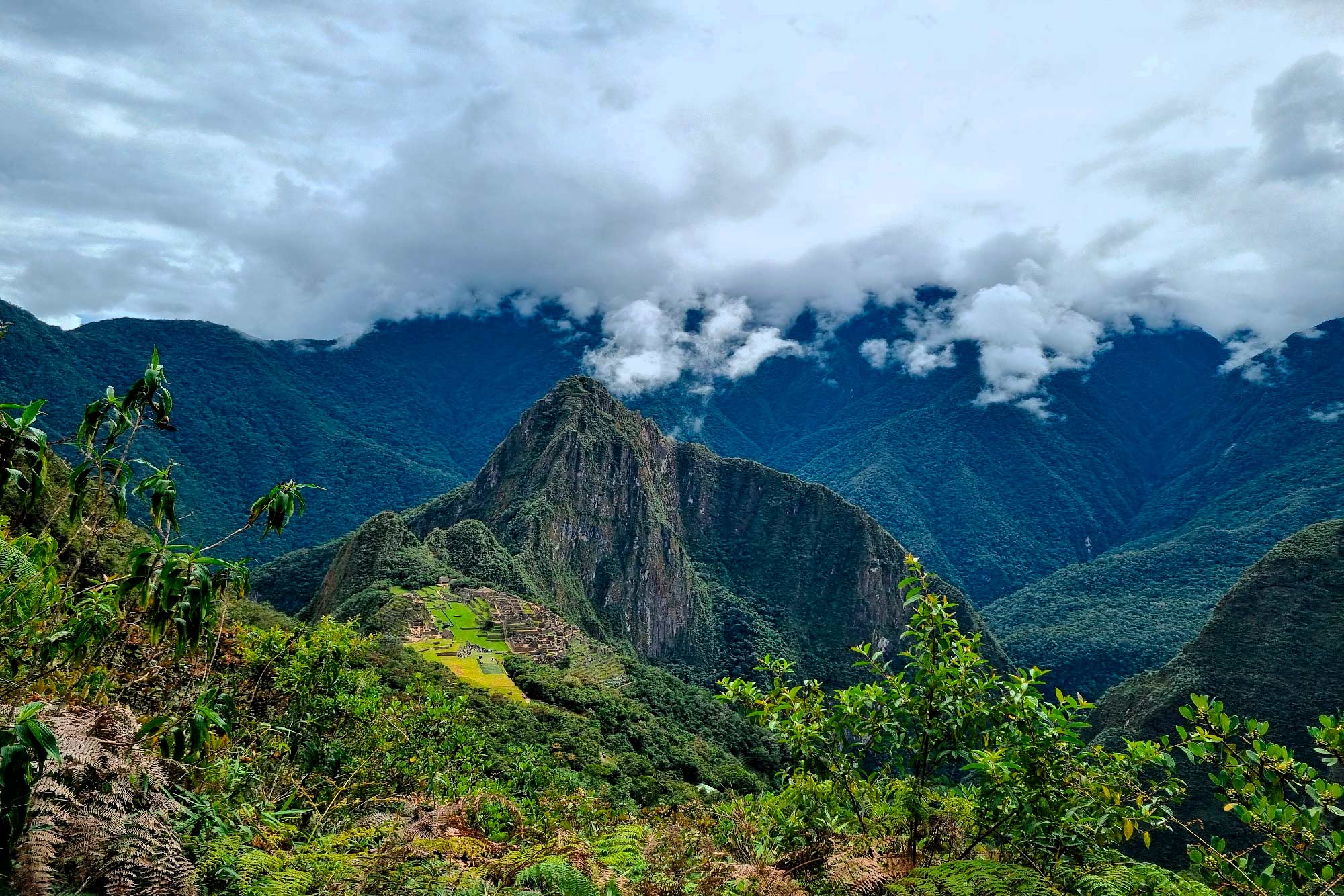
Historic Sanctuary of Machu Picchu
What Does Machu Picchu Represent?
- Machu Picchu is one of the most important archaeological sites in the world and a natural sanctuary of exceptional ecological value.
- Located at a strategic point between the Amazon and the Andes, its construction was intentional, responding to religious, political, and economic purposes that allowed control over territories while interacting with a sacred natural environment.
- This Inca site is surrounded by the Urubamba River and rich biodiversity, offering breathtaking views of snow-capped peaks and high-altitude mountains.
- Its sacred character is closely linked to the apus (sacred mountains), considered ancestral spirits within the Inca worldview.
- The construction of Machu Picchu follows a symbolic network connected to major deities (mountains, sun, moon, water, earth, stars, lightning, among others) and astronomical phenomena.
- The site includes more than 172 structures, many located beyond the urban core and spread throughout the sanctuary, which covers approximately 37,000 hectares.
- Beyond its architecture, Machu Picchu is also a natural sanctuary, hosting approximately 10% of Peru’s fauna and 22% of its flora.
- This unique combination of cultural and natural heritage makes it one of the most extraordinary destinations in the world, where Inca architecture blends seamlessly with the surrounding landscape.
The Impressive Architecture of Machu Picchu
- One of the most remarkable aspects of Machu Picchu is that much of its architectural complexity is not visible, as an estimated 60% of construction work was dedicated to groundwork, foundations, and drainage systems.
- The core of its structures lies in the urban sector, composed of enclosures, plazas, and temples. However, much of its value resides in underground infrastructure such as drainage systems, water channels, and agricultural terraces that ensure its preservation.
- In a terrain marked by steep slopes and high humidity, Inca engineers designed a resilient infrastructure capable of withstanding the test of time. Agricultural terraces not only served farming purposes but also function as retaining walls that regulate water flow and prevent erosion.
- Water, a central element in the Andean worldview, flows through an advanced channeling system that supplies sixteen fountains, many of which still operate today.
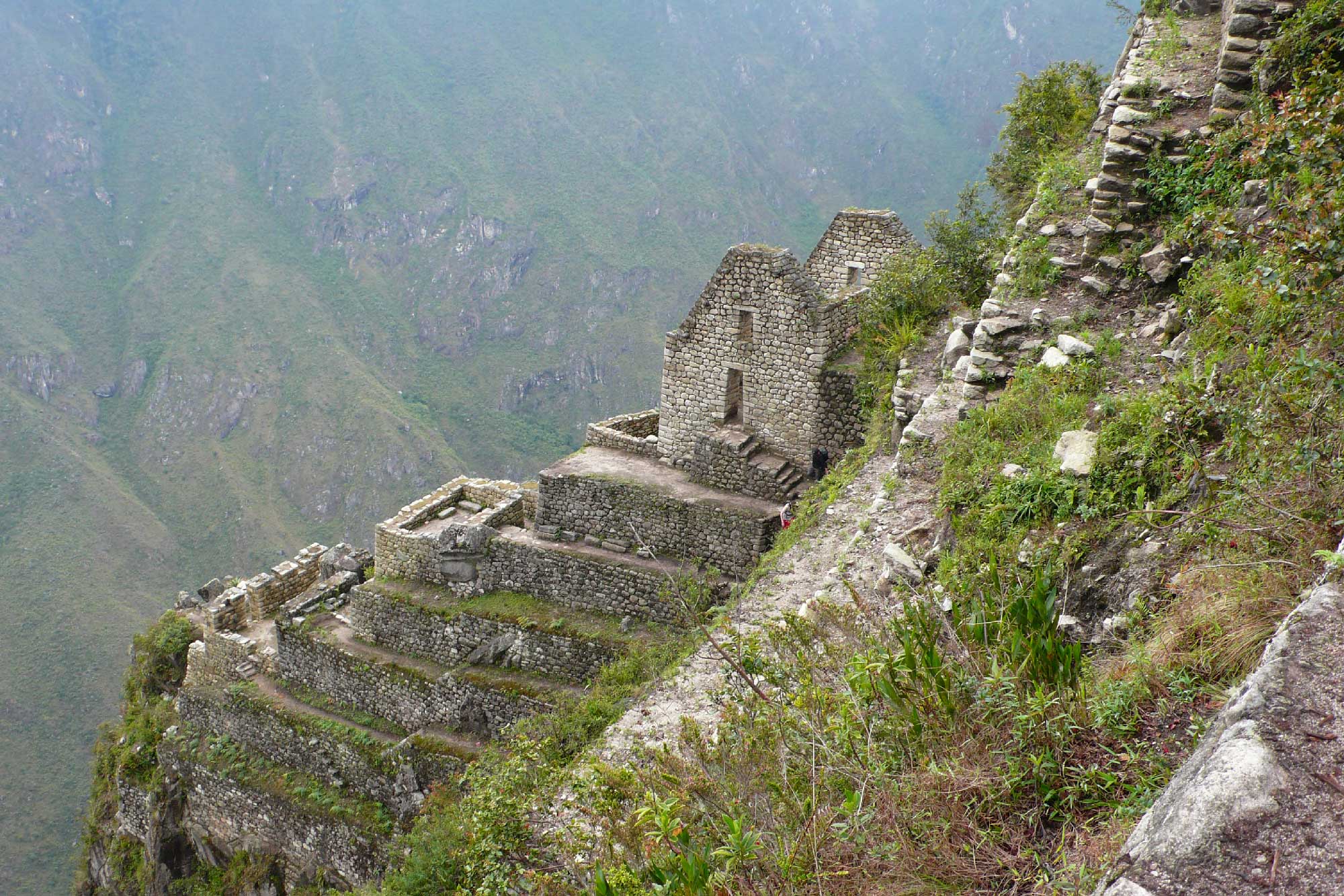
Inca constructions on mountain slopes
Unlike other ancient cities, Machu Picchu lacks defensive walls. Its protection relied mainly on its geography, as it is surrounded by cliffs and mountains that act as natural barriers. Today, visitors can walk along the original trails leading to the site. This experience is known as the Inca Trail, a four-day trek through lush vegetation, stunning landscapes, and exclusive archaeological sites.
Historical Legacy of Machu Picchu
- The sacred city was built by the Inca emperor Pachacutec in the 15th century. It is believed to have been a royal estate, likely intended for the ruler and the Inca elite.
- It was also designed as a site of high symbolic and political importance, linked to the expansion of the empire toward the Amazon region.
- Although abandoned in the 16th century, Machu Picchu was never completely lost. It continued to be visited and sporadically inhabited by local populations.
- In 1911, Hiram Bingham reached the site and introduced it to the scientific world after an expedition. For this reason, he is recognized as its “scientific discoverer,” although he was not the first to arrive.
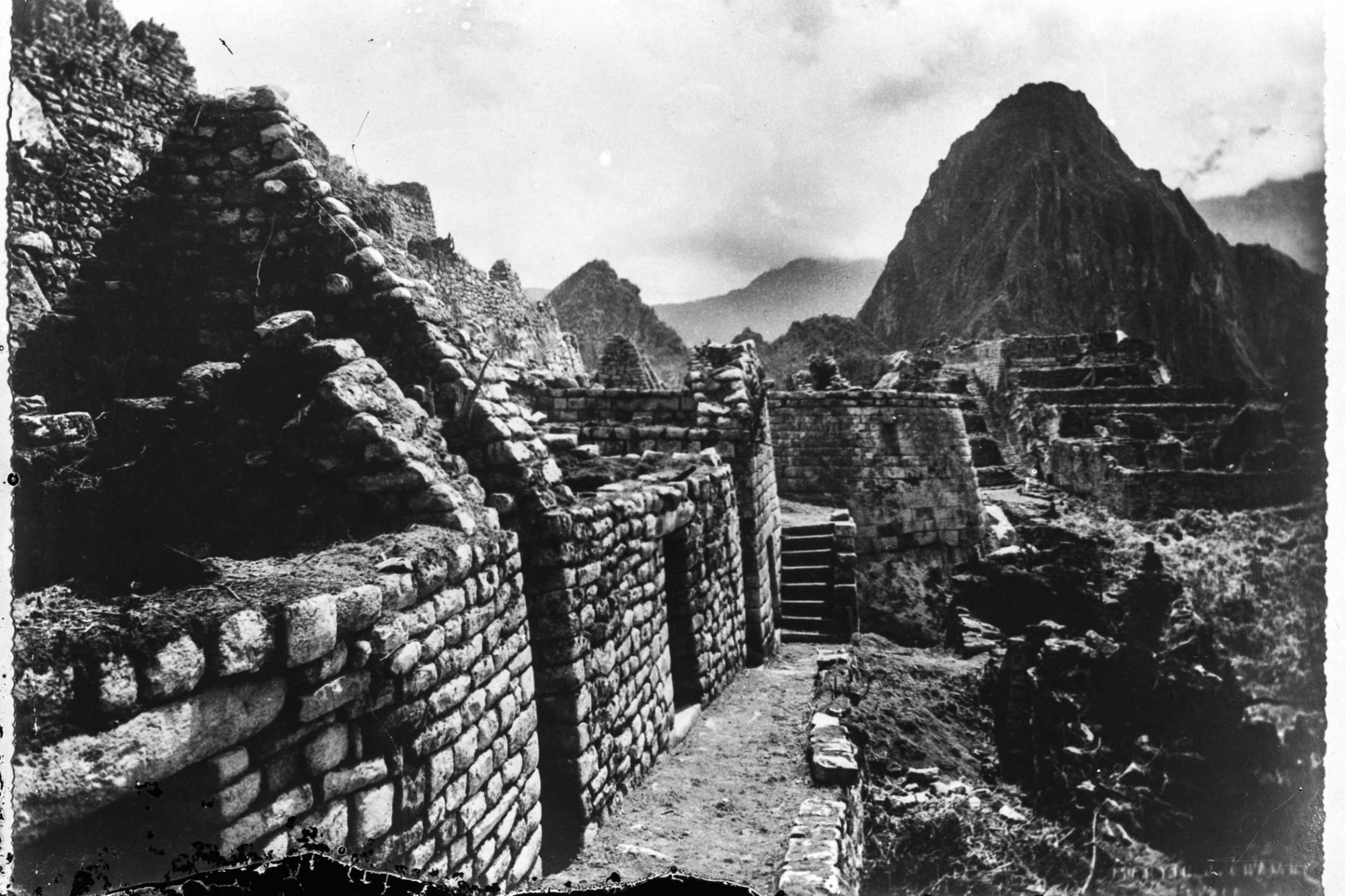
Early images of Machu Picchu
Inca Worldview at Machu Picchu
- Machu Picchu is not only an Inca citadel built for the comfort of the elite and its inhabitants, but also the physical representation of their worldview.
- Its design reflects a deep understanding of geography, astronomy, and engineering, as well as a direct connection with the natural environment, which was considered sacred in Inca culture.
- Many of its structures mirror the surrounding mountains. For instance, some interpretations suggest that the Intihuatana is directly linked to Huayna Picchu mountain, while the Sacred Rock may represent Mount Pumasillo.
- Inca engineers also designed and oriented their structures according to solstices, allowing sunlight to enter precisely at specific times of the year.
- Structures such as the Intihuatana functioned as observational instruments, where projected shadows helped interpret the passage of time, which was essential for organizing agricultural and ritual calendars.
- The most prominent constructions—doors, windows, and streets—are oriented to receive sunlight, especially at sunrise, serving both practical and symbolic purposes.
- This is even more evident in caves or tombs, which are typically oriented toward the east, where the sun rises, reflecting the Andean concept of renewal and continuity of life.
- Overall, the entire Historic Sanctuary appears to be designed to connect architecture with nature and the Inca worldview.
| Main Sacred Structures of Machu Picchu | |||
|---|---|---|---|
| Structure | Main Function | Architectural Features | Connection to the Inca Worldview |
| Intihuatana | Astronomical and ritual observatory | Carved stone located at a high point within the citadel. | Possible representation of the Apu Huayna Picchu, used to mark solar cycles and organize the calendar. |
| Temple of the Sun | Religious ceremonial space | Semicircular structure with a huaca inside and aligned windows. | Windows aligned with solstices, highlighting the worship of the sun. |
| Temple of the Three Windows | Ceremonial and symbolic space | Three large trapezoidal openings oriented eastward. | Associated with the three Andean worlds: Hanan Pacha (upper world), Kay Pacha (earthly world), and Uku Pacha (inner world). |
| Sacred Plaza | Ceremonial gathering space | Open area surrounded by temples. | Represents the integration of political, social, and religious life. |
| Agricultural terraces | Agricultural production and land management | Stepped terraces adapted to steep slopes. | Demonstrates control over terrain and balance with the natural environment. |
| Water fountains (16) | Water supply and ritual use | Interconnected hydraulic and channeling system. | Water as a sacred element of purification and life. |
| Inti Punku Gate | Ceremonial entrance | Elevated entry point with strategic views. | Marks the entrance to the citadel and is connected to solar energy passing through the gate. |
| Sacred Rock | Symbolic space | Carved rock shaped like a mountain. | Represents Mount Pumasillo, an important Apu in Inca belief. |
| Water mirrors | Astronomical observation | Carved cavities in stone. | Possibly used to interpret stars and the sky through water reflections. |
| Temple of the Moon | Ritual and funerary space | Finely carved temple built בתוך a natural cave. | Caves were مرتبط with the world of ancestors and the origin of life. |
| Temple of the Condor | Ceremonial and symbolic space | Combines natural rock with carvings resembling a condor. | The condor was a sacred animal representing the Inca celestial world. |
Key Facts About Machu Picchu
- The population of the Inca citadel is estimated to have ranged between 400 and 1,200 inhabitants, suggesting its exclusive use by the Inca elite and for specific ceremonial or administrative purposes.
- The natural environment surrounding the site hosts an impressive diversity of flora, including over 400 species of orchids, bromeliads, and tree ferns.
- Its fauna includes notable species such as the spectacled bear, the Andean cock-of-the-rock, and more than 300 species of butterflies, along with numerous birds and reptiles.
- To explore every detail of this world wonder, there are 10 different visiting routes available. It is essential to understand their differences before planning your trip. Learn about each type of Machu Picchu ticket.
- The preservation of this Inca sanctuary depends not only on its physical conservation but also on understanding its deeper meaning. In this sense, Machu Picchu remains not just a tourist destination, but a place of ongoing research and interpretation of the Inca civilization.
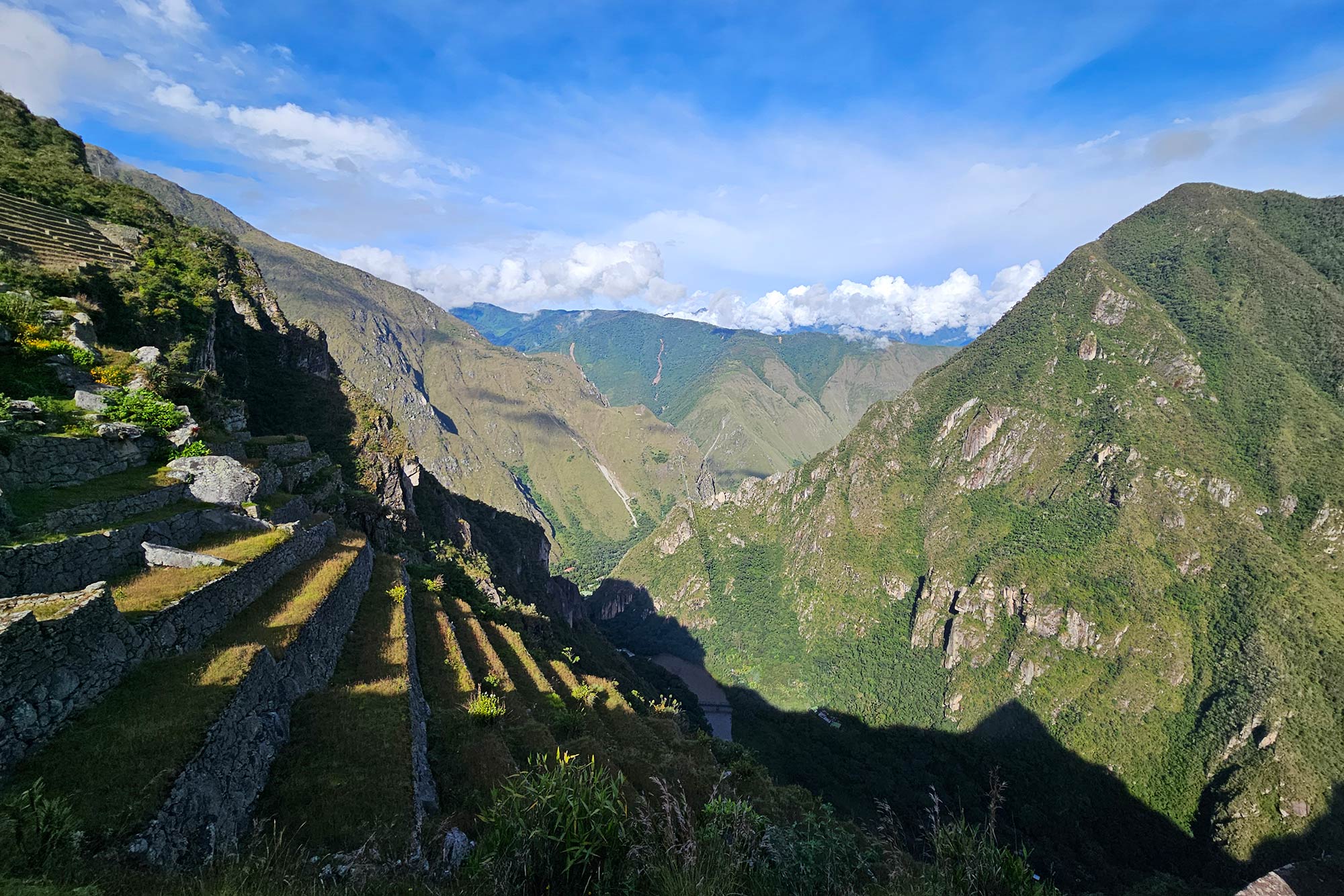
Agricultural terraces of the Inca citadel
Frequently Asked Questions About Machu Picchu
1) What is Machu Picchu?
Machu Picchu is one of the most important archaeological sites in the world and a symbol of the Inca civilization. It stands out for combining history, architecture, and nature in a single destination, earning recognition as a UNESCO World Heritage Site and one of the New Seven Wonders of the World.
2) Where is Machu Picchu located?
Machu Picchu is located in the Cusco region, in southern Peru, at approximately 2,430 meters (7,972 feet) above sea level. It sits between the Andes Mountains and the Amazon basin, surrounded by a dramatic landscape shaped by the Urubamba River.
3) Who built Machu Picchu?
Machu Picchu was built in the 15th century under the order of the Inca emperor Pachacutec, one of the most influential rulers of the Inca Empire. Its construction corresponds to the peak period of expansion and development of the Tahuantinsuyo.
4) Was Machu Picchu abandoned?
It is believed that Machu Picchu was abandoned in the 16th century following the Spanish conquest. However, there is no evidence that it was destroyed, which explains its remarkable state of preservation.
5) Who discovered Machu Picchu?
Machu Picchu was introduced to the scientific world in 1911 by explorer Hiram Bingham. However, it is important to note that the site was never truly lost, as it was known to local inhabitants.
6) What is the connection between Machu Picchu and the Inca worldview?
The architecture of Machu Picchu reflects the Inca worldview. Its layout aligns with sacred mountains, astronomical events, and natural elements, demonstrating a strong connection between architecture, spirituality, and the surrounding environment.
7) How many structures are there in Machu Picchu?
Machu Picchu features more than 170 structures, including houses, temples, plazas, and ceremonial spaces, each designed with a specific function within the citadel.
8) How does the water system work in Machu Picchu?
The hydraulic system of Machu Picchu is one of its greatest engineering achievements. Through a network of channels and fountains, water flows efficiently throughout the citadel, ensuring supply while preventing humidity damage and erosion.
9) What is the Intihuatana?
The Intihuatana is a carved stone structure believed to function as an astronomical observation instrument. It was likely used to track solar cycles and organize agricultural and ceremonial activities.
10) What is the importance of nature in Machu Picchu?
Nature played a central role in the Inca worldview and was deeply respected and revered. Many structures are directly connected to natural elements such as mountains and water, which were considered sacred deities.
Advice from people who have been there
 By: Hugo E.
“Climbing Huayna Picchu early changes the experience“
“I chose the first time slot to climb Huayna Picchu, and it was the right decision. There are fewer people and the weather is usually more stable. The hike is challenging, but manageable if you take it at a steady pace.“
By Ticket Machu Picchu – Last updated, April 29, 2026