The Santurantikuy: The Christmas Fair of Cusco
The Christmas Eve in the city of Cusco is filled with a special aura, not only because of the decorations and colors that adorn the city but also because of the Santurantikuy Christmas fair. In this artistic event, pieces related to Cusco’s syncretism are displayed, as well as many contemporary works that fill the city’s Main Square with mysticism. Discover more about this traditional Christmas fair and get ready for its arrival.
- What is the Santurantikuy?
- History of Santurantikuy
- What will I find at this fair?
- Santurantikuy 2025 Date
- Where is Santurantikuy held?
- Recommendations for visiting Santurantikuy
- Frequently Asked Questions
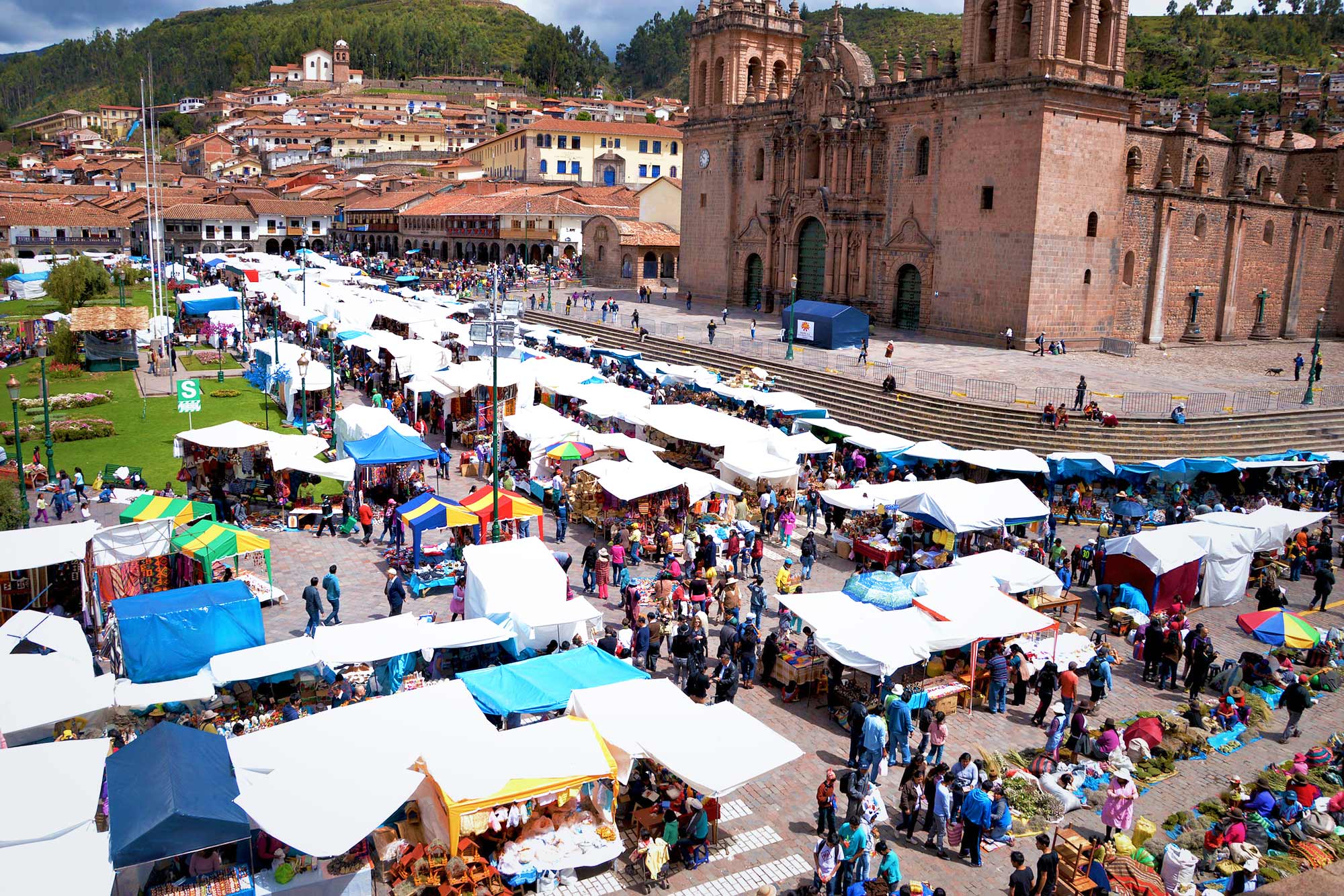
Santurantikuy – Main Square Cusco
What is the Santurantikuy?
- The Santurantikuy is a traditional Christmas fair held in the city of Cusco. Its Quechua name literally translates to “buying saints,” as the fair, while having a commercial purpose, also has a religious origin inherent in its celebration.
- The traditional fair is a Christmas expression born from the cultural mestizaje that shaped Cusco’s Catholicism.
- Strongly linked to popular Baroque, it brings together traditional imagery with handcrafted works that accompany the Christmas spirit and keep Cusco’s artistic identity alive.
- At this fair, artistic pieces related to the Christmas season, along with syncretism (Catholic and Andean), which is so characteristic of Cusco’s culture, are exhibited. It is a fair that showcases the skill and potential of the region’s artisans.
History of Santurantikuy
- The customary celebration of Santurantikuy dates back to 1834, when during Christmas time, Cusco’s inhabitants would set up their nativity scenes (depictions of the birth of Jesus in Catholic traditions).
- In the Main Square and the steps of the cathedral, natural products (straw, carved branches, grass mats) and ceramic figurines were sold.
- Although this tradition is related to Christmas, it has operated within a popular and traditional framework, without interference from the church.
- The Santurantikuy fair originates from the culture of Cusco’s popular Baroque, and today, the displayed works also feature contemporary cultural representations that add more diversity and appeal.
- The most notable historical works are part of the Cusco Popular Art Museum, which is an ideal place to visit if you travel during a time other than when Santurantikuy is held.
- On September 22, 2009, the Santurantikuy fair was declared part of the national heritage by the Ministry of Culture, for its value as one of the most important cultural expressions in Peru.
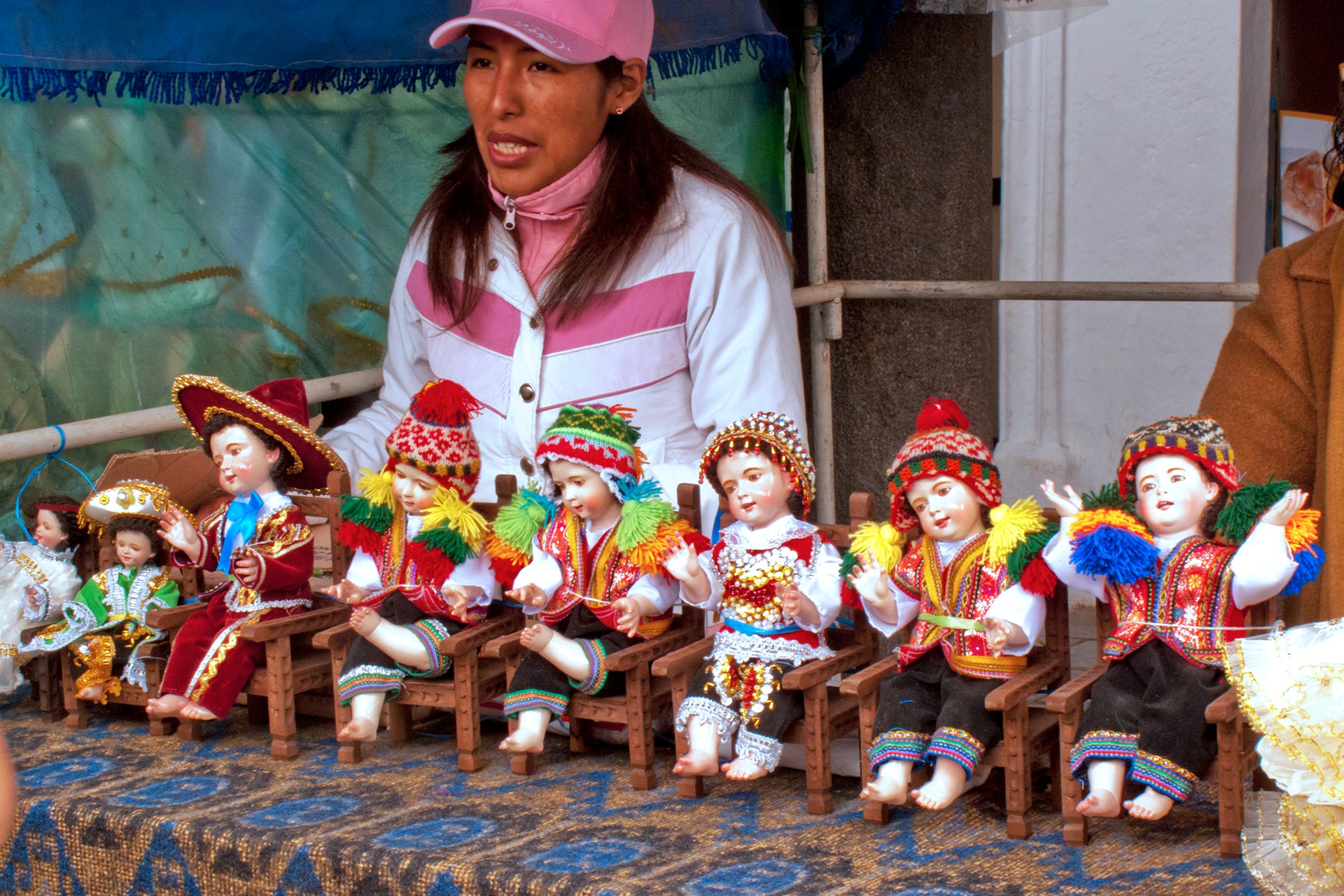
Niño Manuelito – Santurantikuy
Niño Manuelito
A large part of the Santurantikuy Christmas fair revolves around Niño Manuelito (which comes from the name Emmanuel, meaning “God with us”), also known as the “Inca Child,” which is a representation of Jesus in his early years. During the fair, one can acquire clothing to dress this artisanal figure, which is traditionally passed down from generation to generation in families, giving it greater symbolic value. In addition, on Christmas Eve and during the Epiphany (January 6), it is customary to have the Niño Manuelito blessed at Masses around the city.
What will I find at this fair?
- Before being officially called a fair, Santurantikuy offered handmade works focused solely on Catholic and syncretic representations. In addition, it sold products for making the popular “nacimientos” (nativity scenes), plastic icons that represent the baby Jesus’ crib.
- Over the years, the fair expanded its artistic offerings, but without losing the syncretic essence related to Christmas.
- The artistic categories present include: imagery, ceramics, candle-making, tinwork, silverwork, goldsmithing, children’s clothing, stonework, woodwork, leatherwork, doll-making, toys, painting, Andean nativity scenes, glasswork, typical musical instruments, Christmas crafts, and Christmas pastries.
- The most popular and prevalent artistic works are: clothing for saints and children, figures for the nativity representation, Christmas decorations, artistic canvases, and a wide variety of handcrafted works.
- As an additional incentive for many Cusco artisans and artists, there is a contest that awards the best pieces in various categories. This event takes place on the last day of the fair, December 24th.
| MAIN PRODUCTS OF SANTURANTIKUY | ||
|---|---|---|
| Category | Description | Typical Examples |
| Religious Images | Handcrafted pieces related to Christmas and Andean syncretism. | Niño Manuelito, virgins, saints, archangels, small altarpieces. |
| Cusco Ceramics | Works with Andean and colonial iconography. | Nativity scenes, traditional figures, representations of the Andean worldview. |
| Wood Carvings | Traditional craftsmanship with unique details and style. | Religious images, masks, zoomorphic figures. |
| Goldsmithing and Silverwork | Fine works created by master artisans. | Crosses, reliquaries, Andean jewelry, nativity decorations. |
| Andean Textiles | Clothing and fabrics using traditional techniques. | Chullos, blankets, gloves, knitted Christmas decorations. |
| Herbs and Natural Products | Traditional items used for rituals and home medicine. | Medicinal plants, incense, smudge sticks, aromatic resins. |
| Christmas Decorations | Handmade decorative items with local identity. | Stars, nativity scenes, wreaths, and many other decorations. |
| Handcrafted Toys | Creations for children, many in a traditional style. | Articulated animals, textile dolls, and contemporary figures. |
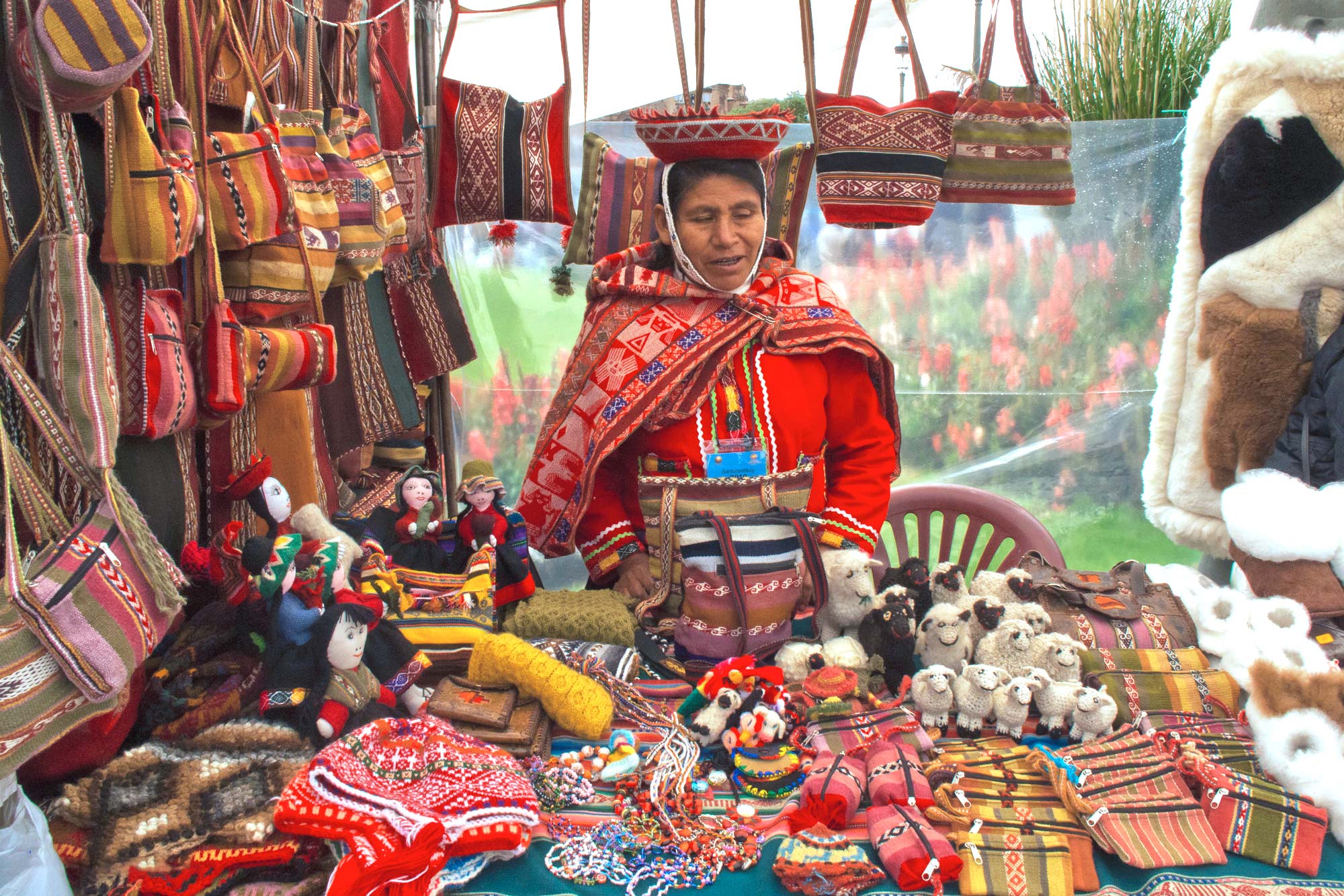
Artistic works for sale at Santurantikuy
Santurantikuy 2025 Date
- Santurantikuy in 2025 will take place from December 22 to 24, as it has been regularly held in recent years.
- Originally, the Christmas artisan fair was only held on December 24, but due to the growing popularity of Santurantikuy, the dates of the event were extended.
Where is Santurantikuy held?
- Since its origins in the 19th century, Santurantikuy is held at the Main Square, also known as the Main Square of Cusco. Although in some years this Christmas fair was held in other parts of the city, it was only for external reasons.
- The Main Square, since Inca times (where it was called “Haucaypata”), is the most important meeting place in the city. With many years of history and tradition, the Main Square is a key part of the traditional Cusco Christmas fair.
Recommendations for visiting Santurantikuy
- The opening hours of Santurantikuy are from 6:00 AM to 8:00 PM. The first day (December 22) is inaugurated at 11:00 AM.
- Santurantikuy runs from December 22 to 24, with the last day being the busiest. If you prefer a quieter visit, we recommend attending on the first or second day.
- Visit the Cusco Popular Art Museum to appreciate some of the best works of Santurantikuy at any time of the year.
- Cusco’s historic center is never as magical and charming as during Christmas. It is the ideal time to visit. (Discover all the festivals and traditions of Cusco).
- December is part of the rainy season in Cusco, so it is recommended to always bring waterproof clothing or a rain poncho, as rain is very likely during your visit.
- Visiting this Christmas fair not only has historical syncretic value but also provides a great opportunity to appreciate contemporary artistic works.
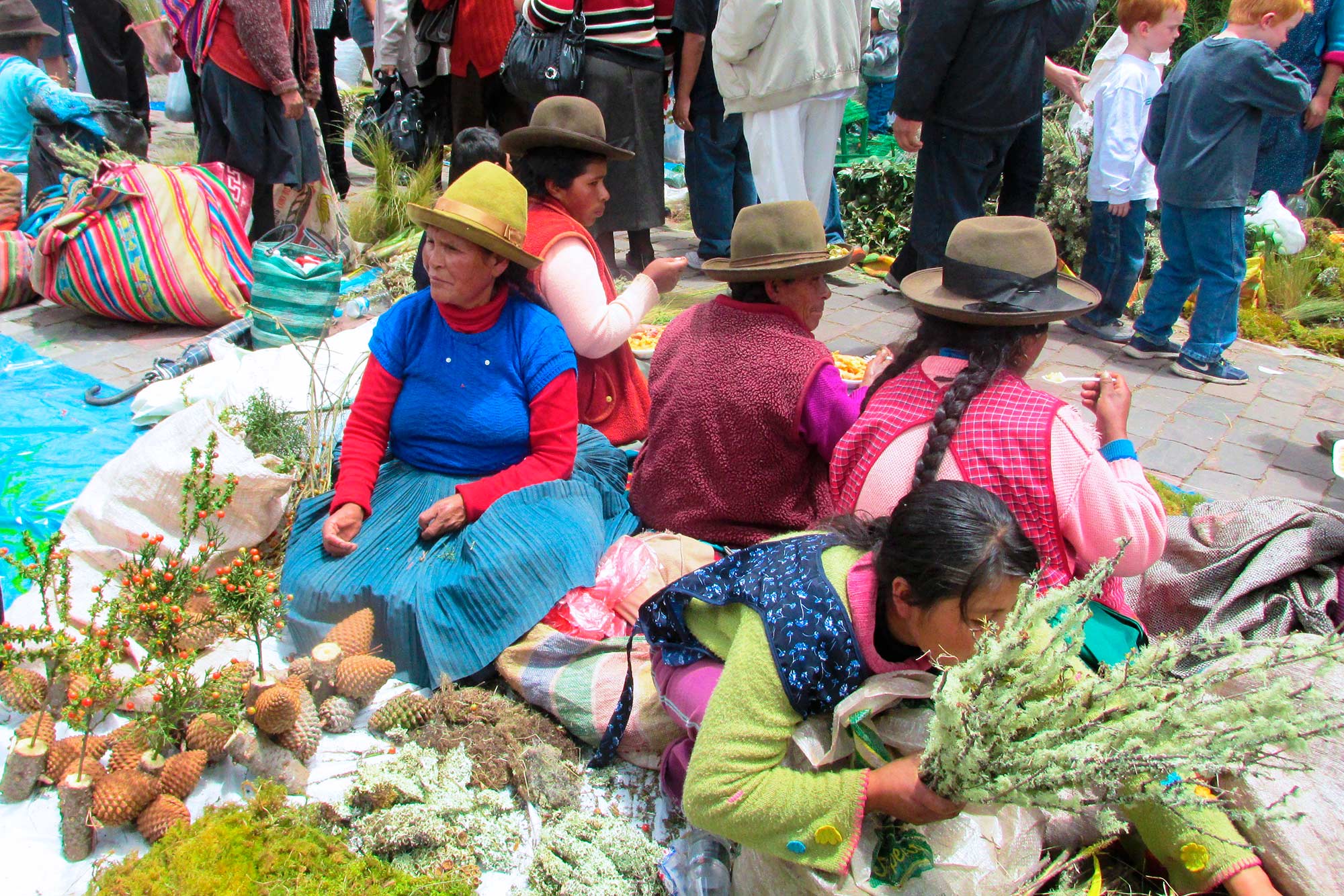
Santurantikuy – Cusco
Frequently Asked Questions
1) What does the name “Santurantikuy” mean?
The name comes from Quechua and translates as “buying saints.” In practice, it is a fair where religious tradition and popular art meet. When you visit, you’ll notice how the trade of images and pieces related to Christmas is an essential part of its identity.
2) Why is Santurantikuy so important for Cusco’s culture?
Because it brings together centuries of tradition. This fair retains a strong connection to Cusco’s popular Baroque and simultaneously includes contemporary expressions. At Santurantikuy, you can see firsthand how Andean-Catholic syncretism remains alive in each work.
3) When is Santurantikuy 2025 held?
It will take place from December 22 to 24. If you prefer a more peaceful experience, we recommend visiting during the first two days, as the 24th is usually the busiest day.
4) Where is Santurantikuy held?
Santurantikuy is held at the Main Square of Cusco, the historical heart of the city since Inca times. It is a spacious, beautiful, and colorful location where the fair has been held since its inception.
5) What kind of artistic works can I find at the fair?
At the Christmas fair, you’ll find a wide variety: ceramics, imagery, textiles, goldsmithing, toys, wood carvings, leatherwork, and contemporary pieces. Explore each booth with ease, as all of them have something unique to offer.
6) Can I find figures to create my own nativity scene?
Yes, and in fact, it is one of the main reasons many visitors come. You’ll find traditional figures, Andean pieces, Niño Manuelito images, and decorative elements to create a completely personalized nativity scene.
7) What is the best time to visit Santurantikuy?
Santurantikuy is open from 6:00 AM to 8:00 PM. If you seek tranquility and comfort during your visit, we recommend coming in the morning, as there are fewer visitors at that time.
8) What is the weather like in Cusco in December?
December is part of the rainy season in Cusco, so it is advisable to bring lightweight waterproof clothing or a rain poncho. The fair continues despite the weather, so being prepared will make your visit more enjoyable.
9) Is it better to visit the Museum of Popular Art before or after the fair?
Either option works, but if you’re traveling outside of Santurantikuy dates, the museum is an excellent alternative to appreciate representative pieces from past editions. It will help you better understand the spirit of this traditional Christmas fair.
10) Is this fair suitable for families?
Absolutely, with its festive, safe, and colorful atmosphere. If you plan to attend with children, we recommend arriving early to avoid the busiest times and explore all the booths in peace.
Advice from people who have been there
 By: Vicent L.
“Santurantikuy“
“I was in Cusco during Santurantikuy, and it was magical. The streets full of colors, music, and artisans offering their creations made me feel closer to Andean culture. The warm people, the festive atmosphere, and the beauty of the city made this trip unforgettable. Without a doubt, a unique and enriching experience.“
By Ticket Machu Picchu – Last updated, December 15, 2025