Ollantaytambo: History, What to See, and How to Visit
Ollantaytambo was one of the most important settlements of the Inca civilization. The city served as a major ceremonial center while also functioning as an agricultural storage site and strategic lookout point. Built on the slopes of a mountain, it features remarkable historical structures and breathtaking views of the Sacred Valley. Discover more about the Ollantaytambo archaeological site in Cusco, Peru.
- What does the name Ollantaytambo mean?
- When was Ollantaytambo built?
- Historical importance of Ollantaytambo
- What is the Ollantaytambo archaeological site like?
- What is the town of Ollantaytambo like?
- Important places at the Ollantaytambo archaeological site
- The Temple of the Sun in Ollantaytambo
- The Inca terraces of Ollantaytambo
- What other attractions can you visit in Ollantaytambo?
- How to buy tickets for Ollantaytambo?
- Interesting facts about Ollantaytambo
- Frequently asked questions about Ollantaytambo
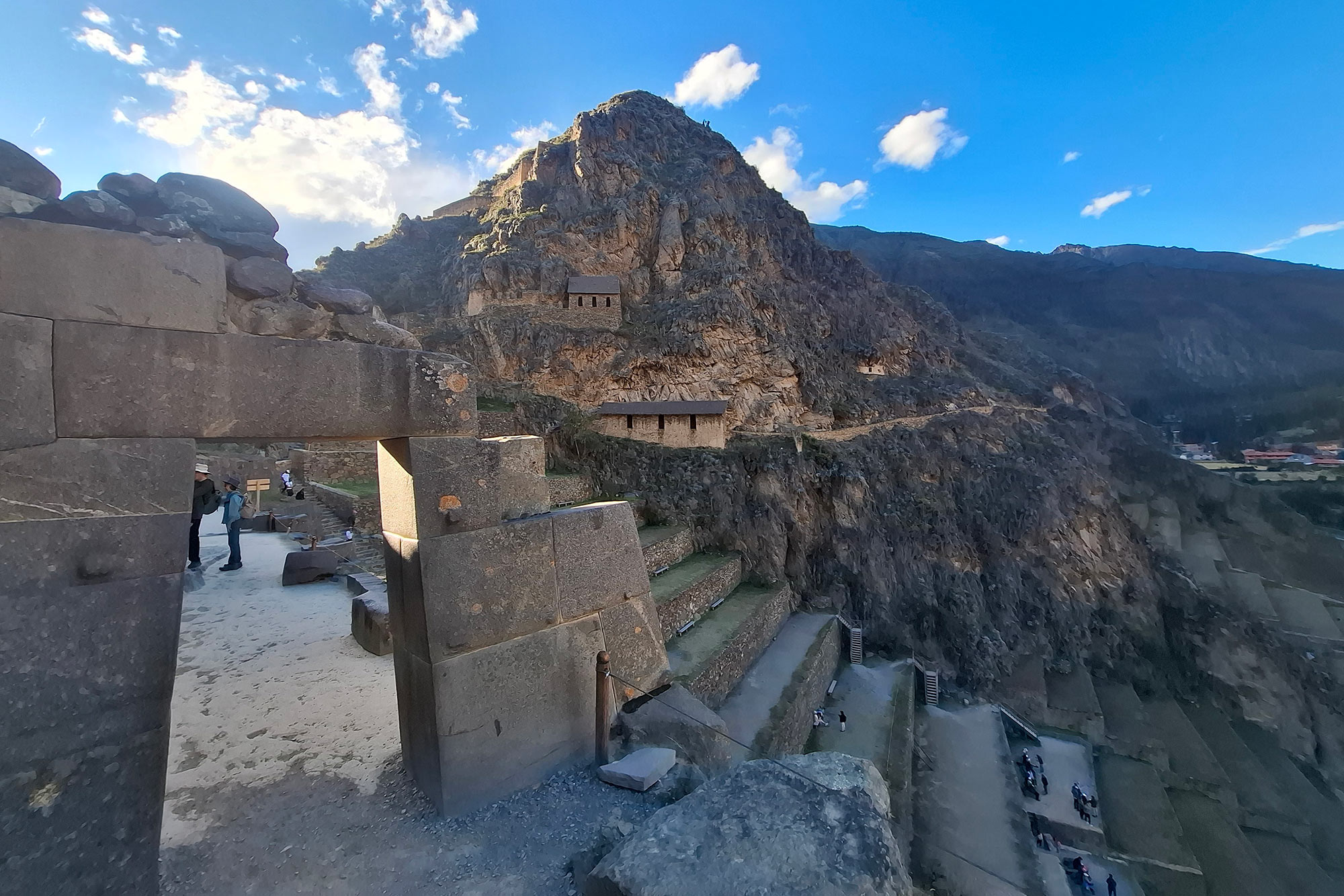
Ollantaytambo archaeological site
Sacred Valley Tour
A visit to the Ollantaytambo archaeological site is included in the classic Sacred Valley tour. This full-day experience also visits the Inca sites of Pisac and Chinchero, allowing travelers to explore the most important Inca citadels in the Sacred Valley of Peru. If you book the VIP experience, you will also visit the Maras Salt Mines and the circular terraces of Moray.
What does the name Ollantaytambo mean?
- According to several studies, Ollantaytambo is a word of Aymara origin (a language from the Peruvian highlands) that means “Place of observation from below”.
- In Ollantaytambo, culture and nature blend harmoniously, creating an almost perfect coexistence.
- If you decide to explore the town of Ollantaytambo during your trip to Machu Picchu, you will enjoy not only stunning green landscapes, but also the daily life of the local people who inhabit this ancient urban settlement.
- According to oral tradition, Ollantaytambo owes its name to the Inca drama ‘Ollantay’, whose main character was the Inca general ‘Ollanta’.
- Today, Ollantaytambo is the name of both the town and the archaeological site built in this area.
When was Ollantaytambo built?
- In the mid-15th century, the Inca emperor Pachacutec founded Ollantaytambo over an existing settlement and incorporated it into the Tahuantinsuyo Empire.
- Pachacutec ordered the construction of the main buildings of what is now the Ollantaytambo archaeological site, as well as the Inca town located at its foothills.
- Pachacutec is known as the great Inca builder. During his reign, the Incas also built the citadel of Machu Picchu.
- The town of Ollantaytambo still preserves its original urban design and many important Inca walls.
- Much of the site remains exceptionally well preserved, with structures whose historical purpose is still unknown today.
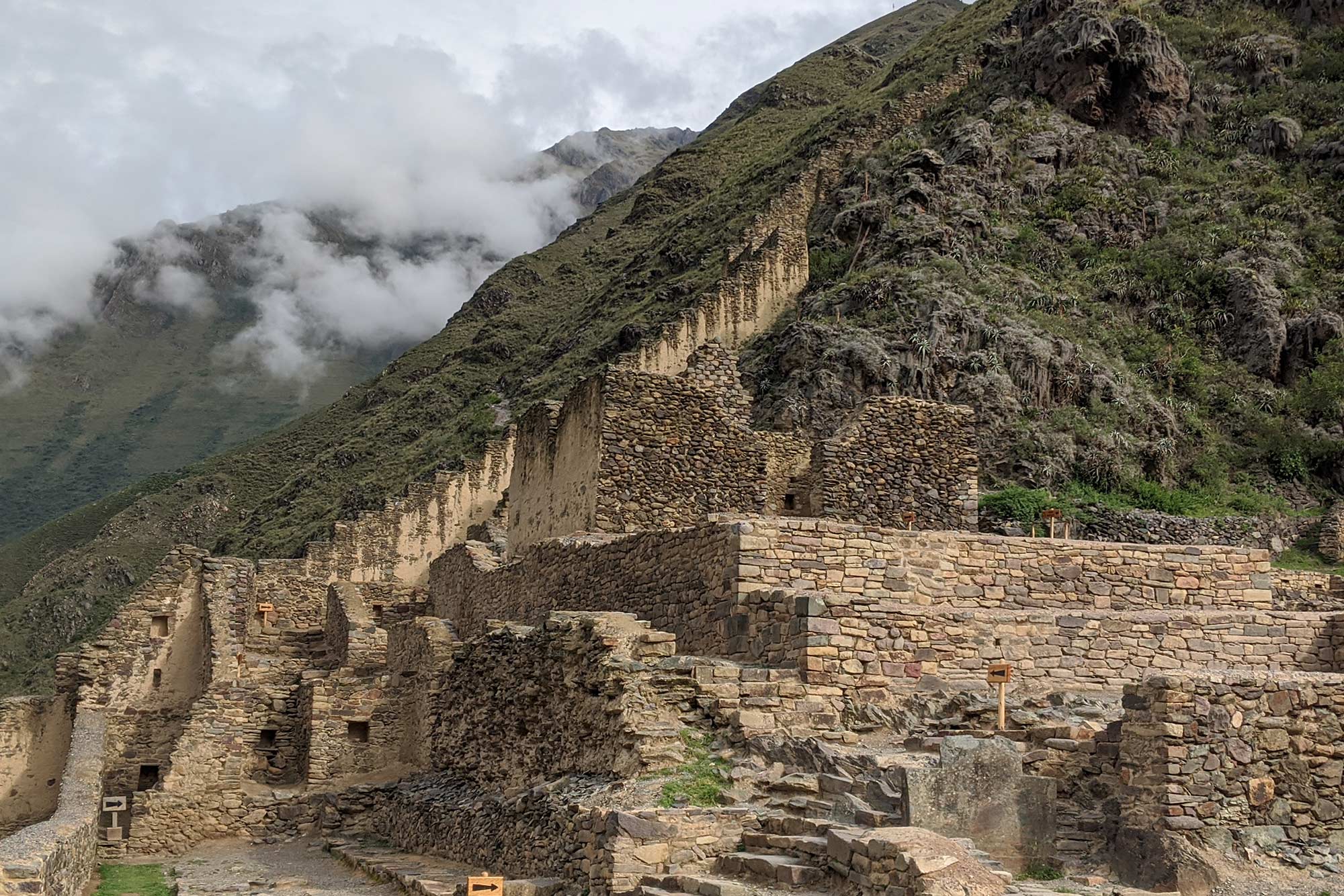
Historic constructions of Ollantaytambo
Historical importance of Ollantaytambo
- Ollantaytambo was an important religious, agricultural, and military center. Due to its strategic location during the Spanish conquest, it served as a defensive stronghold against the invaders.
- In 1537, Spanish conquistadors clashed in Ollantaytambo with the last Incas resisting European invasion.
- The resistance led by Manco Inca could not stop the Spanish attack, forcing the Incas to retreat to the city of Vilcabamba in the Cusco jungle.
- The city eventually fell into the hands of the invaders and became an “encomienda” granted to the Spanish conqueror Hernando Pizarro.
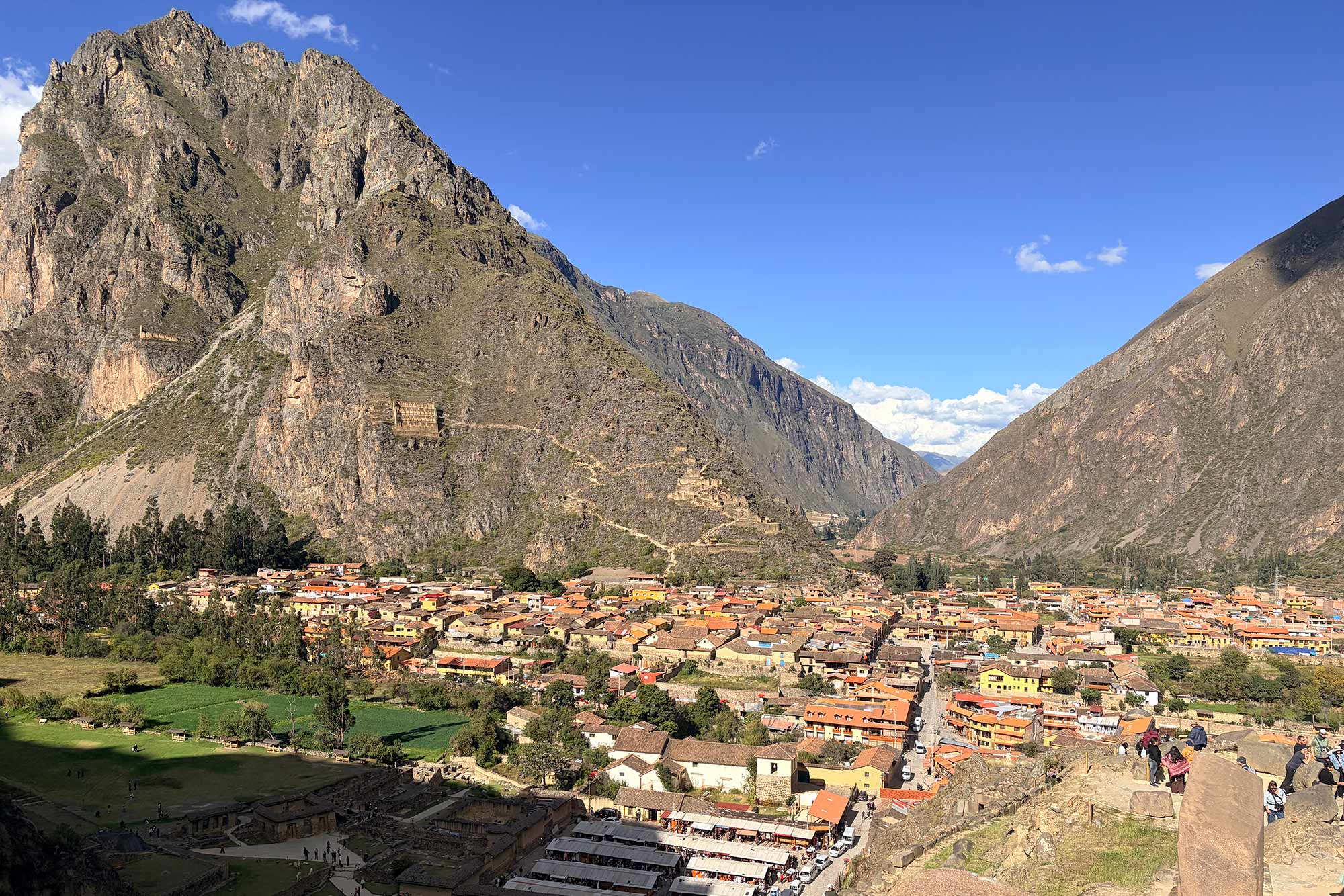
Views of the town of Ollantaytambo
Encomiendas were territories assigned to Spanish colonizers. Because of this, the town of Ollantaytambo combines Inca, colonial, and contemporary architecture. Even so, Andean culture remains alive today, and visitors can still experience many of its traditions and way of life by visiting communities around the ancient Inca town of Ollantaytambo.
What is the Ollantaytambo archaeological site like?
- The Ollantaytambo archaeological site stretches across the mountains surrounding the Inca town of the same name.
- This ancient Inca citadel features some of the finest stonework ever created by the Incas, including the famous Temple of the Sun.
- For many years, researchers believed this complex functioned mainly as a defensive fortress. However, the quality of its architecture suggests it also served as a ceremonial center and a royal retreat for the Inca ruler and his family.
- Thanks to its location high on the mountainside, visitors can enjoy spectacular views of the Sacred Valley while overlooking the surrounding geography.
- The tour route is extensive, so visitors are advised to allow at least two hours for the visit.
What is the town of Ollantaytambo like?
- The town of Ollantaytambo preserves its original Inca urban layout, organized with a polygonal design. The main square is located at the center of the town.
- Today, the current town occupies only a fraction of the area it once covered in ancient times.
- The southern side of Ollantaytambo features higher-quality construction, while the northern side contains more rudimentary buildings.
- Among its top attractions are the original cobblestone streets, historic stone walls, and water channels that still carry water through the main streets of Ollantaytambo.
- Nowadays, the town offers a wide variety of tourist services, including hotels, restaurants, cafés, and many attractions that complement the visitor experience.
| Characteristics of the town of Ollantaytambo | |
|---|---|
| Aspect | Description |
| Location | Sacred Valley of the Incas, Urubamba Province, Cusco. |
| Altitude | Approximately 2,792 meters above sea level. |
| Urban design | Narrow stone streets with the original Inca layout. |
| Connection to Machu Picchu | Main railway connection point and principal train station to Machu Picchu. |
| Landscape | Surrounded by mountains, agricultural terraces, and striking rock formations. |
| Daily life | A peaceful atmosphere with strong local traditions focused on tourism and agriculture. |
| Tourism | One of the most visited destinations in the Sacred Valley, included in the classic tour route. |
| Climate | Mild and dry for most of the year. |
| Distance from Cusco | Approximately 1 hour and 45 minutes by car. |
| Exploring Ollantaytambo | A small walkable town mainly designed for pedestrian traffic. |
Important places at the Ollantaytambo archaeological site
- The Ollantaytambo archaeological site features many structures of great historical importance, such as the Bath of the Ñusta, the Royal House of the Sun, the Monumental Gateway, and many others.
- However, the most famous and impressive constructions in Ollantaytambo are the Temple of the Sun and its remarkable system of agricultural terraces.
- High in the mountains surrounding Ollantaytambo, visitors can also explore structures known as ‘Colcas’. These buildings served as storage facilities for staple products such as corn and potatoes.
- The tour mostly follows an uphill route, allowing visitors to discover structures at the base of the mountain, along the slopes, and at the summit.
The Temple of the Sun in Ollantaytambo
- On the western side of the Ollantaytambo archaeological site, visitors can find a structure known as ‘Aracama’. This area is home to the Temple of the Sun.
- The Temple of the Sun is one of the most unique constructions in the entire Inca civilization.
- This structure was built on top of a pyramid of terraces leading toward the Main Plaza.
- Inside the Temple of the Sun, six massive stone monoliths still survive, forming one of the most impressive structures in the Sacred Valley of the Incas.
- The Temple of the Sun primarily served a ceremonial purpose. It is also believed that construction was interrupted during the Spanish invasion, leaving the structure unfinished.
- From this point, visitors can enjoy breathtaking landscapes from near the mountain summit.
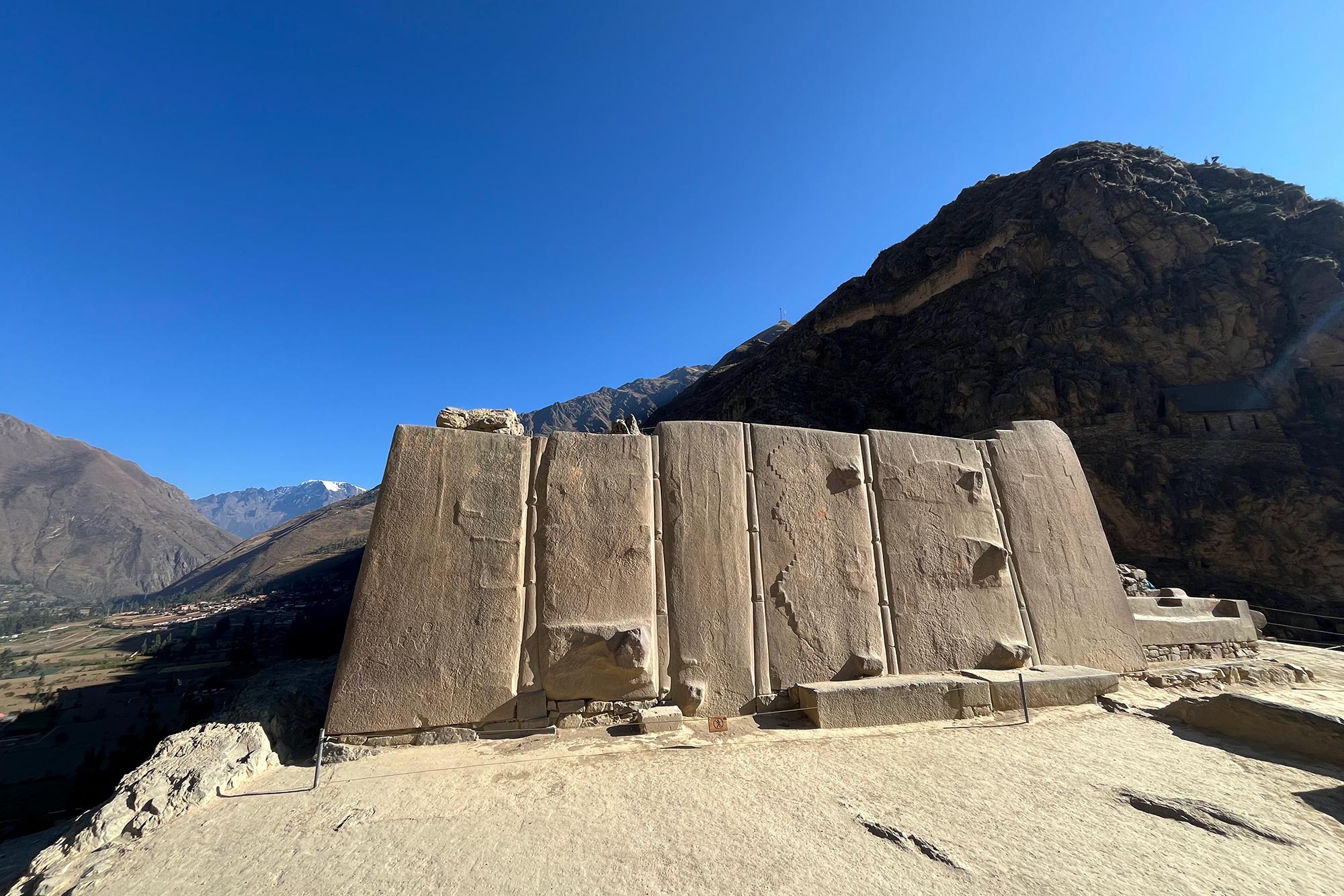
Temple of the Sun
The Inca terraces of Ollantaytambo
- The terraces of Ollantaytambo are one of the greatest examples of agricultural engineering developed by the Tahuantinsuyo Empire.
- The main terraces reach up to 700 meters in length, 58 meters in width, and 15 meters in depth.
- Each terrace level was built according to the position of the sun and the surrounding natural environment, creating different microclimates in each section.
- The terraces create unique microclimates that allow the cultivation of different crops within the same territory.
- This agricultural practice can be seen throughout the Sacred Valley, demonstrating the essential farming role of Andean civilization.
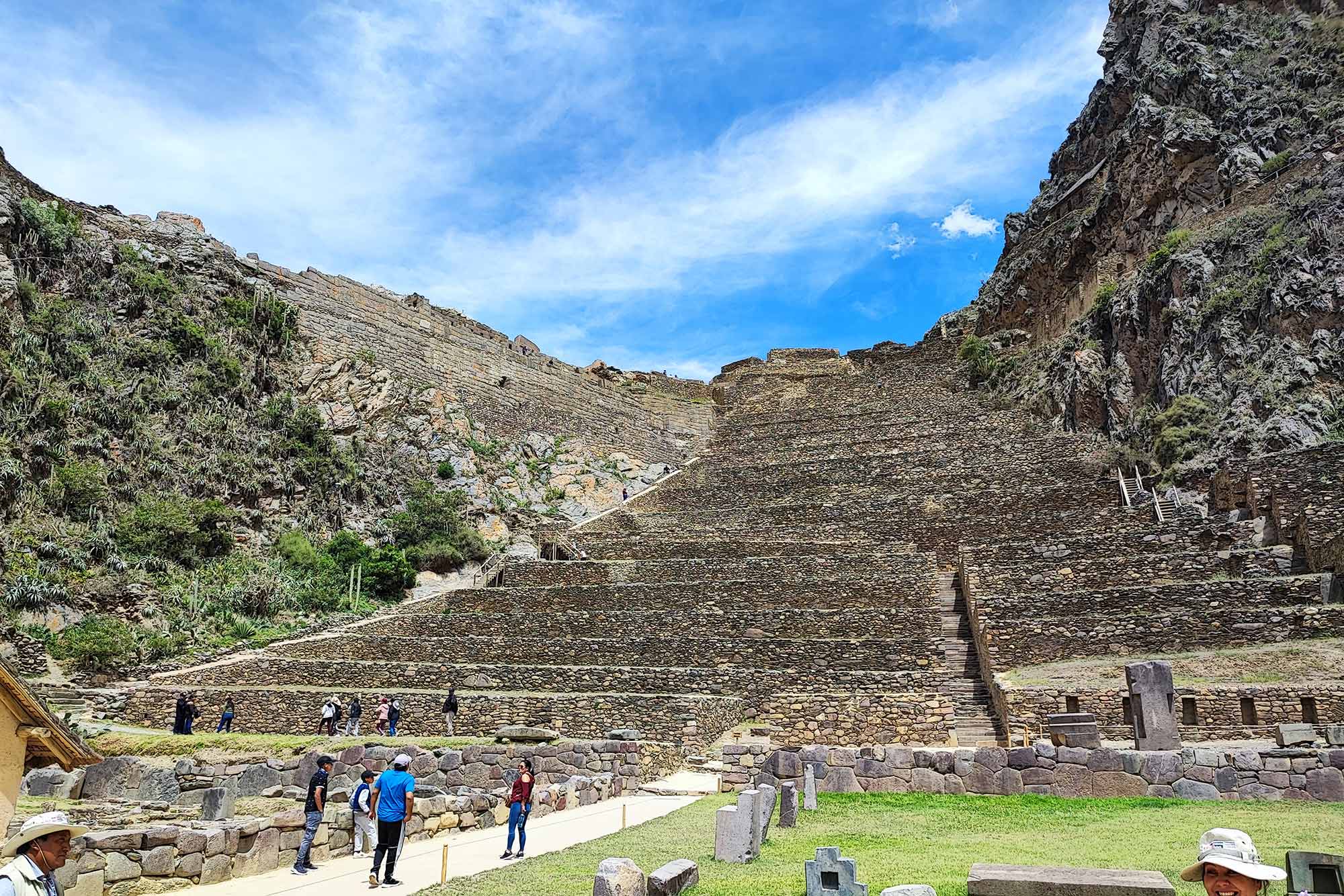
Inca agricultural terraces
What other attractions can you visit in Ollantaytambo?
In addition to its impressive Inca archaeological remains, Ollantaytambo is surrounded by spectacular Andean landscapes and natural scenery, offering many travel experiences to complement your visit. Among the top attractions are:
- Pinkuylluna - Located on a mountainside overlooking Ollantaytambo, this site offers a short hiking experience (about 30 minutes from the main square) with panoramic views of the town and the surrounding Sacred Valley landscapes.
- Pumamarca - Also known as the City of the Pumas, this archaeological site features impressive agricultural terraces. It is located about one hour from Ollantaytambo, combining travel by car and a short hike.
- Inti Punku Gateway - Inti Punku, also known as the Sun Gate, is a magnificent structure surrounded by snow-capped mountains and breathtaking Andean scenery at more than 3,900 meters above sea level. Reaching this destination requires a challenging hike of nearly 4 hours each way (around 7 hours round trip).
- Cachicata Quarries - Located along the first section of the hike to Inti Punku, visitors can observe unfinished stone structures from the Inca civilization. In ancient times, this area served as the main quarry for the construction of Ollantaytambo.
- Ñaupa Iglesia - Built inside a natural cave, this archaeological site stands out for its finely carved stone structures, including an impressive gateway, a ceremonial huaca, and a wall with trapezoidal windows. Getting there combines a short 20-minute drive with a 15-minute walk.
How to buy tickets for Ollantaytambo?
- To enter Ollantaytambo, visitors must purchase the Cusco Tourist Ticket either in its comprehensive version or through Circuit 3.
- The Circuit 3 Cusco Tourist Ticket includes access not only to Ollantaytambo, but also to the archaeological sites of Moray, Chinchero, and Pisac.
- The Comprehensive Cusco Tourist Ticket grants access to 10 archaeological sites, 5 museums, and one cultural center.
- This ticket can be purchased directly at the entrance to Ollantaytambo or at authorized offices in Cusco city located on Avenida El Sol 103 and Garcilaso Street s/n.
- The Circuit 3 Cusco Tourist Ticket costs 70 Peruvian soles (valid for 2 days), while the Comprehensive Ticket costs 130 soles (valid for 10 days).
- Currently, this ticket can only be purchased in person. It is not yet available online, although some travel agencies offer advance reservations.
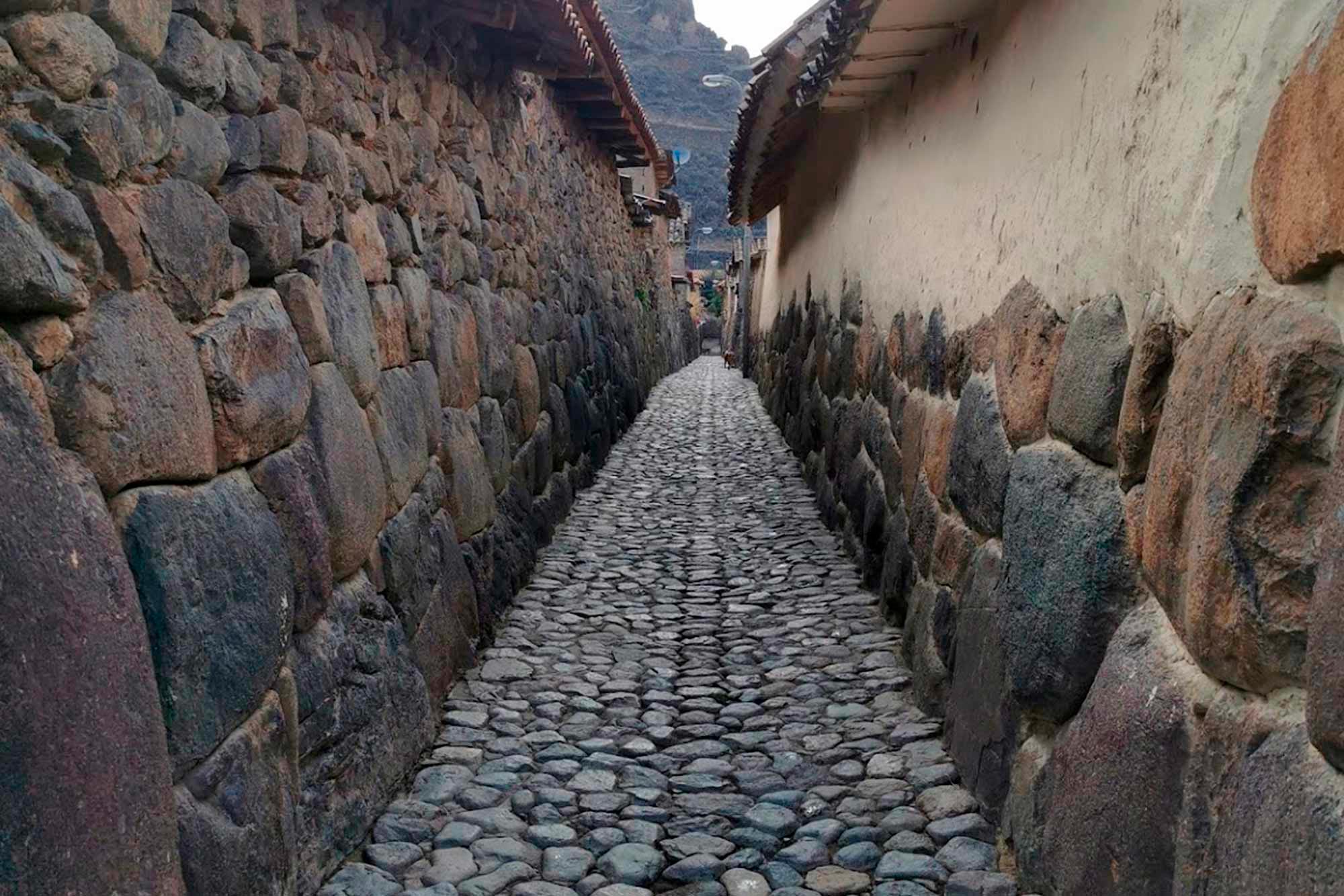
Streets of Ollantaytambo
Interesting facts about Ollantaytambo
- The town of Ollantaytambo is filled with Inca constructions. Beyond the main archaeological site, visitors can spot colcas (storage buildings), ancient structures, and even the famous Inti Punku or Sun Gate in the surrounding mountains. Reaching Inti Punku requires a hike of approximately 4 hours.
- Ollantaytambo also celebrates an Inca festival similar to the famous Inti Raymi in Cusco. Known as the ‘Ollantay Raymi’, this event is a theatrical performance based on the historic drama of Ollantay. The main stage for the celebration is the Ollantaytambo archaeological site itself.
- The Ollantaytambo archaeological site can also be visited through the ‘1-Day Sacred Valley of the Incas Tour’. This service includes full transportation, entrance tickets to archaeological sites (Ollantaytambo, Pisac, and Chinchero), a buffet lunch in Urubamba, and a professional tour guide service.
- The journey from Cusco to Ollantaytambo takes approximately 1 hour and 45 minutes. Along the route, travelers can enjoy spectacular views of the Sacred Valley, adding even more value to the experience.
Frequently asked questions about Ollantaytambo
1) Who ordered the construction of Ollantaytambo?
Emperor Pachacutec ordered the expansion and construction of the current Ollantaytambo archaeological site in the mid-15th century. Shortly before, he had conquered this settlement and expanded the borders of the Inca Empire.
2) What does Ollantaytambo mean?
The word Ollantaytambo, translated from the Quechua term Ullantaytampu, means “Ollanta’s inn” or “the lodging place of Ollanta.” The name refers to the character ‘Ollanta’ from the drama ‘Ollantay’, an Inca general who ruled this Andean region.
3) What can you see in Ollantaytambo?
Ollantaytambo is famous for its impressive Inca archaeological site. Visitors can explore remarkable stone constructions such as the Temple of the Sun, the Royal House of the Sun, the Monumental Gateway, the Enclosure of the Ten Niches, the Baths of the Ñusta, and many more.
4) What was the purpose of Ollantaytambo?
Ollantaytambo was an Inca citadel that, like many others, included temples, agricultural terraces, and residential areas for the inhabitants of the Tahuantinsuyo Empire. However, during the 16th century, it also served as a fortress during the battles between the Incas and the Spanish conquistadors.
5) Who fought in the Battle of Ollantaytambo?
Historical chronicles state that in January 1537, the army of Manco Inca, leader of the Vilcabamba rebellion, fought against the Spanish forces led by Hernando Pizarro in Ollantaytambo. The Incas resisted there until they were defeated and forced to retreat into the Cusco jungle region of Vilcabamba.
6) Is it dangerous to visit Ollantaytambo?
Ollantaytambo is considered a safe destination for visitors. There are no especially dangerous sections during the tour. However, travelers are advised not to get too close to the edges of pathways and terraces.
7) What is the altitude of Ollantaytambo?
Ollantaytambo is located at an altitude of 2,792 meters (9,160 feet) above sea level.
8) What landscapes can you see in Ollantaytambo?
In Ollantaytambo, visitors can admire beautiful natural landscapes such as the Urubamba River, extensive agricultural fields, and the snow-capped mountains of Veronica, Chicón, and Sahuasiray.
9) How do you get from Cusco to Ollantaytambo?
Traveling from Cusco to Ollantaytambo can be done by public transportation. Visitors can take shared minivans departing from Pavitos Street in Cusco’s historic center. The trip takes approximately 1 hour and 45 minutes, and ticket prices usually range from 12 to 15 Peruvian soles.
10) How much does a tour to Ollantaytambo cost?
A visit to Ollantaytambo is included in the 1-Day Sacred Valley of the Incas Tour. This service typically includes transportation, a professional guide, entrance tickets (Ollantaytambo, Pisac, and Chinchero), and even a buffet lunch in Urubamba.
Advice from people who have been there
 By: Tierno B.
“The hike to the terraces offers incredible views“
“I went up early in the morning and the site looked spectacular with the mist drifting through the mountains. It’s worth taking your time because every corner offers something interesting to photograph, and the view from the top is simply breathtaking.“
By Ticket Machu Picchu – Last updated, September 16, 2026