Guide to getting to Machu Picchu on foot
The Historic Sanctuary of Machu Picchu is located almost 100 kilometers from the city of Cusco, in the Peruvian Andes, within a high jungle area. There are several ways to get there, including hiking routes. The most well-known is the 4-day Inca Trail, a journey of approximately 40 kilometers that follows ancient paths used by the Incas to reach the citadel. Other notable alternatives include the Salkantay Trek, the Hydroelectric route, and the final hike from Aguas Calientes of about 10 kilometers. Discover the main trekking routes to reach Machu Picchu on foot.
- How to get to Machu Picchu from Cusco
- General map of hiking routes to Machu Picchu
- 4-day Inca Trail: the classic route to the Inca citadel
- 5-day Salkantay Trek: the high-altitude route to Machu Picchu
- Hydroelectric route: the budget-friendly alternative to reach Machu Picchu on foot
- Hike from Aguas Calientes to Machu Picchu
- Other trekking routes to Machu Picchu
- Frequently asked questions about hikes to Machu Picchu
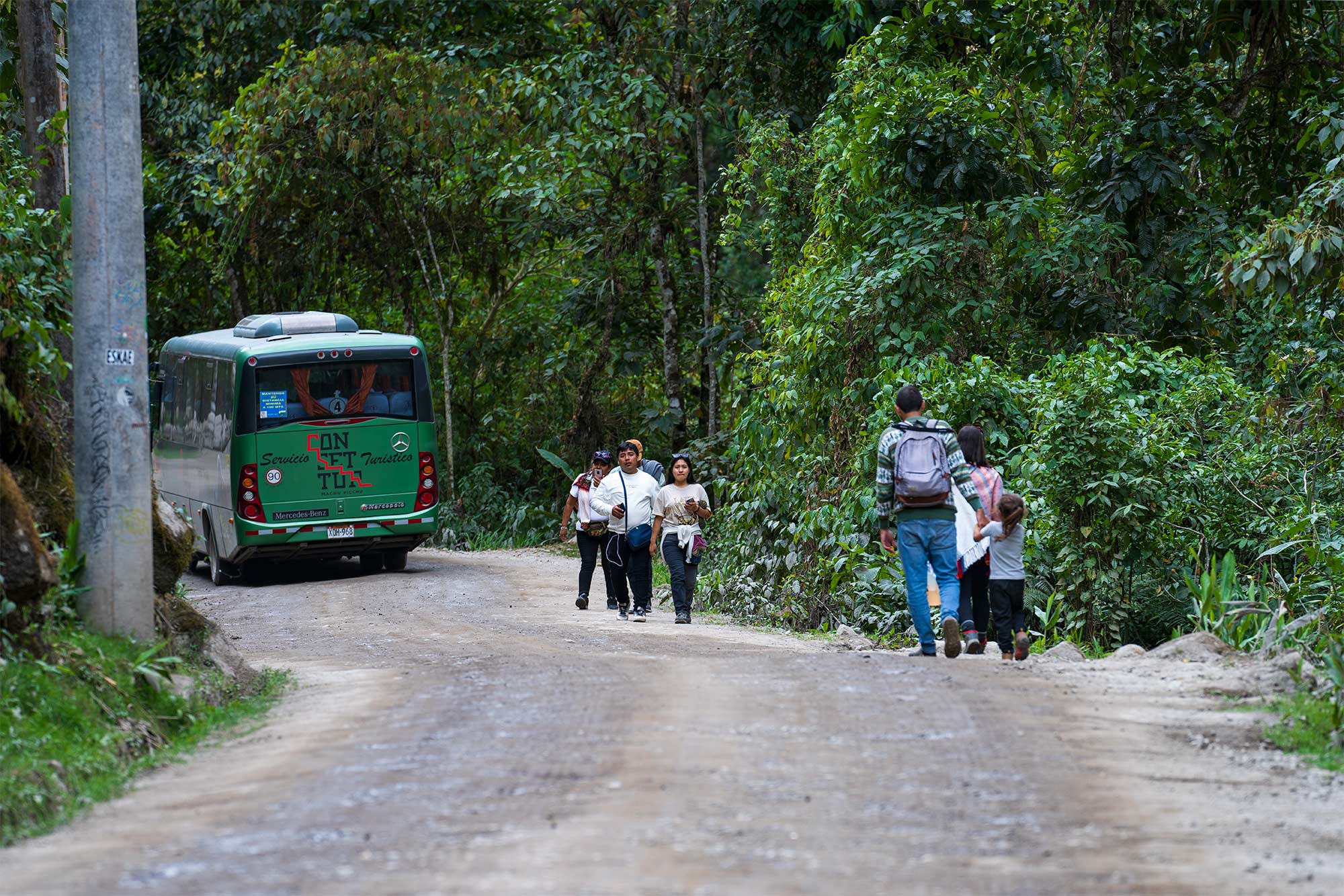
Path to the Inca citadel of Machu Picchu on foot
The train journey, the classic way to reach Machu Picchu
In Inca times, the only way to reach Machu Picchu was by walking through the qhapac ñan, the Inca Trail paths. Today, more than five hundred years later, the train journey is how most people choose to travel due to its comfort and speed. This trip departs from Cusco or the Ollantaytambo station in the Sacred Valley. From this station, most trains depart, and the journey takes about 1 hour and 45 minutes on average. The train ride ends at the station in the town of Aguas Calientes, also known as Machu Picchu. From there, most visitors take buses that climb a mountain for 30 minutes until reaching the entrance of Machu Picchu.
How to get to Machu Picchu from Cusco
- All trips to Machu Picchu start in Cusco, one of the most touristy cities in South America. To get there, in most cases, you take a flight from the city of Lima, the capital of Peru. The flight from Lima to Cusco takes about 1 hour.
- The city of Cusco is located approximately 100 kilometers from Machu Picchu. Most travelers stay in Cusco for days or weeks before taking their trip to Machu Picchu by train from the Ollantaytambo station.
- Other people prefer to stay in the Sacred Valley of the Incas, in towns such as Urubamba, Pisac, Ollantaytambo, or Yucay, as they are at a lower altitude and are better for acclimatization.
- The train journey to Machu Picchu is the most comfortable and fastest way to travel, but it is not the only option. Alternatives include the 4-day Inca Trail (or its 2-day short version) and the Hydroelectric route. Both options include memorable hikes toward the wonder of the world.
- For all routes, except the one that includes entry to Machu Picchu, you must book one of the ten available tickets to the Inca citadel in advance. Below, learn about the prices of Machu Picchu tickets:
| Type of ticket | Foreign adults | Adults (Peru, Bolivia, Ecuador and Colombia) | Foreign students | Students (Peru, Bolivia, Ecuador and Colombia) | Foreign minors under 18 | Minors under 18 (Peru, Bolivia, Ecuador and Colombia) |
|---|---|---|---|---|---|---|
| Machu Picchu Mountain Route (1A) | 200 soles | 112 soles | 125 soles | 80 soles | 118 soles | 80 soles |
| Upper Terrace Classic Photo Route (1B) | 152 soles | 64 soles | 77 soles | 32 soles | 70 soles | 32 soles |
| Inti Punku Gate Route (1C) | 152 soles | 64 soles | 77 soles | 32 soles | 70 soles | 32 soles |
| Inca Bridge Route (1D) | 152 soles | 64 soles | 77 soles | 32 soles | 70 soles | 32 soles |
| Classic Designed Route (2A) | 152 soles | 64 soles | 77 soles | 32 soles | 70 soles | 32 soles |
| Classic Lower Terrace Route (2B) | 152 soles | 64 soles | 77 soles | 32 soles | 70 soles | 32 soles |
| Huayna Picchu Mountain Route (3A) | 200 soles | 112 soles | 125 soles | 80 soles | 118 soles | 80 soles |
| Royal Designed Route Lower Temples (3B) | 152 soles | 64 soles | 77 soles | 32 soles | 70 soles | 32 soles |
| Temple of the Moon or Great Cavern Route (3C) | 200 soles | 112 soles | 125 soles | 80 soles | 118 soles | 80 soles |
| Huchuy Picchu Mountain Route (3D) | 200 soles | 112 soles | 125 soles | 80 soles | 118 soles | 80 soles |
General map of hiking routes to Machu Picchu
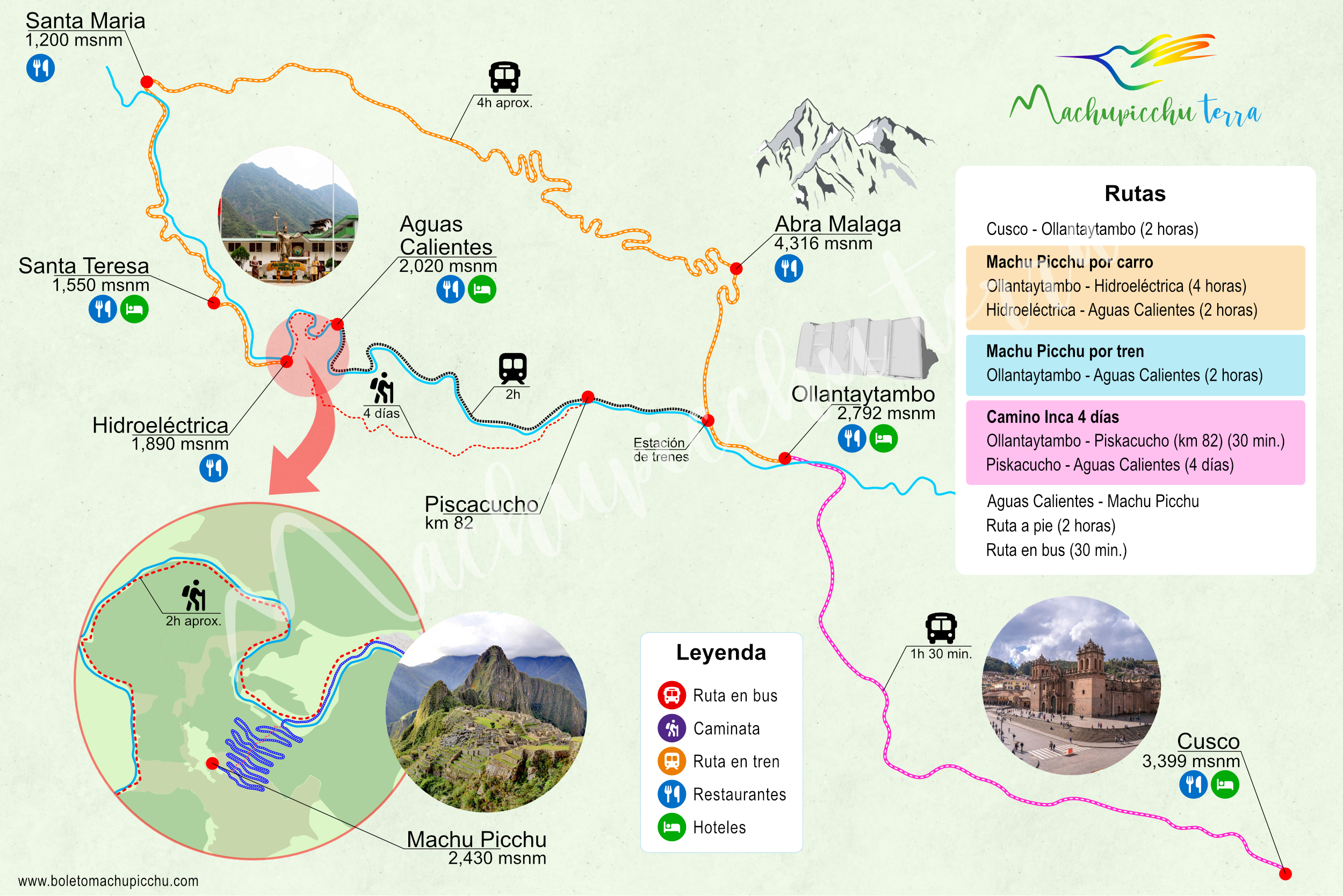
Map to Machu Picchu via the Inca Trail routes, by car and by train
4-day Inca Trail: the classic route to the Inca citadel
- The classic Inca Trail trekking route is considered one of the best hikes in the world.
- This experience follows paths full of history, built by the Incas hundreds of years ago, allowing access to Machu Picchu just as in pre-Hispanic times.
- On the Inca Trail, approximately 40 kilometers are covered over four days and three nights of camping. On the final day, Machu Picchu is explored after entering through the Inti Punku gate. The return to Cusco is done by train.
- This route can only be done with organized tour agencies, as these regulations help preserve the safety of visitors and the integrity of the trails and structures.
- The tours include everything needed for the adventure: hotel pickup, transportation to the starting point of the hike, a professional guide, entrance tickets, cooking staff for meals, camping equipment, and porters. It also includes the necessary tickets for the return train journey to Cusco.
- The hike is moderately challenging, but you are constantly surrounded by beautiful Andean and high jungle landscapes. The route also includes exclusive archaeological sites such as Patallacta, Sayacmarca, Phuyupatamarca, Wiñayhuayna, and finally Machu Picchu.
- Arrival at the Inca city is made just as the Incas did, through the Inti Punku gate, a sacred entrance that offers a first panoramic view of the citadel and its surrounding natural landscape.
- During the four-day adventure, visitors experience a cultural journey surrounded by nature, away from phone or internet signals.
- The highest point of the trek is the Warmiwañusca pass (the “Dead Woman’s Pass” in Quechua), located at about 4,215 meters above sea level. It is an experience that crosses different climates and landscapes, a complete journey toward Machu Picchu.
5-day Salkantay Trek: the high-mountain route to Machu Picchu
- The 5-day Salkantay Trek adventure is one of the best hiking routes to reach Machu Picchu, and for some even superior to the Inca Trail, as it allows visitors to see more attractions along the way.
- The trek is named after the stop at the Salkantay snow pass, at over 4,600 meters above sea level (the highest point of the hike).
- The route also passes through other beautiful places such as Humantay Lake, the Cocalmayo hot springs, the archaeological site of Llactapata, the town of Aguas Calientes, and finally Machu Picchu.
- The trek covers about 70 kilometers on average, from the starting point in the town of Mollepata to Machu Picchu. However, there is also a shorter 4-day version that reduces the distance to about 50 kilometers.
- Unlike the Inca Trail, the Salkantay Trek is open to everyone. In other words, visitors can do it with a tour agency or on their own.
- During the experience, camping takes place in three locations: Soraypampa (3,910 m.a.s.l.), Chaullay (2,800 m.a.s.l.), and Lucmabamba (1,800 m.a.s.l.). The last night is spent in a hotel in the town of Aguas Calientes (2,040 m.a.s.l.).
- If you do the Salkantay Trek on your own, you can easily rent accommodation in these places.
- The Salkantay Trek tour includes everything needed for the experience: hotel pickup in Cusco, transportation to the starting point, a professional guide, entrance fees, campsites, meals prepared by cooks and in tourist restaurants, necessary equipment such as pack horses, and the return train ticket to Cusco.
- The final stretch of the adventure follows the Hydroelectric route to Aguas Calientes. This hike is one of the two ways to reach Machu Picchu via the town of Aguas Calientes.
- This trekking route, thanks to its adventure, beautiful landscapes, and visit to Machu Picchu, is one of the best experiences to live in Peru.
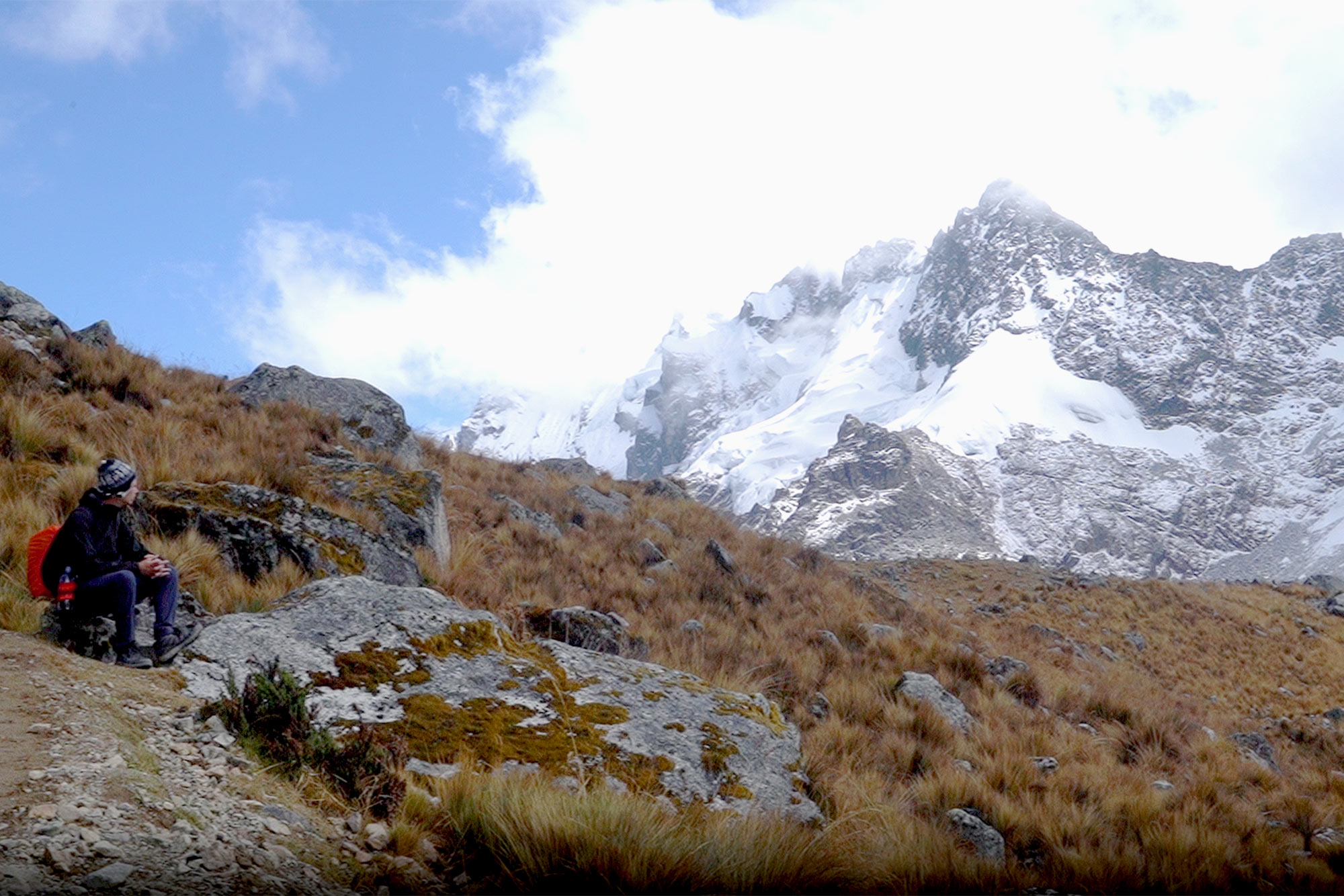
Tourist observing the Salkantay snow-capped mountain
Hydroelectric route: the budget-friendly alternative to reach Machu Picchu on foot
- The Hydroelectric alternative route is the cheapest way to reach Machu Picchu. It combines bus travel and hiking toward the eastern or Amazonian side of the town of Aguas Calientes.
- The bus trip from Cusco to Hidroeléctrica can be done independently, but the best option is to hire a tourist transport agency.
- The cost of the trip is approximately 15 USD (30 USD round trip). The route departs from Cusco toward the town of Santa Teresa (about 6 hours). After that, there is a short transfer to the Hidroeléctrica station, where the hike begins.
- The walk from Hidroeléctrica covers approximately 10 kilometers along flat paths surrounded by vegetation and running parallel to the Vilcanota River.
- This stretch takes about two hours and ends in the town of Aguas Calientes (Machu Picchu Pueblo). The Hydroelectric route is an adventurous and low-cost alternative to travel to Machu Picchu.
- After arriving in Aguas Calientes, due to the tiring journey, travelers usually stay overnight and visit the Inca city the following day.
- The Hydroelectric route is the cheapest way to reach Machu Picchu, as it avoids the cost of the train. The challenging part is that it involves a longer and more exhausting journey, so staying overnight in Aguas Calientes or Santa Teresa is recommended.
- Additionally, you can extend your trip along this route to visit the famous Cocalmayo hot springs, located in Santa Teresa.
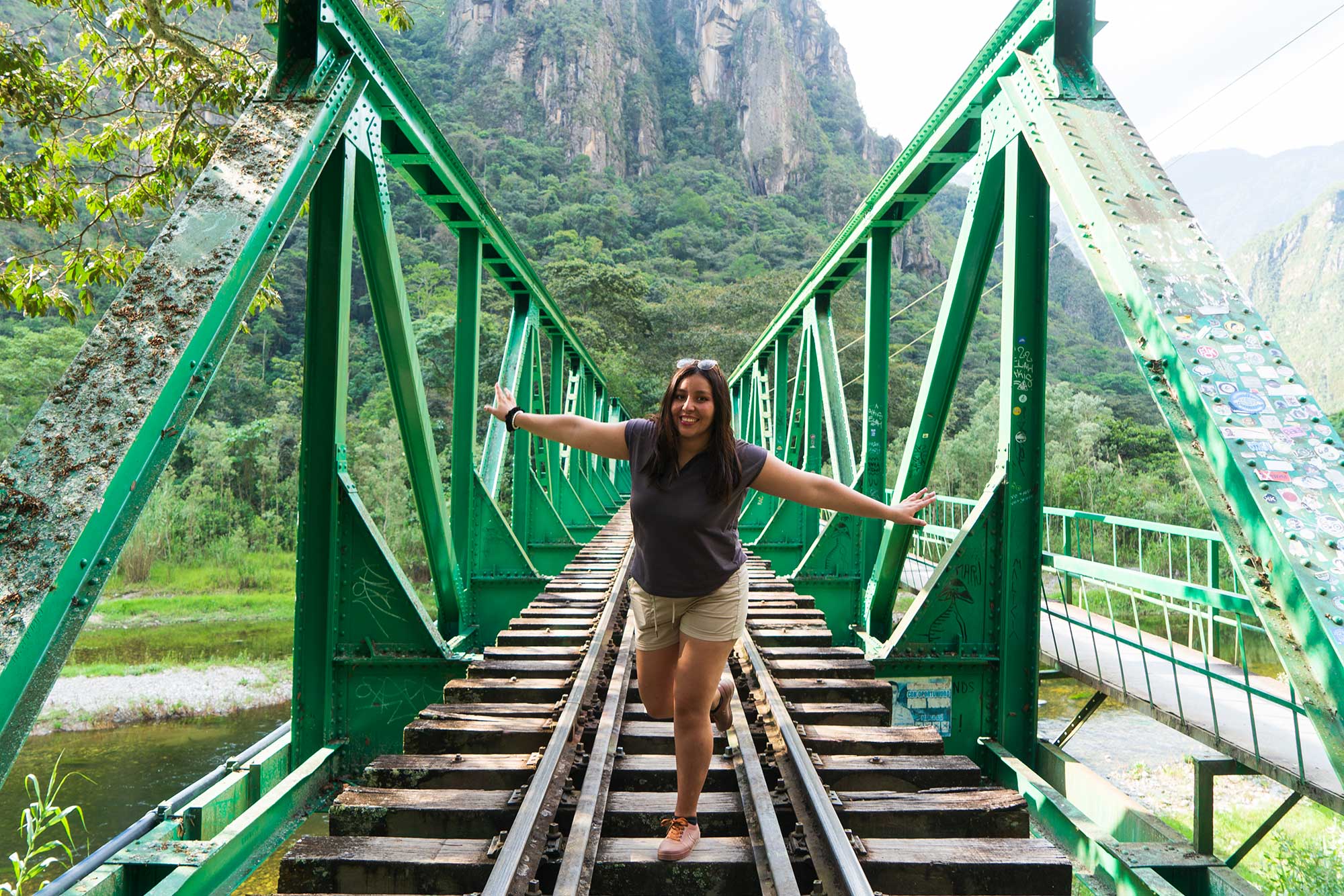
Path to Aguas Calientes from Hidroeléctrica
Hike from Aguas Calientes to Machu Picchu
- Aguas Calientes is also known as Machu Picchu Pueblo, as it is located just 10 kilometers from the Inca citadel. This town serves as the main tourist base for services needed to visit Machu Picchu.
- The only access routes to reach Aguas Calientes are the train line through the Sacred Valley and the hiking route from the Hidroeléctrica station.
- From this town, the road called Hiram Bingham leads to the entrance of the Machu Picchu archaeological site. This route climbs the mountain slopes for about 10 kilometers.
- Most visitors prefer to take a bus for this final section. Tickets cost around 12 USD for foreign tourists (24 USD round trip).
- The other option is to do it on foot. This hike is short but demanding. Instead of following the road, it cuts through hundreds of stone steps to reach Machu Picchu. The route is about 8 kilometers and takes a little over 2 hours depending on fitness level. Many visitors prefer to do this hike on the way down to Aguas Calientes.
- The hike is free for everyone and can be done from 5:00 a.m., allowing visitors to enjoy the natural surroundings of the wonder of the world.
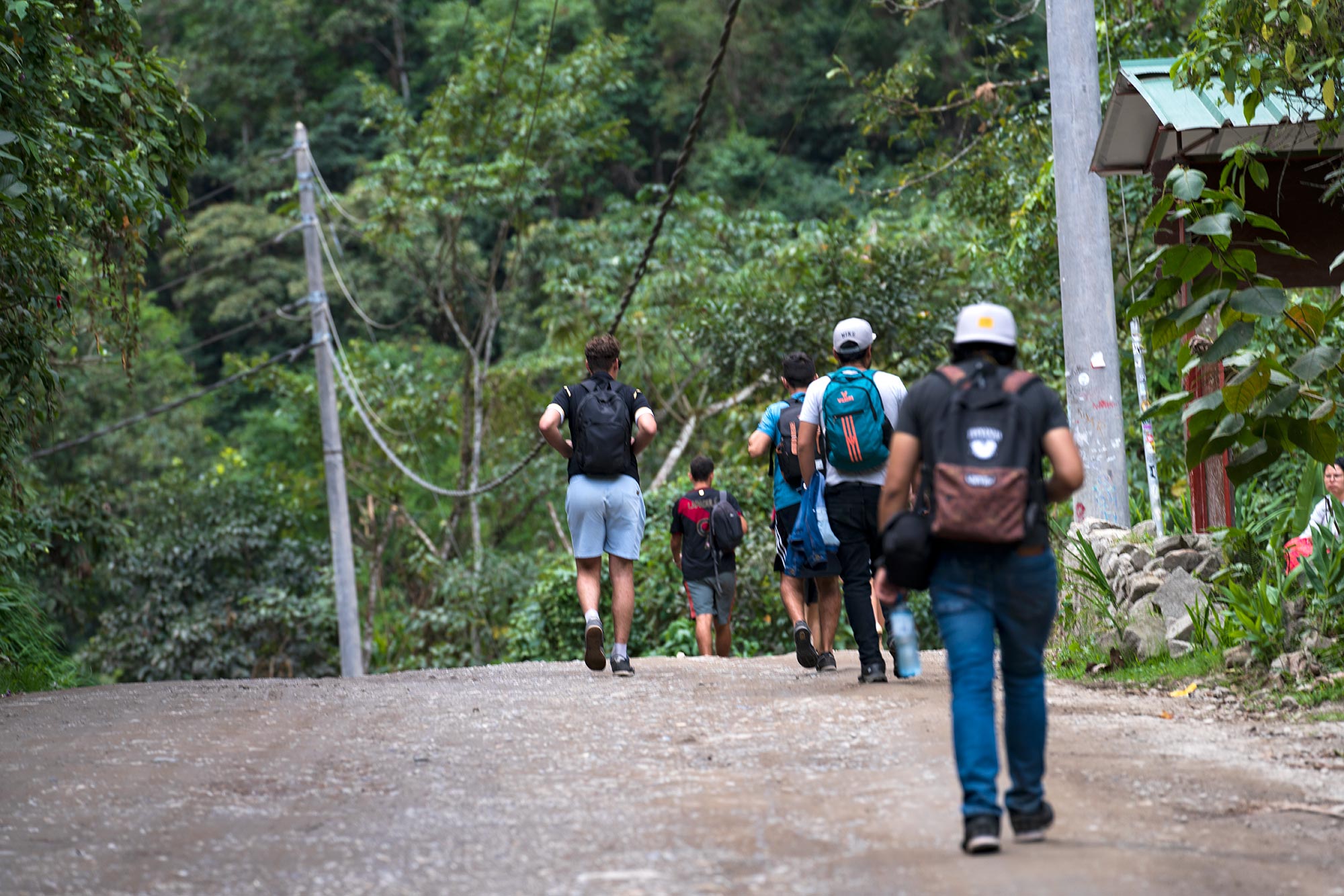
Route to Machu Picchu from the town of Aguas Calientes
Other trekking routes to Machu Picchu
- 2-day Inca Trail – This adventure is a shorter version of the classic 4-day Inca Trail. It covers just 13 kilometers from the starting point at kilometer 104, and also passes through notable archaeological sites such as Chachabamba and Wiñay Wayna. Entry to Machu Picchu is through the Inti Punku gate, just like the classic version.
- Lares Trek – This trekking alternative crosses Andean communities, high-altitude landscapes, and includes a visit to the Lares hot springs. The route is approximately 37 kilometers (4 days and 3 nights). The final stretch is done by train from Ollantaytambo to Aguas Calientes. It is famous for the cultural experiences along the way, offering deeper insight into Andean culture and traditions.
- Inca Jungle – This Machu Picchu route is one of the most complete, combining adventure sports along the way. Activities include cycling, rafting, ziplining, and trekking. It also includes a visit to the Cocalmayo hot springs. The total route covers approximately 50 kilometers. On the penultimate day, travelers arrive in Aguas Calientes via the Hydroelectric route. After spending the night, the final day is dedicated to visiting the Inca citadel.
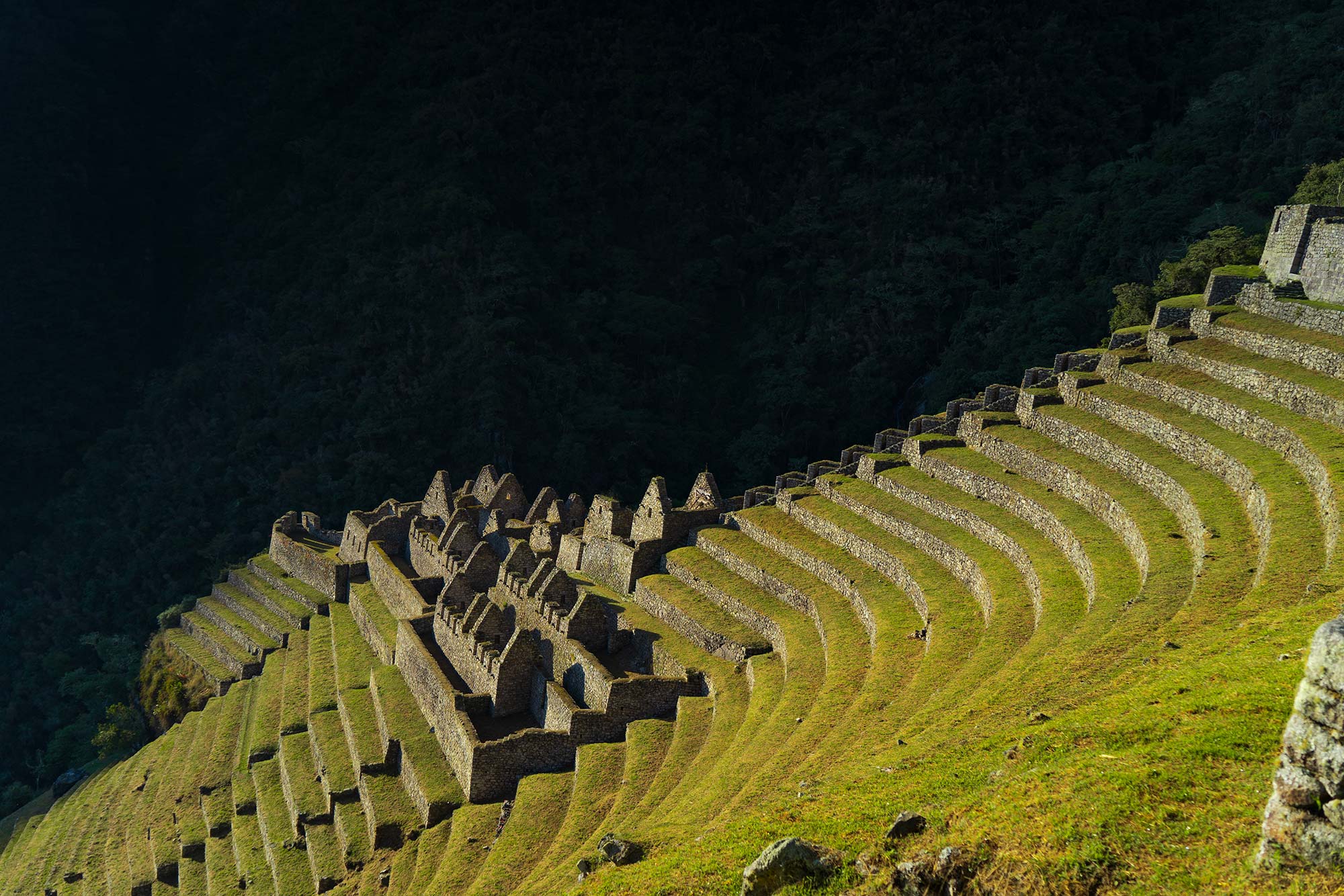
Wiñaywayna archaeological site – Inca Trail
Questions and answers
1) How do you get to Machu Picchu on foot?
There are several ways to reach Machu Picchu on foot: via the Inca Trail, the alternative Hydroelectric route, as well as the final hike from the town of Aguas Calientes.
2) How many kilometers is the 4-day Inca Trail?
The 4-day Inca Trail covers approximately 40 kilometers on foot.
3) How many kilometers is the 5-day Salkantay Trek?
The 5-day Salkantay Trek covers approximately 70 kilometers on foot.
4) How many kilometers is it from Cusco to Machu Picchu?
Machu Picchu is located a little over 100 kilometers from the city of Cusco (including the train journey via Ollantaytambo).
5) How many kilometers is it from Aguas Calientes to Machu Picchu?
Machu Picchu is only about 10 kilometers from the town of Aguas Calientes (Machupicchu Pueblo).
6) How many kilometers is it from Hidroeléctrica to Machu Picchu?
The Hidroeléctrica station is 10 kilometers from the town of Aguas Calientes. Therefore, it is about 20 kilometers from Machu Picchu.
7) How do you do the Hydroelectric route to Machu Picchu?
The Hydroelectric route to Machu Picchu is done by hiring tourist transport from Cusco. You can book it online or through a tour agency in Cusco. The average cost is around 30 USD for a round trip.
8) Can I do the Inca Trail on my own?
No. This trekking route is protected by the Peruvian Ministry of Culture. Therefore, only visitors with a special permit arranged through an authorized tour agency can enter.
9) How many kilometers is the 2-day Inca Trail?
The 2-day Inca Trail covers approximately 13 kilometers on foot.
10) How many kilometers is the 4-day Lares Trek?
The 4-day Lares Trek covers approximately 37 kilometers on foot.
Advice from people who have been there
 By: Francis A.
“Great“
“It was an adventure full of landscapes and we even saw some animals along the way. I recommend the Hydroelectric route to Machu Picchu without a doubt, an experience you will never forget.“
By Ticket Machu Picchu – Last updated, June 5, 2026