Machu Picchu, travel information
Machu Picchu, one of the seven wonders of the world, was built around 1450 AD under the orders of the Inca emperor Pachacuti, who designed a citadel to integrate perfectly with nature. After the Spanish invasion in the 16th century, the site was abandoned and remained hidden for centuries until American explorer Hiram Bingham brought it to the world’s attention in 1911. Since then, the Inca citadel has been surrounded by discoveries and mysteries that continue to fascinate travelers from around the world. Discover more about this magnificent place and plan your ideal trip to the Historic Sanctuary of Machu Picchu.
- Why is it so famous?
- Machu Picchu, the emperor’s gem?
- Machu Picchu’s situation in 2026
- Where is Machu Picchu?
- Route map
- Geography
- Flora and fauna
- What does Machu Picchu mean?
- What is the most amazing thing?
- What constructions to see?
- Machu Picchu with a tour guide
- The mountains: Huayna Picchu, Machu Picchu, and Huchuy Picchu
- Circuits in Machu Picchu
- Other destinations to add to your trip
- How to get to Machu Picchu?
- What is the best time to travel?
- Photo gallery
- Some tips for your visit
- Frequently Asked Questions
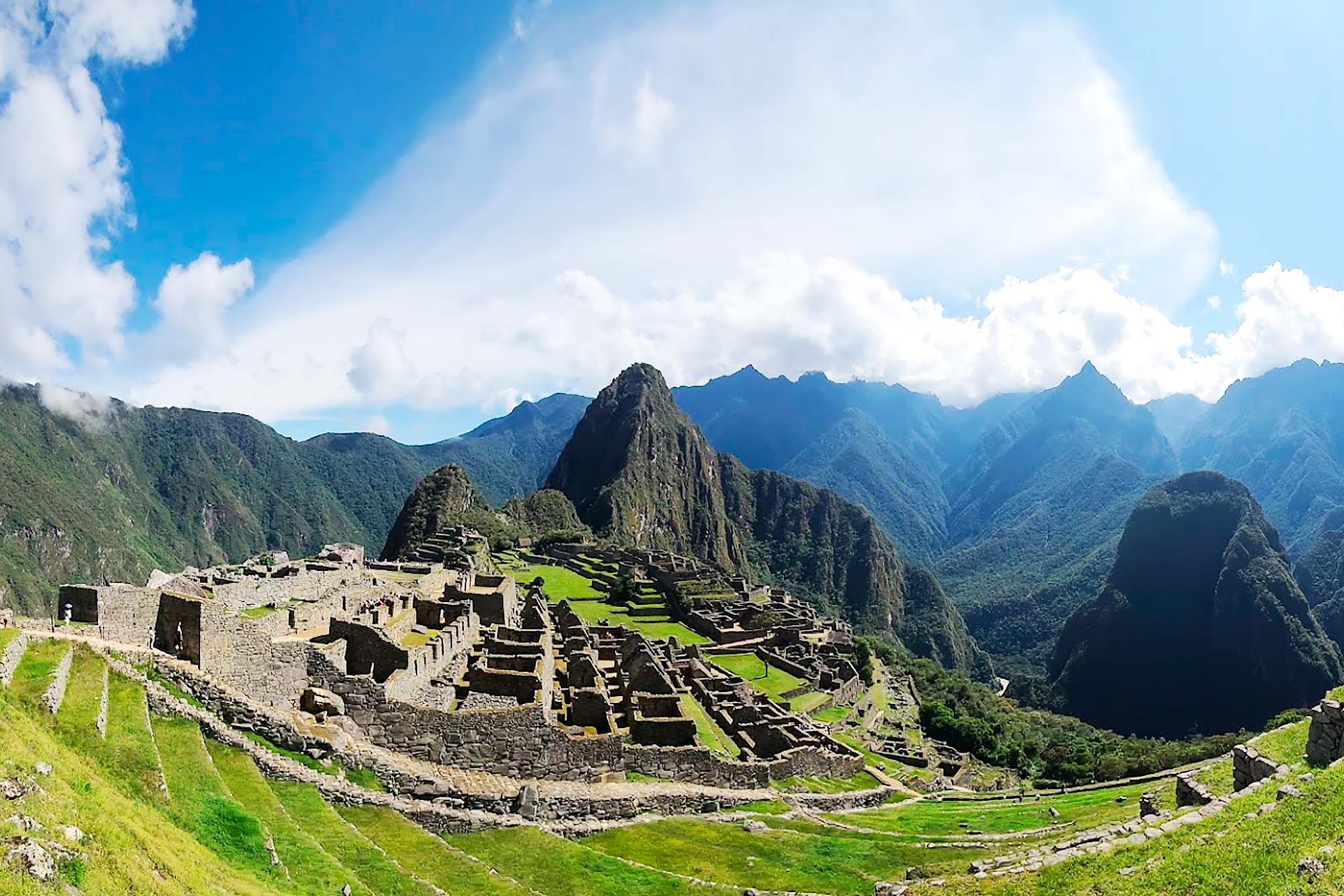
Panoramic photo of Machu Picchu
Why is it so famous?
- The Historic Sanctuary of Machu Picchu served as a residence for the Inca elite. Evidence found indicates that it was built at the end of the 14th century (around 100 years before the arrival of the Spanish to the continent).
- Machu Picchu has many temples and buildings dedicated to the worship of Inca gods, and also features terraces, water channels, plazas, and paths to distant constructions.
- The city was designed to be entirely self-sufficient and comfortably house its inhabitants without any external dependencies.
- It had its own fields of cultivation, textile workshops, servants, livestock enclosures, and water supply throughout the day and the entire site.
The Inca citadel of Machu Picchu is bordered to the north by the Huayna Picchu mountain (the highest peak seen in the classic postcard photos). To the south by the network of trails known as the Inca Trail (a four-day hiking route through historic paths). To the east by the path leading to Aguas Calientes (Machu Picchu town). And to the west by the path leading to the Inca Bridge, which marked the limits of the Historic Sanctuary.
Machu Picchu, the emperor’s gem?
- Machu Picchu was commissioned by the famous Inca emperor Pachacuti (1438 – 1471) to be a resting place and strategic point for the Tahuantinsuyo Empire, hidden among mountains at the edge of the Amazon rainforest.
- The buildings of Machu Picchu were constructed in harmony with the natural surroundings. The Incas adapted the shapes of the mountains to build their city.
- Most of the construction is underground, as they developed a complete irrigation system to cultivate plants of various species on the agricultural terraces spread across the site.
- Various types of crops were found in Machu Picchu, ranging from tubers in the higher areas to hallucinogenic plants from the jungle regions of the empire.
- Like many of the Inca Empire’s important settlements, it was built on terraces connected by steep paths and stone stairways.
Machu Picchu’s situation in 2026
- Machu Picchu in 2026 is once again set to be one of the most visited tourist destinations in the world, offering more immersive experiences for visitors.
- There are a total of ten types of tickets, with different availability depending on the season of your visit.
- During the regular season (November 3 to June 18), six types of tickets will be available. Additionally, the daily availability of tickets will be 4500 (3500 virtual reservations and 1000 in-person purchases at Aguas Calientes).
- In the high season (June 19 to November 2), all ten tickets will be available. During these dates, the daily ticket availability will be 5600 (4600 virtual reservations and 1000 in-person purchases at Aguas Calientes).
- Additionally, each ticket covers one of the three circuits that divide the citadel, offering you diverse experiences and views.
| ENTRIES TO MACHU PICCHU IN 2026 | ||||||
|---|---|---|---|---|---|---|
| Machu Picchu Tickets | Included Circuit | Schedules | Ticket Quantity | Route | Availability | Restrictions |
| Machu Picchu Mountain Route (1A) | Circuit 1 – Machu Picchu Panoramic |
| 350 tickets all year (300 online and 50 in-person) | Hike to Machu Picchu Mountain and tour the panoramic circuit | All year | Suitable for all ages |
| Classic Photo Terrace Route (1B) | Circuit 1 – Machu Picchu Panoramic | Ten schedules, from 6:00 AM to 3:00 PM (in one-hour intervals) | 950 tickets all year (850 online and 100 in-person) | Tour the panoramic circuit and the Classic Terrace | All year | Suitable for all ages |
| Inti Punku Gate Route (1C) | Circuit 1 – Machu Picchu Panoramic |
| 130 tickets during high season (online only) | Hike to Inti Punku Gate and tour the panoramic circuit | Only during high season (June 19 to November 2) | Suitable for all ages |
| Inca Bridge Route (1D) | Circuit 1 – Machu Picchu Panoramic |
| 80 tickets during high season (online only) | Hike to the Inca Bridge and tour the panoramic circuit | Only during high season (June 19 to November 2) | Suitable for ages 12 and up |
| Classic Designed Route (2A) | Circuit 2 – Machu Picchu Classic | Ten schedules, from 6:00 AM to 3:00 PM (in one-hour intervals) | 1400 tickets during regular season (800 online and 600 in-person) 1600 tickets during high season (1000 online and 600 in-person) | Tour the classic circuit (temples and main constructions) | All year | Suitable for all ages |
| Classic Lower Terrace Route (2B) | Circuit 2 – Machu Picchu Classic | Ten schedules, from 6:00 AM to 3:00 PM (in one-hour intervals) | 500 tickets during regular season (400 online and 100 in-person) 800 tickets during high season (700 online and 100 in-person) | Tour the classic circuit and the Lower Terrace | All year | Suitable for all ages |
| Huayna Picchu Mountain Route (3A) | Circuit 3 – Machu Picchu Royalty |
| 400 tickets all year (350 online and 50 in-person) | Hike to Huayna Picchu Mountain and tour the royalty circuit | All year | Suitable for ages 12 and up |
| Royalty Designed Lower Temples Route (3B) | Circuit 3 – Machu Picchu Royalty | Ten schedules, from 6:00 AM to 3:00 PM (in one-hour intervals) | 900 tickets during regular season (800 online and 100 in-person) 1200 tickets during high season (1100 online and 100 in-person) | Tour the royalty circuit (temples and lower sector constructions) | All year | Suitable for all ages |
| Moon Temple or Great Cave Route (3C) | Circuit 3 – Machu Picchu Royalty |
| 50 tickets during high season (online only) | Hike to the Moon Temple and tour the royalty circuit | Only during high season (June 19 to November 2) | Suitable for ages 12 and up |
| Huchuy Picchu Mountain Route (3D) | Circuit 3 – Machu Picchu Royalty |
| 40 tickets during high season (online only) | Hike to Huchuy Picchu Mountain and tour the royalty circuit | Only during high season (June 19 to November 2) | Suitable for ages 12 and up |
Where is Machu Picchu located?
- The Historic Sanctuary of Machu Picchu is located in the district of the same name, in the Urubamba province, Cusco department, in southern Peru (South America).
- Geographically, Machu Picchu is located at 2,438 meters above sea level, between the Andes Mountains and the edge of the Amazon rainforest.
- There are 3 mountains surrounding the Inca wonder: Machu Picchu, Huayna Picchu, and Putucusi. These peaks belong to the ‘Vilcabamba Batholith.’
- Due to its location on top of an inaccessible mountain, Machu Picchu was unknown to the Spanish invaders. Only the nearby inhabitants knew about this site, but it was explorer Hiram Bingham who brought Machu Picchu to the world in 1911.
- The Machu Picchu Mountain is the highest in the area (3,082 meters above sea level), and it is also the reason why the Inca citadel was named after it.
Map to Get to Machu Picchu
- By the Ollantaytambo Train Route – The journey starts with a car ride from the city of Cusco to the town of Ollantaytambo in the Sacred Valley of the Incas (almost 2 hours). Then, you take a train that will take you to the town of Aguas Calientes (another 2 hours). Finally, you take a bus to Machu Picchu (30 minutes).
- By the Santa Teresa (Hydroelectric) Route – The route begins in the city of Cusco with a bus ride to the ‘Hydroelectric’ train station, passing through the towns of Santa María and Santa Teresa in the jungle of Cusco (almost 5 hours). Then, you must hike for about 2 hours to the town of Aguas Calientes. Finally, take the bus to Machu Picchu (30 minutes). This route is recommended for a 2-day visit.
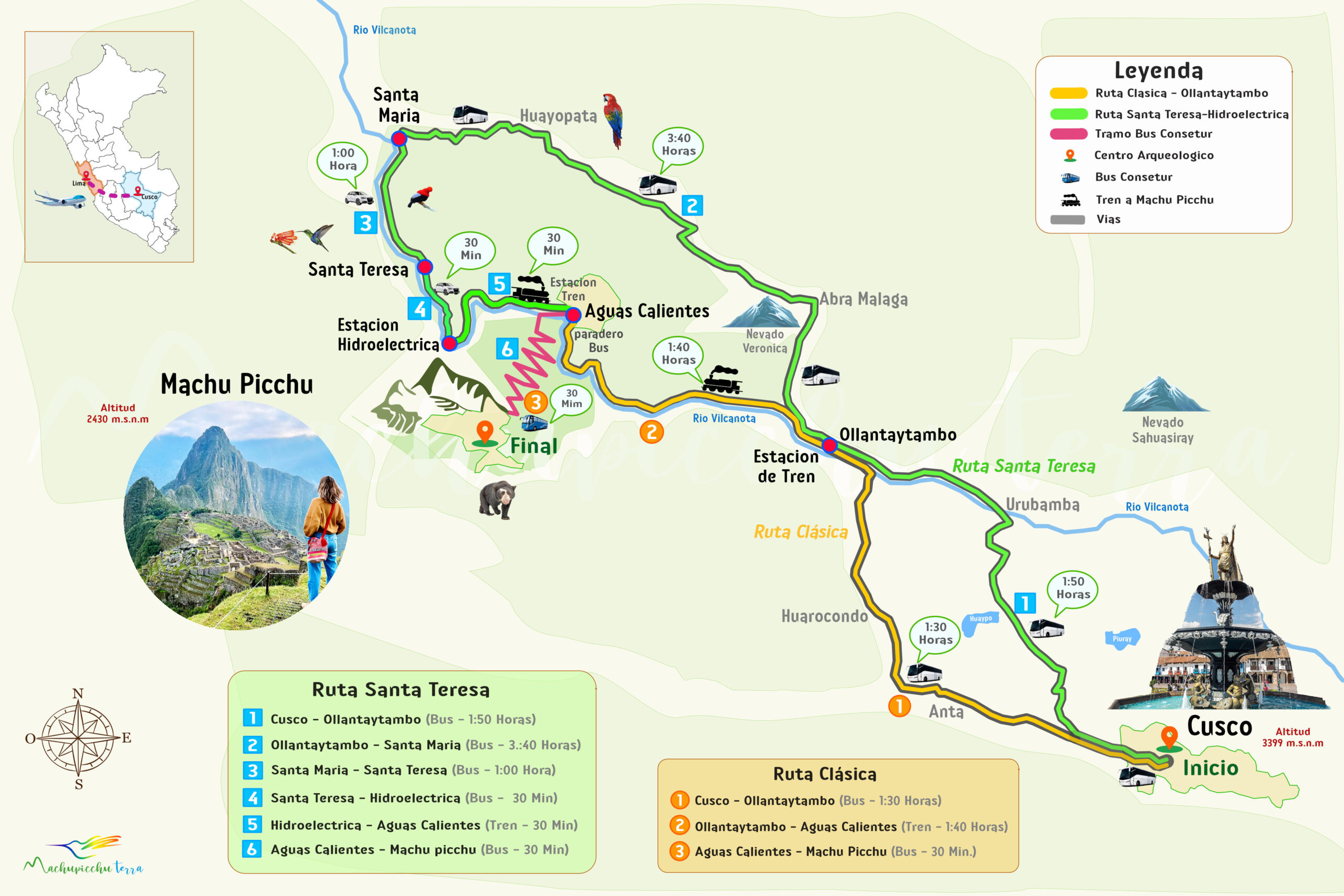
Routes to reach Machu Picchu
The Inca Trail Route
The Inca Trail adventure is an alternative route to reach the Machu Picchu Sanctuary. This hiking route is one of the most popular treks in the world, passing through historic paths along with archaeological sites and the vast biodiversity of the Cusco rainforest. Nights are spent camping under the stars. On the fourth day, you arrive at the Inca citadel through the Inti Punku entrance. If you want to experience this adventure, you must book it at least 4 or 5 months in advance. Remember that you can also take the shorter version of this hike, which lasts two days.
Geography
- The geography of the area where Machu Picchu is located is characterized by tropical flora, rivers, mountains, and snow-capped peaks belonging to the ‘Vilcabamba Mountain Range,’ with the imposing Salkantay snow-capped peak standing out.
- The area has geological faults that have created an abundance of granite stones (which facilitated the construction of the Inca city).
- The Inca citadel is overlooked by two mountains: Huayna Picchu and Machu Picchu. Currently, both mountains offer the most popular hiking routes. Another nearby mountain is ‘Putucusi,’ just 10 kilometers away, near the town of Aguas Calientes.
Flora and Fauna
- The Machu Picchu territory has a great diversity of animals, with butterflies, birds, and the famous Andean cock-of-the-rock (Peru’s national bird) being some of the most notable species.
- There are also wild animals such as pudús, pumas, deer, howler monkeys, foxes, llamas, vizcachas, and the spectacled bear, which is endangered.
- Among the flora, the more than 300 species of orchids stand out. These flowers are highly appreciated for their beauty and the variety of shapes and colors. There are also many species of ferns, shrubs, bromeliads, queñuas, and more.
What does Machu Picchu mean?
- The word Machu Picchu comes from the Quechua language (the language of the Incas and many Andean regions such as Peru, Bolivia, and Ecuador) and means ‘old mountain.’ This name was arbitrarily chosen by the locals who referred to the highest mountain surrounding the Inca citadel.
- However, according to various studies, the true name of Machu Picchu would be ‘Patallaqta,’ a Quechua word meaning ‘town of the steps.’
- Currently, Machu Picchu is also the name used for the famous town of Aguas Calientes, located at the foot of the Inca wonder. The massive mountain on which the archaeological site is located is also known by that name.
- Likewise, Peruvians have named a famous cocktail ‘Machu Picchu,’ made with pisco (Peru’s signature spirit), and its presentation combines the colors green, yellow, and red.
What’s so amazing about it?
The Historic Sanctuary of Machu Picchu receives over 1.5 million visitors annually. It’s true, the fame of the Inca wonder draws tourists from all over the globe. But, what is so amazing about Machu Picchu that it offers to its visitors?
- The landscapes – Tourists who see Machu Picchu for the first time are amazed by the beautiful landscapes surrounding the archaeological site. The views include mountains, snow-capped peaks, tropical forests, rivers, and a variety of flora and fauna.
- The energy – Although it sounds surprising, many tourists say they feel a special energy during their visit to the Historic Sanctuary. Many of the constructions on the site were dedicated to Inca gods, and many rituals and ceremonies were performed there, which have imbued the place with energetic charges.
- The history – The Incas did not have a writing system. Most of their history was told by Spanish chroniclers who arrived after the conquest. Because of this, much of what is known about this Inca wonder is still surrounded by mystery. To gain a clearer understanding of this enigmatic place, it’s important to hire a tour guide.
- The buildings and temples – The citadel has over 150 stone buildings, including temples, residential areas, and agricultural structures. It also has large terraces, water channels, and iconic structures that reflect the Inca worldview.
What constructions should you see?
Machu Picchu is an impressive Inca citadel that has temples, residences, terraces, stone paths, plazas, and more. Most of these places are included in the three main circuits. To access certain remote buildings, such as the Inti Punku, Temple of the Moon, and Inca Bridge, you need to hike. Discover the most remarkable constructions:
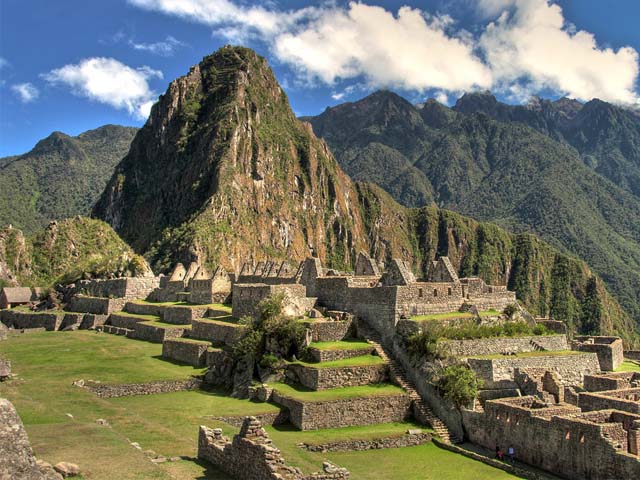
- The Guardian’s House – A famous building where the entire Machu Picchu area was monitored, offering the best panoramic view of the site. This place is popularly known for being where the classic postcard photo of the citadel is taken.
- The Inti Punku Entrance – The famous ‘Sun Gate’ where Incas entered Machu Picchu from Cusco. It’s one of the most distant and stunning viewpoints, and in ancient times, the Incas ceremoniously greeted the first rays of the sun at the solstices through this gate. It consists of several walls and windows, as well as a main entrance used by tourists who do the famous ‘Inca Trail.’ The hike to the top takes approximately 1 hour.
- The Inca Bridge – The impressive Inca Bridge is located on the slopes of a mountain. Made of stone, it functioned as a boundary marker for the Inca empire in the east. In case of threats, the Incas would remove the small wooden part. The hike to this site is optional and takes approximately 30 minutes. The trail passes close to cliffs, but it is entirely safe.
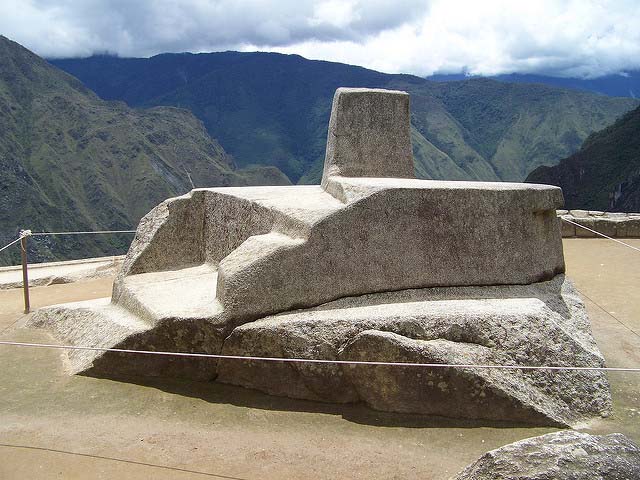
- The Intihuatana – This structure consists of a large carved stone with three levels that directly receive sunlight. It is believed to function as a solar clock, used to determine planting and harvesting seasons. It is believed that those who touch this construction absorb energy from the sun.
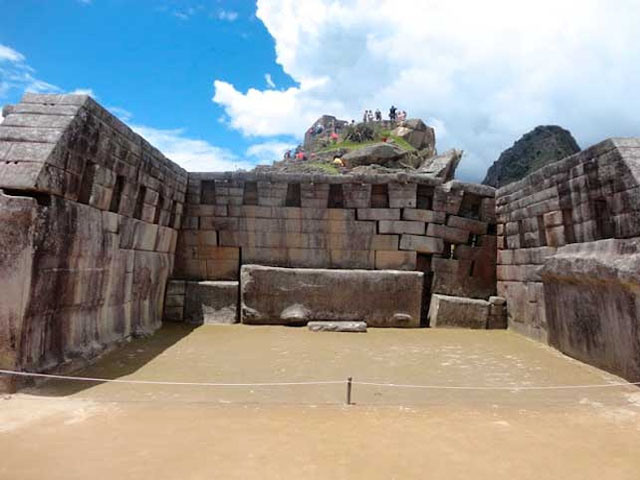
- The Main Temple – The Main Temple is a three-walled structure with a main platform resembling an altar for offerings. It also has windows where decorations were placed. Earthquakes and time have damaged these structures, causing them to be uneven.
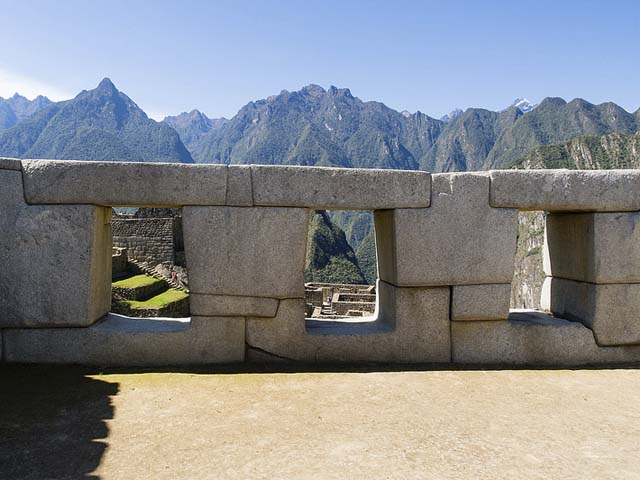
- The Temple of the Three Windows – The Temple of the Three Windows, as the name suggests, is a stone structure with three windows representing the Inca worldview: Hanan Pacha (the celestial world), Kay Pacha (the earthly world), and Uku Pacha (the world of the interior).
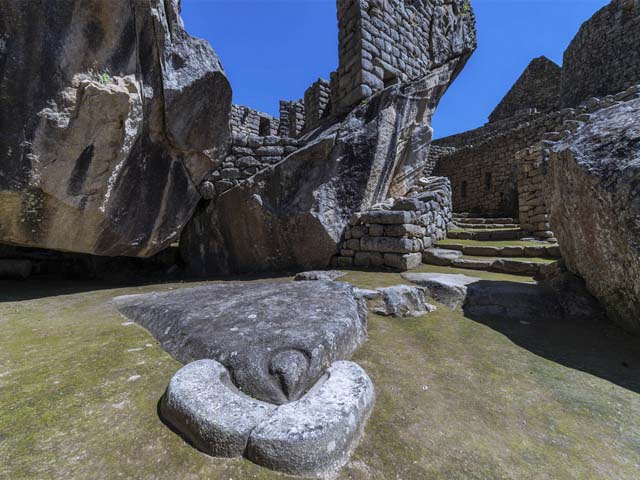
- The Temple of the Condor – This temple is made of an irregularly shaped rock, resembling the wing and beak of a condor; when put together, they visually form the shape of a condor, a sacred bird for the Incas. According to Inca cosmology, the condor communicated the earthly world with the celestial world of the gods.
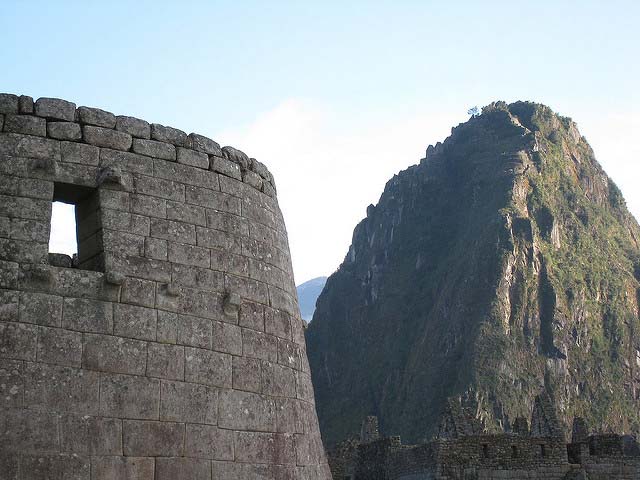
- The Temple of the Sun – This temple was one of the main religious sites in Machu Picchu. It consists of many regularly cut stones that form a circular structure atop a cave. It is located at a great height to receive the sun’s rays inside. Below, there are stairs leading to what is believed to be a royal tomb, based on relics found there during its discovery.
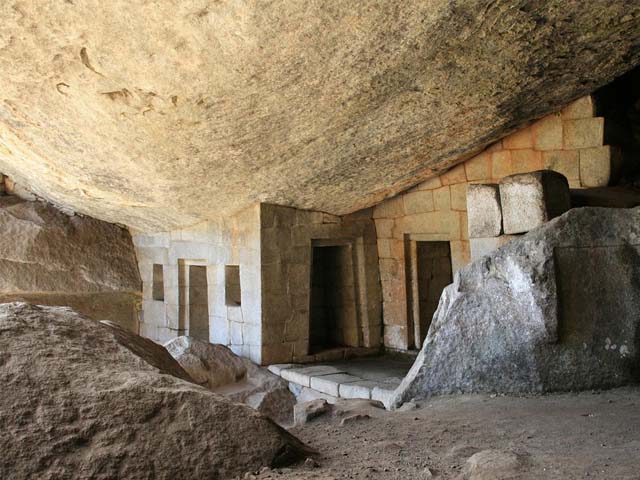
- The Temple of the Moon – Also known as the ‘Great Cave,’ this temple is built inside a cave. It features finely crafted walls and windows, as well as an altar where sacrifices or offerings to the gods and Inca ancestors might have been made. The Temple of the Moon is located on an alternative route of Huayna Picchu, surrounded by abundant nature, making it one of the least visited sites in Machu Picchu.
Machu Picchu with a Guide
Did you know that touring Machu Picchu with a tour guide makes the experience much more special? Watch the video and learn more details. Explore each temple of the Inca city with a professional guide!
The Mountains: Huayna Picchu, Machu Picchu, and Huchuy Picchu
Machu Picchu not only offers mysterious temples, structures, and stone buildings. It also features incredible hikes to its most famous mountains: Huayna Picchu, Machu Picchu, and Huchuy Picchu. These routes were created by the Incas to honor their gods at the highest peaks. The views from the summits are the best in the Inca citadel. Additionally, you can observe abundant flora, fauna, and all the site’s constructions.
- Huayna Picchu Mountain – This peak stands out in the classic postcard photo of Machu Picchu. On its slopes, the Incas built hundreds of stone stairs, some of which are close to cliffs. For this reason, access is only allowed for visitors over the age of 12. This adventure is considered one of the world’s best short hikes, given the vertigo and the landscapes seen along the route. Access is with the ticket for the Huayna Picchu Mountain route (3A). Approximate height 2,693 meters above sea level.
- Machu Picchu Mountain – This imposing mountain is where the Historic Sanctuary is located. Its name was used to name the Inca city, although it is believed that its original name was ‘Patallacta.’ On the mountain, the Incas built ascending paths to the top. From there, you get the highest view of the Inca city, as well as the diverse flora and fauna of the area. Access is for visitors of any age and requires the Machu Picchu Mountain route ticket (1A). Approximate height 3,082 meters above sea level.
- Huchuy Picchu Mountain – On the way to Huayna Picchu, there is a detour that leads to Huchuy Picchu, the smallest summit of the Inca citadel. Unlike Huayna Picchu, the hike to this mountain is easier, taking only 30 minutes to reach the top. The route follows Inca stone stairs. Access is with the Huchuy Picchu Mountain route ticket (3D), which also includes the circuit 3 route of Machu Picchu. Approximate height 2,497 meters above sea level.
The Circuits at Machu Picchu
Depending on the ticket you choose for Machu Picchu, you will be able to experience one of the three available circuits:
Circuit 1 – Panoramic
Ideal for those seeking a visually impactful experience. This circuit covers the upper section of Machu Picchu, allowing you to explore the upper terrace and the Guardian’s House. It offers the most beautiful scenic views, as well as the opportunity to take the classic postcard photo. The difficulty level is minimal, with spaces to rest and enjoy each construction from afar. This circuit requires a ticket for entry to four different areas.
Circuit 2 – Classic Route
This circuit is perfect for those wishing to explore both the agricultural terraces in the middle section and the urban area of Machu Picchu. It features two moderately physically demanding routes, taking you through the main temples and structures that once served as residences, ceremonial spaces, and astronomical observation areas. It is the most balanced option between history, architecture, and physical effort.
Circuit 3 – Royal Route
Designed to explore the most iconic areas linked to Inca nobility, this circuit includes four routes leading to the lower section of Machu Picchu. In its base version, it involves mild physical effort, making it an ideal option for those seeking a more relaxed experience. However, if you choose to extend the tour with a climb to Huayna Picchu, Huchuy Picchu, or the hike to the Great Cave, more physical preparation is required.
Other Destinations to Add to Your Trip
In addition to the adventure routes through the mountains and the archaeological site filled with buildings and history, tourists visiting Machu Picchu can explore other amazing places. For example, one of the region’s most important attractions is the Rainbow Mountain, also known as ‘Vinicunca.’ You can also visit the city of Cusco, the Sacred Valley, or take the Inca Trail to Machu Picchu.
- The City of Cusco – Cusco has countless tourist attractions full of history and nature. Its most famous archaeological sites are Sacsayhuaman and Qoricancha. The city is also known for its squares, museums, churches, forests, and tourism services. A classic City Tour is the best option to visit the most popular attractions.
- The Sacred Valley of the Incas – This geographical area was the most important for the Incas, which is why they built some of their most significant citadels and palaces there, such as Pisac, Ollantaytambo, and Chinchero. The salt mines of Maras and the circular terraces of Moray are also famous in this area. Most tours explore these destinations in one-day adventures.
- The Rainbow Mountain – Vinicunca is the second most popular tourist attraction in Cusco, after Machu Picchu. It is a natural attraction located over 5,200 meters above sea level (17,060 ft). Due to a natural mineralization process, the mountain displays multiple colors that resemble a rainbow. However, on cold days and during heavy rainfall, snow partially covers the area. The journey takes you through one of the most scenic regions of Cusco, the Southern Valley.
- The Inca Trail – According to tourists who have completed this 4-day, 3-night hike, there is no better way to reach Machu Picchu. The total journey covers 39 kilometers, following ancient Inca paths that connected Cusco to the Historic Sanctuary. On the fourth day, you reach Machu Picchu through the Inti Punku entrance. To do this hike, you must book a tour online at least 4 to 5 months in advance.
How to Get to Machu Picchu?
There are three routes to reach the Historic Sanctuary of Machu Picchu, depending on your preferences, budget, and length of stay. Here are the details of each journey:
- The Train Journey from Ollantaytambo – The most common way to reach Machu Picchu is by train, passing through incredible landscapes of the Sacred Valley. On this route, you can see the transition from Andean territory to tropical jungle areas. Most visitors first take a minivan from Cusco to Ollantaytambo (1 hour 30 minutes), then a train to Aguas Calientes (2 hours). From this town, you can take a bus (30 minutes) or walk (2 hours) to the entrance to Machu Picchu.
- The Hydroelectric Adventure – This route is known as the cheapest option to reach Machu Picchu. The journey begins in Cusco and heads toward the town of Santa Teresa (5 hours by car). From there, take a short trip (30 minutes by car) to the Hydroelectric station. Finally, you either walk (2 hours) or take the train (30 minutes) to Aguas Calientes, at the foot of Machu Picchu. This option is recommended for a two-day trip, as it is quite exhausting and long.
- The Inca Trail Hiking Route – If you want to experience an unforgettable adventure to Machu Picchu, the Inca Trail hiking route is the best option. This 4-day journey follows the Inca road network that connected Cusco with the Inca citadel. You will cover 39 kilometers with camping nights, arriving at Machu Picchu on the fourth day through the Inti Punku entrance (the ancient access route used by the Incas). There is also a shorter 2-day alternative route.
What’s the Best Time to Travel?
- Throughout the year, Machu Picchu experiences two very distinct weather seasons: the dry season and the rainy season, each with its own advantages.
- During the dry season (April to October), the weather is better, with sunny days and landscapes that can be fully enjoyed. It’s ideal for hiking routes, though you should book your tickets earlier due to higher visitor numbers.
- If you travel during the rainy season (November to March), you’ll encounter days with a higher chance of rain, though this makes the landscapes even greener. Additionally, you can enjoy more immersive experiences due to fewer visitors.
- Both seasons offer different views of Machu Picchu, but keep in mind that from November 3 to June 18, only six entry slots are available; the rest of the year, ten slots are open.
Machu Picchu
Some Tips for Your Visit
- Machu Picchu is located 2,430 meters above sea level. At this altitude, symptoms of altitude sickness (soroche) are less intense, but it’s still recommended to rest and avoid strenuous activities during your first few days of travel.
- High season tickets will also be available on January 1, from April 2-5, and on December 30 and 31.
- If you can’t get a reserved ticket for Machu Picchu, your last option is to find one of the daily 1,000 tickets available in Aguas Calientes. We recommend traveling the day before your visit to find availability.
- You can plan your trip to Machu Picchu at any time, as the Historic Sanctuary is open every day of the year, from 6:00 AM to 3:00 PM.
- A trip to Machu Picchu is even more memorable with a professional guide. Not only will they provide the historical context of each structure, but they will also ensure your safety and guide you through the correct route.
- There are other hiking routes leading to Machu Picchu, such as the Salkantay Trek, Lares Trek, and Inca Jungle.
- Inside the Inca citadel, the use of umbrellas, strollers, and high-heeled shoes is prohibited. Visitors should bring rain ponchos, baby carriers (backpack style), and sneakers. Drones and trekking poles with metal tips are also not allowed.
- Remember to book your Machu Picchu tickets at least one month in advance, but if you’re looking for popular tickets (such as the Classic Circuit or Huayna Picchu), you should book three months ahead.
- With Ticketmachupicchu, you can reserve your ideal experience in Machu Picchu. Consult with our advisors about all the options available to make your dream trip a reality.
Frequently Asked Questions
1) Where is Machu Picchu located?
Machu Picchu is located in the Cusco region, in the province of Urubamba, in southern Peru. It is situated 2,438 meters above sea level, between the Andes Mountains and the edge of the Amazon jungle.
2) What does the name Machu Picchu mean?
The name Machu Picchu comes from the Quechua language and means “old mountain.” It is the name given to the main mountain surrounding the citadel, although some research suggests the site may have originally been called “Patallaqta.”
3) How can I get to Machu Picchu from Cusco?
The most common way is to travel from Cusco to Ollantaytambo by car, then take the train to Aguas Calientes. From there, you can take a bus for about 30 minutes to the entrance of the Historic Sanctuary of Machu Picchu.
4) What is the most affordable option to get to Machu Picchu?
The cheapest route is the Hydroelectric path. This option combines a car trip to Santa Teresa, followed by a short hike to Aguas Calientes (Machu Picchu Pueblo). It’s recommended if you have more time and want an adventurous experience.
5) What is the best time of year to visit Machu Picchu?
The dry season, from April to October, is highly recommended because it offers sunny days, perfect for hiking and enjoying the landscape in full. However, the rainy season, from November to March, offers greener landscapes and fewer visitors, making for a more peaceful and immersive experience.
6) How many types of tickets are available for Machu Picchu in 2026?
In 2026, there are ten types of tickets to Machu Picchu, though availability depends on the season of your visit. During the regular season (from November 3 to June 18), six tickets are available, while during the high season (from June 18 to November 2), all ten are available.
7) What are the main circuits within Machu Picchu?
Machu Picchu has three main circuits: Circuit 1 (Panoramic Route) covers the upper sector; Circuit 2 (Classic Route) takes you through the middle sector with temples and urban areas; and Circuit 3 (Royal Route) traverses the lower sector.
8) Which circuit should I take if I want the classic photo?
To get the classic photo of Machu Picchu, you need one of the four tickets that include Circuit 1 (Panoramic Route), especially the route to the Upper Terrace, as it provides access to the most famous viewpoint: the Guardian’s House.
9) Is it worth hiring a tour guide to visit Machu Picchu?
Yes, being accompanied by a professional guide is the best way to understand the history, meaning of each temple, and the mysteries surrounding the Inca citadel. A guide will make your visit both safer and more enriching.
10) What days are high-season tickets available?
High-season tickets are available on January 1; from April 2 to 5; from June 19 to November 2; and on December 30 and 31. During these days, all ten types of tickets to Machu Picchu are available.
Advice from people who have been there
 By: Laura G.
“No words“
“I could say that Machu Picchu is amazing, incredible, stunning, mystical, impregnable, mysterious, energetic, but these are just words I write because Machu Picchu left me speechless. You have to see it.“
By Ticket Machu Picchu – Last updated, February 16, 2026