The San Blas neighborhood in Cusco
The San Blas neighborhood is the heart of the city of Cusco. Walking through it inspires every visitor with its history, architecture, art, and color, bringing a mystical energy that takes you back to Incan and colonial times. There are many attractions that make a visit to its streets a must-see stop when traveling to Cusco. Today, we will present to you the best things you can experience while exploring the San Blas neighborhood. Discover its craft workshops, viewpoints, temples, and more attractions.
- What makes the San Blas neighborhood special?
- Map of the San Blas neighborhood
- What to see there?
- Is the San Blas neighborhood in Cusco dangerous?
- What to bring?
- Is there a tour of the San Blas neighborhood?
- Interesting facts about San Blas in Cusco
- San Blas neighborhood image gallery
- Frequently Asked Questions
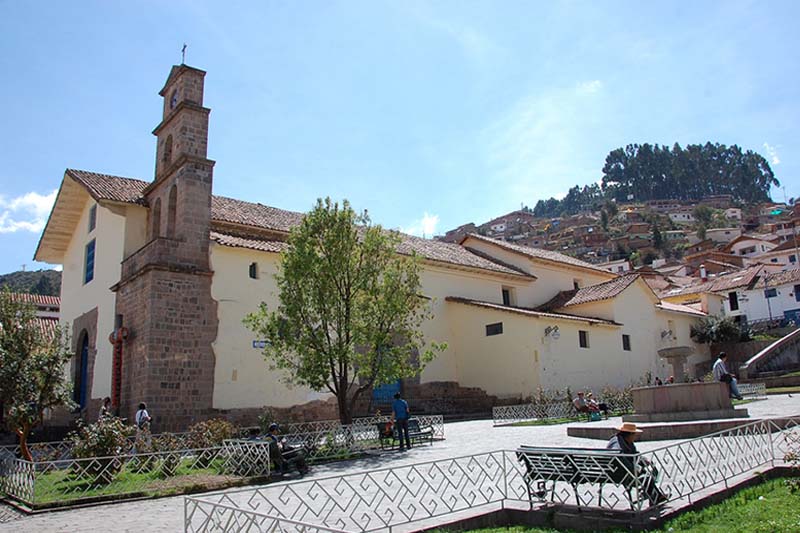
San Blas Church and Plaza
Historical Importance of the San Blas Neighborhood
During the Inca era, the San Blas neighborhood was one of the most important sectors of the Tahuantinsuyo, as it was inhabited by Inca nobility. Its original Quechua name, T’oqokachi, means “Salt Cave.” Today, San Blas is the cultural and artistic epicenter of Cusco, where you’ll find artisan workshops, galleries, and cultural spaces that keep Andean traditions alive.
What makes the San Blas neighborhood special?
- The San Blas neighborhood is famous for its colonial architectural beauty, along with Inca foundations and cobblestone streets.
- The area is home to many artisan workshops and art galleries, earning it the nickname “the neighborhood of artisans,” a reference to the quality and beauty of its works.
- You can explore it on foot, as most of this neighborhood is pedestrian-only. Also, with its bohemian and artistic atmosphere, every street gives off a mystical energy that brightens and inspires every walk.
- Its proximity to the Historic Center, especially to the Plaza de Armas, makes visiting it essential when traveling to Cusco. During your visit, you’ll also discover many businesses and viewpoints where you can enjoy new perspectives of the city.
| MAIN FEATURES OF SAN BLAS | |
|---|---|
| Feature | Description |
| Location | Historic Center of Cusco, near the Plaza de Armas |
| Altitude | Between 3,400 and 3,450 meters above sea level |
| Main Access | Hatun Rumiyoc Street, San Blas Hill |
| Type of Streets | Narrow, cobblestone streets with several stairways |
| Historical Origin | Inca neighborhood, later rebuilt during the colonial era |
| What to see | San Blas Church, San Blas Square, viewpoints, colonial houses, and art galleries |
| What to do | Walk, take photos, visit artisan workshops, cafes, and galleries |
| Architecture | Colonial, with Inca foundations and wooden balconies |
| Atmosphere | Bohemian, artistic, peaceful |
| Best time to visit | Mornings and sunsets |
Map of the San Blas Neighborhood
The San Blas neighborhood is just a few blocks away from the Plaza de Armas in Cusco. The main access is via Hatun Rumiyoc Street (where the famous Stone of the 12 Angles is located), after passing through which you’ll need to climb San Blas Hill to finally reach the small square of the neighborhood.
What to See There?
The San Blas neighborhood offers a wide range of attractions and activities that combine art and history. Some of the most notable are: the Stone of the 12 Angles, the main temple, the San Blas market, art galleries, and historical streets.
Hatun Rumiyoc Street (Stone of the 12 Angles)
Hatun Rumiyoc is a Quechua word that means ‘great stone street’. This street connects the Plaza de Armas in Cusco with the famous Stone of the 12 Angles, a popular polished rock with twelve corners that forms part of the wall of the Inca palace of Sinchi Roca (now the Archbishop’s Palace). As you walk through it, you’ll notice how Inca foundations and walls blend with colonial buildings, giving the city of Cusco an unparalleled beauty and uniqueness.
San Blas Hill
At the end of Hatun Rumiyoc Street is the famous San Blas Hill, a narrow and steep street that houses several galleries with some of the best art collections in the city. This traditional street connects the historic center with the neighborhood and is recognized both for its steep slope and its heritage value.
Hilario Mendívil Museum
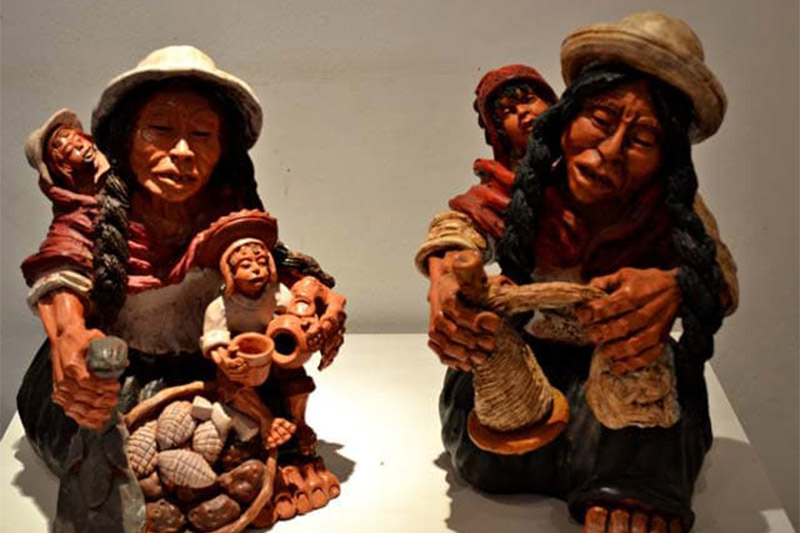
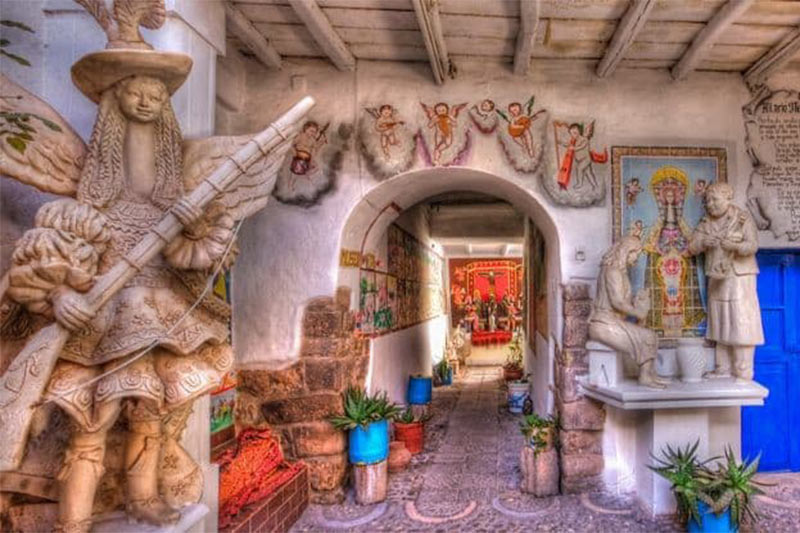
Next to the San Blas Square is the exhibition of the renowned artisan Hilario Mendívil and his family. This Cusco artist was one of the best in traditional imagery. His elongated-neck ceramics, inspired by llamas and alpacas, are unmistakable and recognized worldwide. Although Hilario Mendívil passed away in 1977, his family continues his legacy, keeping his art alive through a museum dedicated to his finest works.
The Mérida House
The Mérida family’s house is located on Carmen Alto Street, next to the San Blas Church. Inside, you can admire the works of Edilberto Mérida, who worked in traditional imagery with a European style. His characteristic works feature disproportionate traits, with large hands and enormous feet, and most reflect a folkloric art style where indigenous people with sorrowful faces stand out. One of his most recognized works is ‘Indigenous Christ’.
Olave Crafts
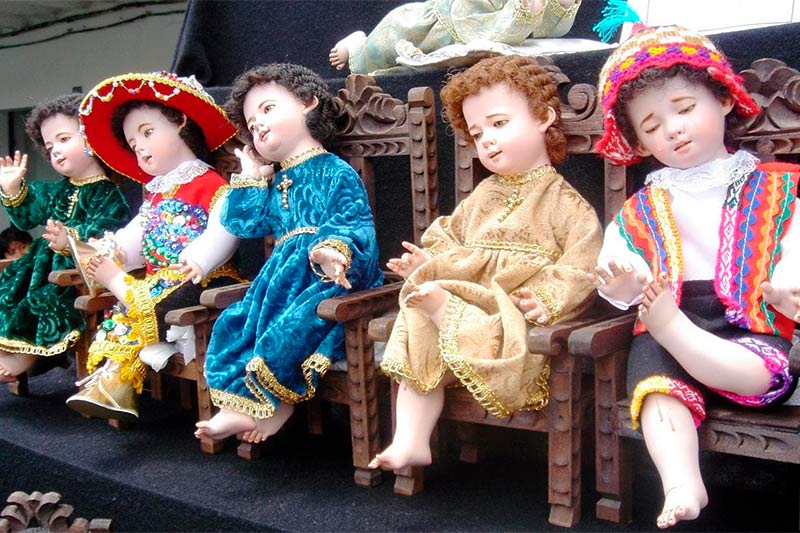
The Cusco artisan Antonio Olave is famous for creating the ‘Niño Manuelito’, a figure that represents the infant Jesus in an Andean version. The tenderness and delicacy of his works have earned him several recognitions, such as the title of ‘Great Master of Peruvian Craftsmanship’ and ‘Living Human Treasure of the Nation’. In the Olave workshop-museum, you can admire his work, which features details like mirror-like palates, bird feather teeth, and natural hair on the heads of the popular ‘Manuelitos’ children figures.
San Blas Temple
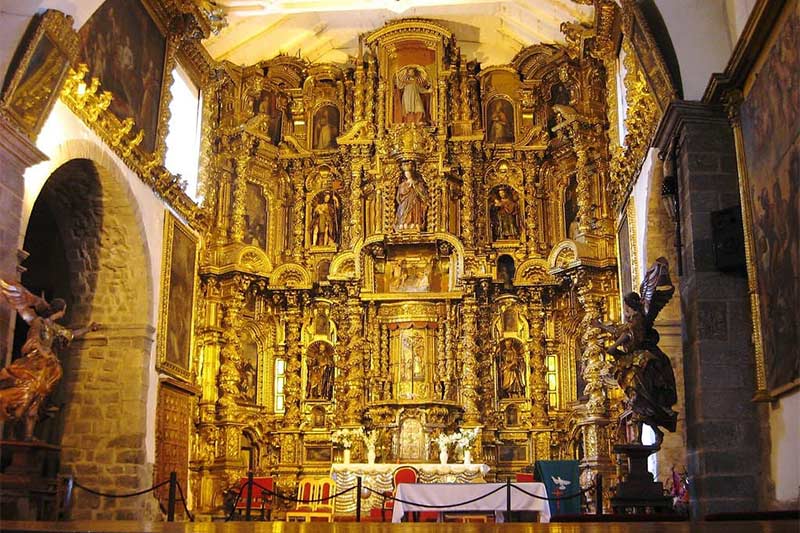
Inside the neighborhood square is the San Blas Temple, one of the most important colonial temples in the city. It was built in 1563 over an Inca temple dedicated to the thunder god Illapa. Inside, you’ll find a pulpit carved from cedar wood, considered a masterpiece of Andean baroque, attributed to the artisan Juan Tomás Tuyro Túpac. Additionally, the temple walls feature beautiful pieces of art that further enrich its historic beauty.
San Blas Market
One of the most popular markets in Cusco is San Blas, known for offering locally sourced foods from the region. It’s an ideal place to have lunch or breakfast, offering a wide variety of food options, including classic menus, vegan choices, coffees, juices, and more. In the market’s square, you’ll also find a resting area surrounded by artisan stalls and services at very affordable prices.
San Blas Viewpoint
From the San Blas Viewpoint, you’ll enjoy one of the best views of the city, with its iconic colonial rooftops of uniform color, surrounding mountains, and the main streets of Cusco. It’s a great place to visit at any time of the day, and it’s also a perfect romantic spot, as it provides a very magical atmosphere for a break during your walk.
Cafes, Restaurants, and Bars
Most of the cafes, restaurants, and bars in San Blas feature terraces where you can enjoy views of Cusco’s historic center. You can savor a wide variety of food, regardless of the time of your visit.
Is the San Blas Neighborhood in Cusco Dangerous?
- No, the San Blas neighborhood, like the Historic Center, is very safe, with police security available 24 hours a day. Tourists can walk through its streets both day and night with complete peace of mind.
What to Bring?
- Camera.
- Cash (preferably).
- Cusco map (or use Google Maps).
- Backpack with water, snacks, fruits, etc.
Is there a tour of the San Blas neighborhood?
- No, tour agencies usually do not offer packages or guided tours of the San Blas neighborhood.
- Exploring it on foot is very simple, as you can get to know the area thoroughly with easy walks through its cobblestone streets (most of which are pedestrian-only).
- However, if a tourist wishes to explore the area with a professional guide, they can request the service from a tourism agency (either online or within the city of Cusco itself).
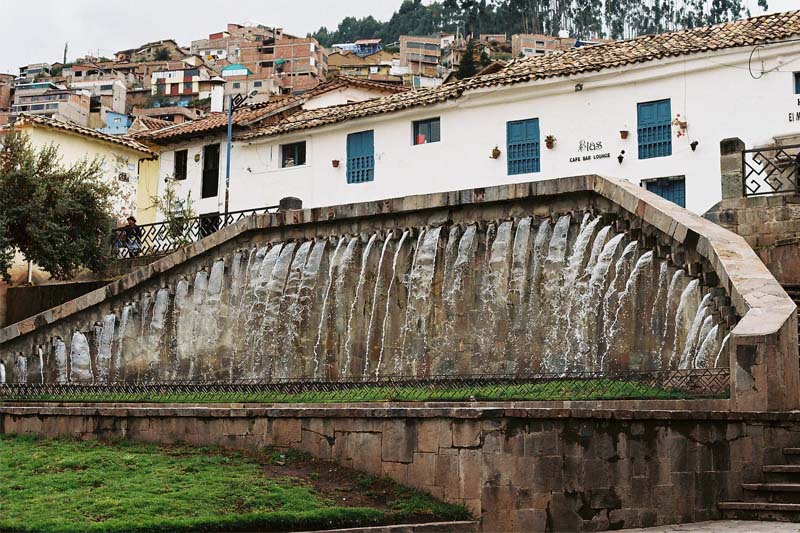
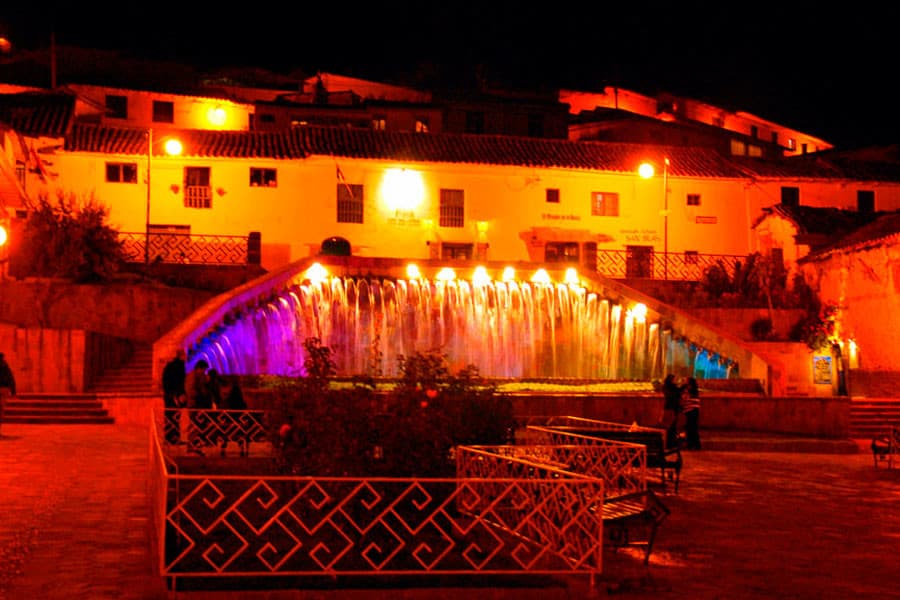
Paccha in San Blas Square
Interesting Facts about San Blas in Cusco
- During the Inca era, the area corresponding to San Blas was called ‘T’oqokachi’, a Quechua word meaning ‘Salt Cave’. After the Spanish invasion, the place was renamed San Blas in honor of the bishop of Sebaste who lived in the 3rd century.
- According to some chroniclers, the mummy of Inca Pachacutec (the emperor who ordered the construction of Machu Picchu) was kept in the ‘T’oqokachi’ temple (now San Blas Church) until the Spanish took and destroyed it.
- During the Republic of Peru, Cusco artisans settled in San Blas. Since then, the place has been famous as the ‘neighborhood of bohemians’.
- Today, the San Blas neighborhood is home to many classical and contemporary art businesses, where you can enjoy its bohemian and warm atmosphere. Its small square is the perfect place to enjoy a moment of silence.
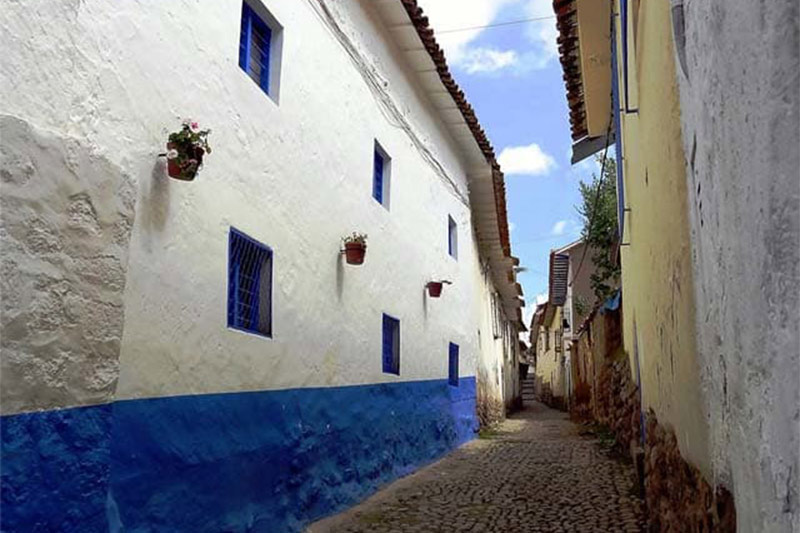
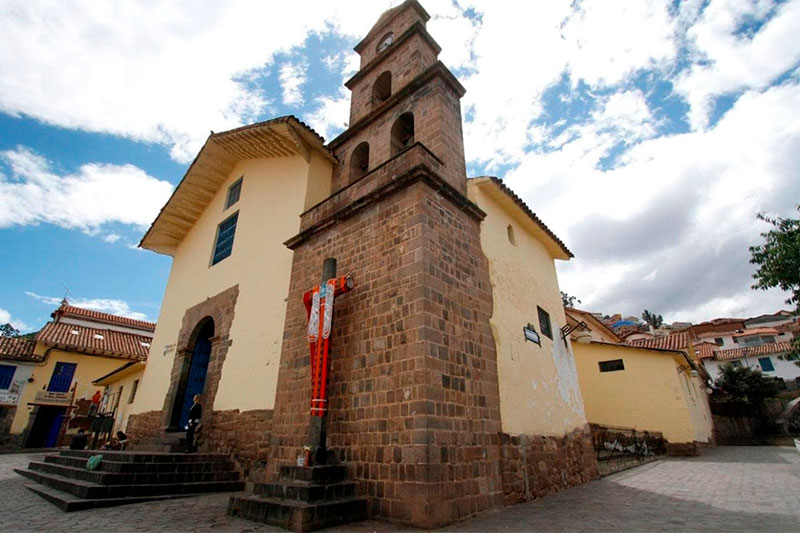
Image Gallery of the San Blas Neighborhood
Images
Frequently Asked Questions
1) Why should I visit the San Blas neighborhood?
San Blas is a must-visit because it concentrates history, art, and architecture all in one place. Walking through it, you’ll see Inca foundations, colonial houses, artisan workshops, and viewpoints that offer new perspectives of the city, all in a peaceful and bohemian atmosphere.
2) Where is the San Blas neighborhood located?
The San Blas neighborhood is located in the Historic Center of Cusco, just a few blocks from the Plaza de Armas. The most common access is via Hatun Rumiyoc Street and then up San Blas Hill.
3) What is the best time to visit San Blas?
The ideal times are in the morning or at sunset. During these hours, the neighborhood is quieter, the lighting is perfect for photography, and you’ll enjoy the viewpoints and cafes more.
4) What attractions should I not miss in San Blas?
Some of the main highlights include: the San Blas Temple, the local market, the viewpoint, art galleries, and artisan museums like Hilario Mendívil’s.
5) Is it worth visiting the San Blas Temple?
Yes, because the temple houses one of the most important baroque pulpits in Andean colonial art, as well as an interesting collection of religious art in a historically rich environment.
6) What kind of crafts can I find in the San Blas neighborhood?
You will find traditional imagery, ceramics, wood carvings, paintings, and unique pieces made by renowned Cusco artisans, many of which use techniques passed down through generations.
7) Do I need to book a tour to explore San Blas?
No, it’s not required, as the neighborhood is easy to explore on your own. However, if you want a deeper explanation of its history and art, you can hire a professional tour guide.
8) Are there dining options in San Blas?
Yes, the San Blas neighborhood offers a wide variety of cafes, restaurants, and bars with both local and international options. The San Blas market is also a great choice for simpler and more affordable meals.
9) Is the San Blas viewpoint free?
Yes, the access is free, though it involves climbing some stairs. From there, you’ll enjoy one of the best panoramic views of Cusco, perfect for resting and taking photos in a tranquil setting.
10) Is San Blas suitable for couples or solo travelers?
It’s ideal for both. Its tranquil, artistic, and romantic atmosphere makes it perfect for couples, while solo travelers can enjoy numerous cultural and historical sites and meet people from all around the world.
Advice from people who have been there
 By: Gianelly V
“One of the most beautiful places in Cusco“
“San Blas is my favorite place in Cusco, without a doubt. Its cobbled streets, bars, cafes, and restaurants mix with museums and art everywhere; the decoration of the businesses, the architecture, and the craftsmanship on sale make for an impressive walk.“
By Ticket Machu Picchu – Last updated, February 19, 2026