Temple of the Condor at Machu Picchu
The Temple of the Condor is one of the most impressive works of Inca architecture, a space where natural rocks were masterfully used in ways that still amaze us today. It is considered one of the most important temples in Machu Picchu and is part of Circuit 3, also known as the Royal Route. Discover more mysteries about this incredible place and book one of the four available tickets to visit it.
- The Temple of the Condor in Machu Picchu
- The Importance of the Andean Condor for the Incas
- Where is the Temple of the Condor?
- Which Ticket Includes the Visit to the Temple of the Condor?
- Recommendations for Your Visit to Machu Picchu
- Frequently Asked Questions

Temple of the Condor – Machu Picchu
The Temple of the Condor in Machu Picchu
- Also known as the 3D temple of Machu Picchu, this place is arranged around a natural cave that makes use of the mountain’s living rock.
- Among the rocks stands a formation that appears to have been adapted and shaped to represent the wings of this enormous bird. In addition, on the ground lies a large triangular-shaped stone carved to resemble the condor’s head and beak, above its characteristic crop.
- At the top of the Temple of the Condors, there is a small enclosure where several llama remains were found, which could indicate that it was a place of sacrifice dedicated to their gods or to the condors themselves, who were considered highly significant spiritual beings in Inca culture.
- Below the temple lies a small cave where, long ago, a mummy was discovered. Some chroniclers suggest that sacrifices were also performed here in honor of the condor, possibly attracting them from the Andes mountains to the edge of the Amazon rainforest, where they feasted.
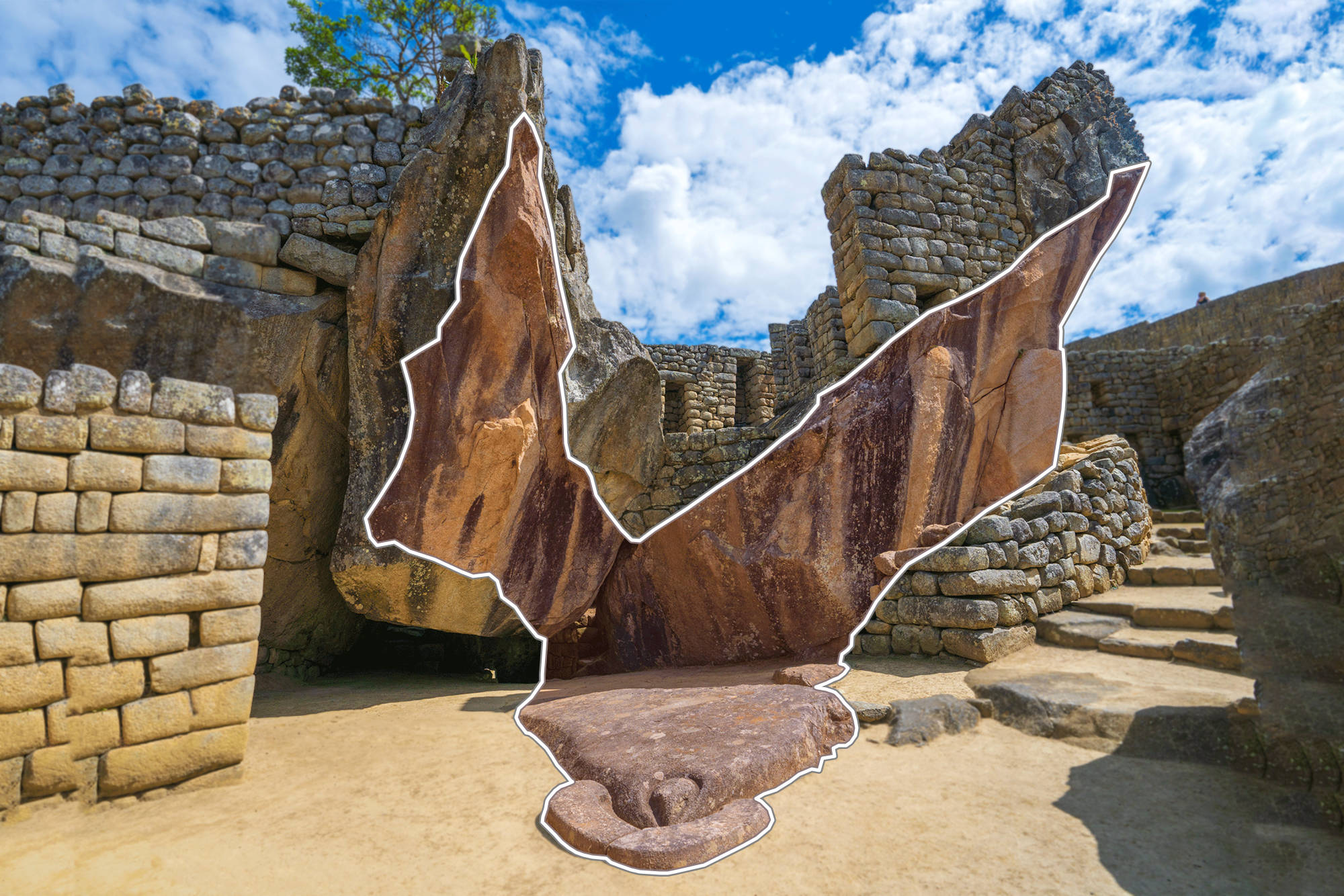
Representation of the Condor – Machu Picchu
The Inca Worldview
The Inca culture believed that everything in nature possessed a soul and that this interconnectedness allowed everything to flow in harmony. Their prosperity, and that of the Tahuantinsuyo, depended directly on climatic and geographic factors such as fertile land, regular rainfall, nearby rivers, and the presence of mountains and valleys—elements that strengthened their agriculture and, with it, their empire. For this reason, they worshipped everything that formed nature, aware that even the smallest animal contributed to collective prosperity. This worldview still endures in Andean culture and among those who understand that only through caring for and respecting nature can we coexist in true harmony.
The Importance of the Andean Condor for the Incas
- The Andean condor is the largest bird in South America (approximately 1.40 meters tall, with a wingspan of up to 4 meters). It is one of the most magnificent birds in the world, inhabits mainly the Andes Mountains, and can live for more than 50 years.
- For Andean culture, and especially for the ancient civilization of the Incas, it was considered a deity, forming part of the sacred trilogy that represented the Inca worldview.
- The upper or celestial world (Hanan Pacha) was represented by the condor, the earthly plane (Kay Pacha) by the puma, and the inner world or realm of rebirth (Ukhu Pacha) by the serpent.
- The condor was also a symbol of power and fertility. The beliefs of the Tahuantinsuyo empire attributed to this bird the ability to gather clouds so that rain would fall and fertilize the land.
| THE SACRED TRILOGY OF THE INCA WORLDVIEW | ||||
|---|---|---|---|---|
| Level of the Worldview | Quechua Name | Representative Animal | Representation | Symbolism |
| Upper world | Hanan Pacha | Condor | The celestial world, the gods, the ancestors. | Sun, moon, stars. |
| Earthly world | Kay Pacha | Puma | Everyday life, action, the search for harmony. | Humans, animals, plants. |
| Inner world | Ukhu Pacha | Serpent | The inner realm, death, and transformation. | Seeds, caves, fertility of the earth. |
Where is the Temple of the Condor?
- The Temple of the Condor is part of Circuit 3 (Royal Route) of Machu Picchu, which goes through the lower part of the Inca citadel, along with other notable constructions (the Inca’s house, agricultural terraces, sacred fountains, royal tomb, and the Temple of the Sun).
- During the tour of Circuit 3, you will find the Temple of the Condor in the urban area, specifically in the Hurin neighborhood. You can access this place through a passage near the main square of Machu Picchu.
- Depending on the ticket you purchase, you may also visit Huayna Picchu Mountain, Huchuy Picchu Mountain, and the Temple of the Moon when visiting the Temple of the Moon.
- You can visit the Temple of the Condor at any time of the year and during any opening hours, since, like the Machu Picchu citadel, entry is allowed from 6:00 a.m. to 5:00 p.m.
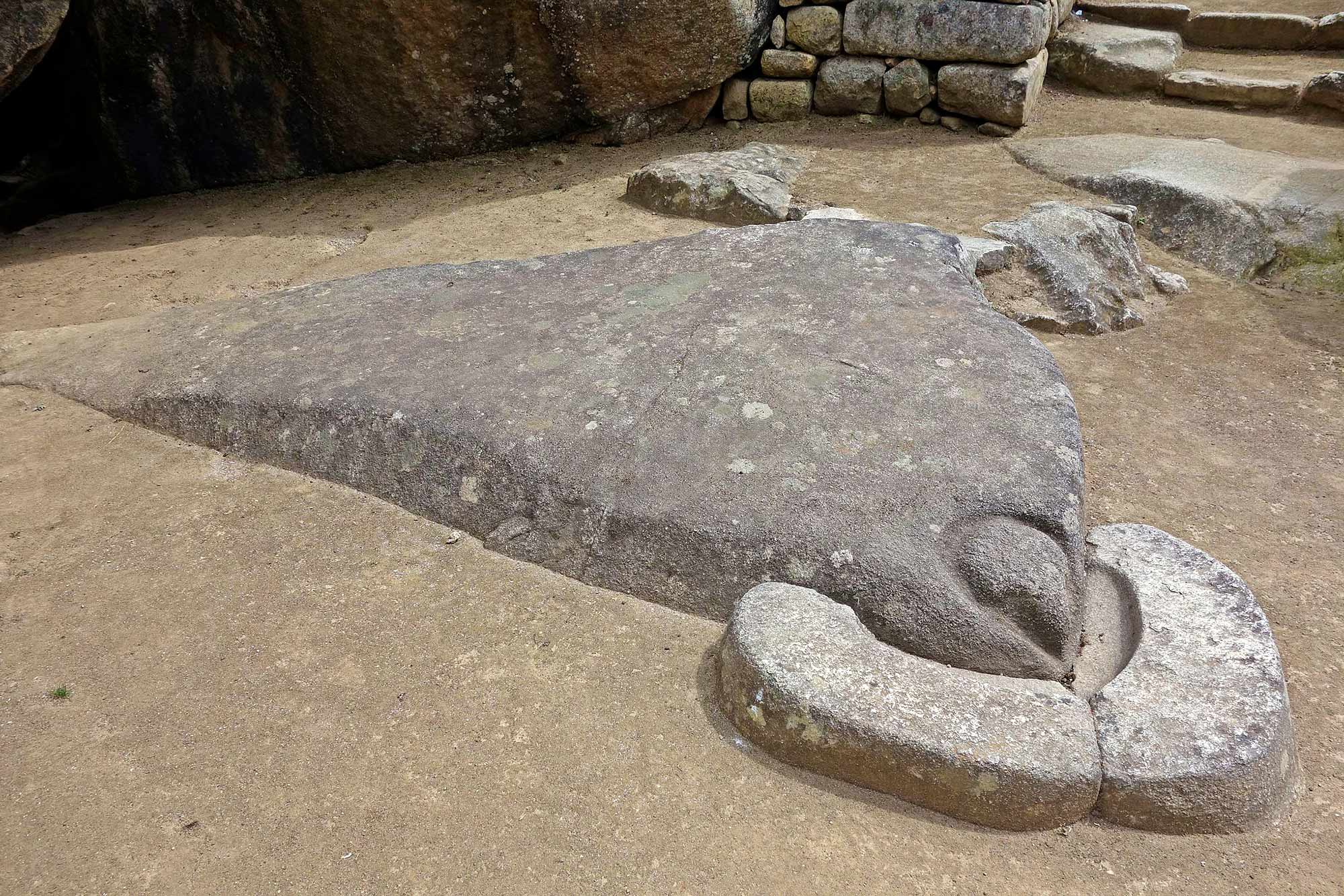
Representation of the Condor’s Head
Which Ticket Includes the Visit to the Temple of the Condor?
- The Inca citadel of Machu Picchu offers 10 types of entrance tickets, each including a specific route and one of the three tour circuits (panoramic route, classic route, and royal route).
- Circuit 3, the Royal Route, is the one that includes the visit to the Temple of the Condor in Machu Picchu. In addition, this circuit includes four entrance tickets, each offering different experiences within the Inca citadel.
| ENTRANCES TO THE TEMPLE OF THE CONDOR | ||||||
|---|---|---|---|---|---|---|
| Entrance | Included Circuit | Tour | Availability | Advance Reservation | Daily Tickets | Schedules |
| Huayna Picchu Mountain Route (3A) | Circuit 3 – Royal Route | Tour through the lower part of the Inca citadel (Temple of the Condor, the Inca’s House, agricultural terraces, sacred fountains, royal tomb, and the Temple of the Sun) plus the hike to Huayna Picchu Mountain | All year | 2 months in advance | 350 (all year) |
|
| Designed Royal Route or Temples of the Lower Area (3B) | Circuit 3 – Royal Route | Tour through the lower part of Machu Picchu (Temple of the Condor, the Inca’s House, agricultural terraces, sacred fountains, royal tomb, and the Temple of the Sun). | All year | 2 months in advance | 600 (regular season) / 650 (high season) |
|
| Great Cavern Route or Temple of the Moon (3C) | Circuit 3 – Royal Route | Tour through the lower part of the Inca citadel (Temple of the Condor, the Inca’s House, agricultural terraces, sacred fountains, royal tomb, and the Temple of the Sun) plus the hike to the Temple of the Moon | High-ticket season (June 19 – November 02) | 1 month in advance | 200 (high season) |
|
| Huchuy Picchu Route (Route 3D) | Circuit 3 – Royal Route | Tour through the lower part of the Inca citadel (Temple of the Condor, the Inca’s House, agricultural terraces, sacred fountains, royal tomb, and the Temple of the Sun) plus the hike to Huchuy Picchu Mountain | High-ticket season (June 19 – November 02) | 2 months in advance | 50 tickets (high season) |
|
Recommendations for Your Trip to Machu Picchu
- Book your Machu Picchu tickets for Circuit 3 (Royal Route) at least 1 to 2 months in advance to visit the Temple of the Condor.
- Before traveling to Machu Picchu, acclimate in the city of Cusco (3,399 meters above sea level) with light activities, so that you avoid suffering from altitude sickness. It is also highly recommended to visit the Sacred Valley during the first days, as it is at a lower altitude (approximately 2,900 meters above sea level).
- Machu Picchu is located at 2,430 meters above sea level, from where you can enjoy the typical biodiversity of the high jungle, along with rivers, mountains, and historic constructions.
- From November to March, there is a higher probability of rain when visiting Machu Picchu, so you should always be prepared with waterproof clothing or a rain poncho. During these months, there are fewer visitors, allowing for a more immersive experience.
- If you visit the historic sanctuary between April and October, you will find more favorable weather for excursions and to fully enjoy each landscape, although this is also the period with the highest number of visitors, so you should make your reservations well in advance.
- Visit Machu Picchu always carrying light clothing, sunglasses, a hat, sunscreen, insect repellent, trekking shoes, a rain poncho, and plenty of water.
- High-season tickets for Circuit 3 (Huchuy Picchu Mountain and Temple of the Moon) are also available on December 30 and 31.
- Exploring the Inca citadel with a professional guide is always the best option, as it allows you to learn the historical context of each construction and follow the correct route without missing any details.
- With Boletomachupicchu you can book your dream experience at the world wonder. Consult with our advisors about all available tour packages to make your trip to Machu Picchu easier.
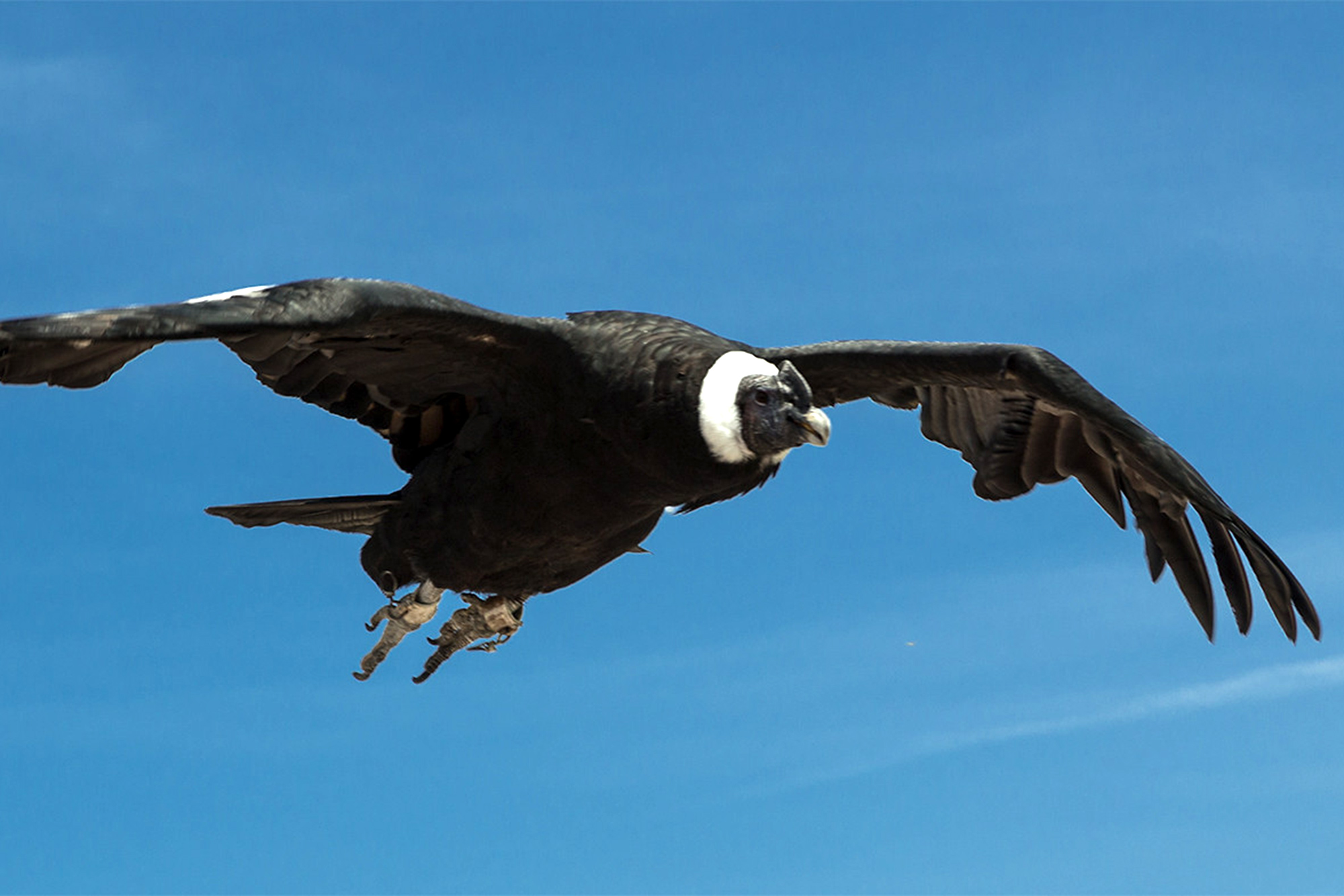
Andean Condor
Frequently Asked Questions
1) How can I visit the Temple of the Condor in Machu Picchu?
To visit the Temple of the Condor, you need to purchase a ticket corresponding to Circuit 3, known as the Royal Route. This tour allows access to the lower part of the citadel, where some of the most important constructions are located (Temple of the Condor, the Inca’s House, agricultural terraces, sacred fountains, royal tomb, and the Temple of the Sun).
2) Which ticket should I buy to visit the Temple of the Condor?
You should choose one of the tickets associated with Circuit 3. Each includes additional experiences, such as “Huayna Picchu Mountain Route (3A)”, “Designed Royal Route (3B)”, “Huchuy Picchu Mountain Route (3C)”, and “Great Cavern or Temple of the Moon Route (3D)”. All of them guarantee access to the Temple of the Condor, so you only need to select the route that best suits the type of experience you want to have.
3) Where is the Temple of the Condor located?
The temple is located in the Hurin neighborhood, one of the urban areas of Machu Picchu. It can be accessed through a passage near the main square, making its location easy to identify during the tour. Additionally, you can always ask the Machu Picchu park rangers for information.
4) How long does it take to complete Circuit 3?
The usual tour can take between two and three hours. This time allows you to visit the Temple of the Condor calmly, observe the details of its design, and complement the experience with the other constructions along the circuit. If your ticket includes an additional hike, such as Huayna Picchu Mountain, you can stay up to 6 hours in the Inca citadel.
5) Is it necessary to book tickets in advance?
Yes, it is essential. Circuit 3 is one of the most requested, especially during high season. Therefore, we recommend booking your ticket one or two months in advance. This ensures availability at your preferred time and date.
6) How important was the condor for Inca culture?
The condor was one of the most important animals within the Inca worldview. It represented the celestial world, associated with the gods and ancestors; moreover, it was part of the sacred trilogy together with the puma and the serpent.
7) Does the temple really have the shape of a condor?
Yes, the temple’s design combines natural rock with intricately carved stone. The upper rocks simulate the bird’s outstretched wings, while the triangular stone on the ground represents its head, beak, and crop. This integration between architecture and nature is one of the most remarkable aspects of the skill of the Inca builders.
8) Can I visit the Temple of the Condor throughout the year?
Yes, access is available every day of the year from 06:00 a.m. to 05:00 p.m. You should only consider that weather conditions vary by season, which may affect visibility, visitor flow, and comfort during your tour.
9) What is the best season to visit Machu Picchu and the Temple of the Condor?
If you are looking for more stable weather, the best period is between April and October. During these months, rainfall is less frequent and ideal for excursions; however, it is also the season with the highest visitor flow. On the other hand, if you prefer a quieter and more immersive experience, the rainy season, from November to March, offers greener landscapes and fewer visitors.
10) Is it necessary to acclimate before traveling to Machu Picchu?
Yes, it is highly recommended. Spending one or two days beforehand in Cusco or the Sacred Valley allows you to gradually adapt to the altitude. This reduces the likelihood of altitude sickness and ensures a more enjoyable experience during your visit to Machu Picchu.
Advice from people who have been there
 By: Dante V.
“Mythology and Architecture“
“This structure is dedicated to the condor; it is a construction that must be viewed from different angles and with a good guide. It is one of the buildings I liked the most in Machu Picchu.“
By Ticket Machu Picchu – Last updated, November 21, 2025