Why visit the Sacred Valley before Machu Picchu?
Travelers looking for experiences rather than simply checking Machu Picchu off their bucket list should land in Cusco and head straight to the Sacred Valley of the Incas, located just an hour away between Cusco and Machu Picchu. This peaceful stretch of land lies among mountains that resemble sleeping giants tucked beneath an emerald-green blanket. But there are many reasons why you should not miss the Sacred Valley when visiting Machu Picchu.
- Why visit the Sacred Valley if you’re going to Machu Picchu?
- What is the Sacred Valley of the Incas?
- How to visit the Sacred Valley?
- What ticket do you need to visit the Sacred Valley?
- What places should you visit in the Sacred Valley?
- Tips for visiting the Sacred Valley
- Frequently asked questions
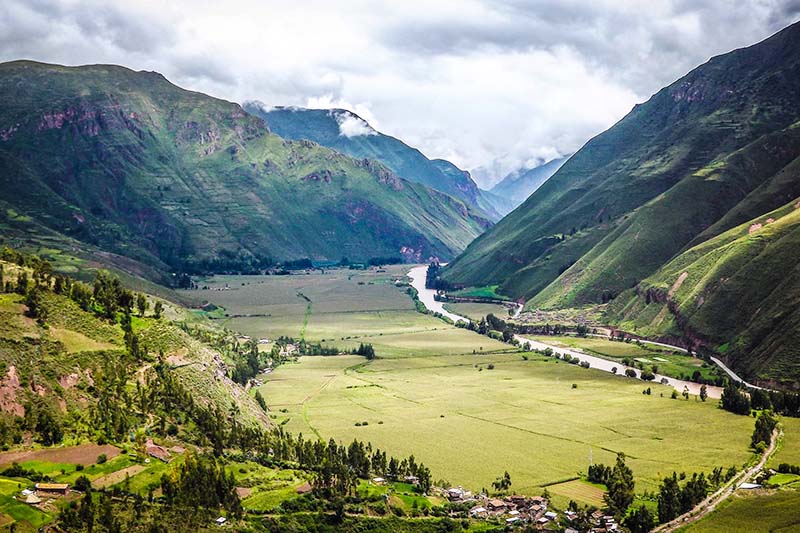
Beautiful view of the Sacred Valley of the Incas
Why visit the Sacred Valley if you’re going to Machu Picchu?
Machu Picchu is one of the wonders of the world and one of the most breathtaking places on the planet, but it is only one of the many sites built by the Incas before the Spanish conquest led by Francisco Pizarro destroyed this magnificent civilization. In less than 300 years, the Incas had become the largest empire in the Western Hemisphere, stretching from southern Colombia to northern Chile and Argentina, and including Ecuador, Peru, and Bolivia. And this vast empire was governed from the Sacred Valley of the Incas, while Cusco served as its capital.
If you visit Machu Picchu without exploring at least the highlights of the Sacred Valley, you will be missing half the story. Machu Picchu is the jewel of the Inca Empire, hidden among the mountains, and the only way to reach it was by following an Inca trail through the Sacred Valley of the Incas.
💡 Travel tip
If you plan to visit Machu Picchu after exploring the Sacred Valley, a great option is to finish your tour in Ollantaytambo. From this town, you can take the train to Aguas Calientes, avoiding the need to return to Cusco and making better use of your time. You will also have the opportunity to visit one of the most important archaeological sites in the Sacred Valley before continuing on to Machu Picchu.
What is the Sacred Valley of the Incas?
The Sacred Valley is the valley formed by the Urubamba (Vilcanota) River. It was the heart of Inca civilization and is now one of South America’s main tourist destinations. It is home to many colonial towns where you can observe the daily lives of people in the Andes, ancient Inca cities that remain almost completely intact, a spiritual center in South America, and some of the best places for adventure sports in Peru. It is also an excellent place to shop for traditional Andean textiles, handicrafts, and other typical Andean items, including gold and silver jewelry. If you do not have enough time to explore the Sacred Valley properly, be sure to visit at least the towns of Pisac and Ollantaytambo.
How to visit the Sacred Valley?
There are several places you should visit in the Sacred Valley of the Incas, each offering a more complete perspective on just how remarkable the Inca civilization was.
If you are traveling independently, you can start in the town of Pisac and visit the villages throughout the Sacred Valley from there. You can take a minivan from Cusco to Pisac on Puputi Street. The trip costs around 10 soles (US$ 3), while getting from one town to another in the valley—such as Urubamba, Ollantaytambo, and Chinchero—costs between 5 and 10 soles (US$ 3). From Urubamba, you can travel to the towns of Maras, Moray, and Yucay. Without a doubt, this is one of the best experiences you can have in Peru. Some people choose to travel from Ollantaytambo to Machu Picchu, but you will need to have booked your Machu Picchu and train tickets in advance.
If you prefer an organized tour, you can hire an agency in Cusco. The tour will take you from Cusco to Pisac, then to Urubamba (including Maras and Moray), followed by Ollantaytambo, and finally to the town of Chinchero before returning to the city of Cusco. You can also choose to continue from Ollantaytambo to Machu Picchu if you wish.
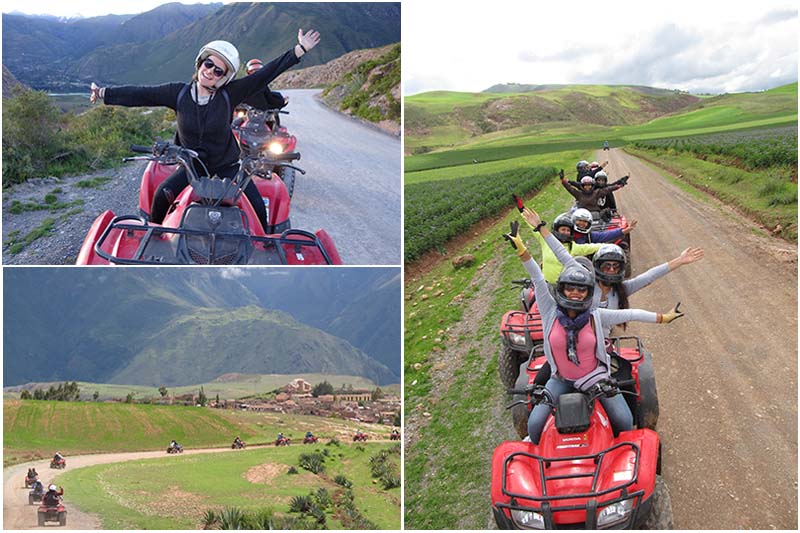
Sacred Valley tour by ATV
What ticket do you need to visit the Sacred Valley?
To visit many of the best places in the Sacred Valley of the Incas, you will need to purchase the Cusco Tourist Ticket. You can buy a partial ticket if you only want to visit the highlights of the valley, or purchase a comprehensive ticket, which includes the main attractions in Cusco, the Sacred Valley, and the South Valley. You will need to purchase this ticket in Cusco. It is a (not very convenient) large A4 paper card featuring photographs of the places it includes. The “comprehensive Cusco Tourist Ticket” costs 130 soles, but just like with Machu Picchu tickets, you can get a discount if you have an ISIC card. These are the places where you can purchase the Cusco Tourist Ticket:
- Main Cosituc Office: Galerías Turísticas, Av. Sol N° 103 (Monday to Friday from 8 am to 5:30 pm and Saturday from 8:30 am to 12:30 pm).
- Branch Office: Calle Garcilaso s/n (Monday to Saturday from 8 am to 5 pm and Sunday from 8 am to 8 pm).
As for Machu Picchu tickets, we recommend purchasing them before arriving in Cusco, as they often sell out weeks in advance—especially if you want the Machu Picchu + Huayna Picchu ticket, which must be booked 4 months in advance. Here you can check the available Machu Picchu tickets.
What places should you visit in the Sacred Valley?
Ollantaytambo
With its cobblestone streets, stone stairways, arches, and plazas, Ollantaytambo is one of the best places to visit, even if you were to overlook some of the most impressive remains of the Inca Empire—which, of course, you should not do.
Ollantaytambo was a fortress and a kind of control center before reaching Machu Picchu. It features temples, ceremonial sites, residences, and terraces. It remains a mystery why the “Temple of the Sun” was never completed. It was once thought that construction was interrupted by the arrival of the Spanish; however, it is now believed that Ollantaytambo may have existed before the Incas arrived. Perhaps this could explain why Ollantaytambo is aligned with other ancient sites around the world, including the pyramids of Egypt, Easter Island in Chile, and other sites belonging to some of the world’s most important ancient cultures. Six kilometers from the Ollantaytambo citadel, you can see the quarry where the stones used to build it were extracted. It is impressive to see how they had to divert the river into nearby channels to extract the stones directly from its riverbed. You should not miss the town of Ollantaytambo, especially since you will need to reach this place to board the trains to Machu Picchu or to begin the Inca Trail.
Pisac
The town of Pisac is famous for its world-renowned market, which operates every day, although the main market takes place on Sundays. Here you can buy all kinds of handicrafts, alpaca clothing, traditional jewelry (gold and silver), and fantastic Peruvian food.
On the slopes above the town of Pisac, you will find extraordinary Inca structures. This ancient Inca town features the finest agricultural terrace system developed by the Incas throughout the Andes; finely crafted buildings with perfectly fitted stones, residences, towers, military fortresses, astronomical observatories, and more. The Inca cemetery stands out as the largest ancient cemetery on the American continent.
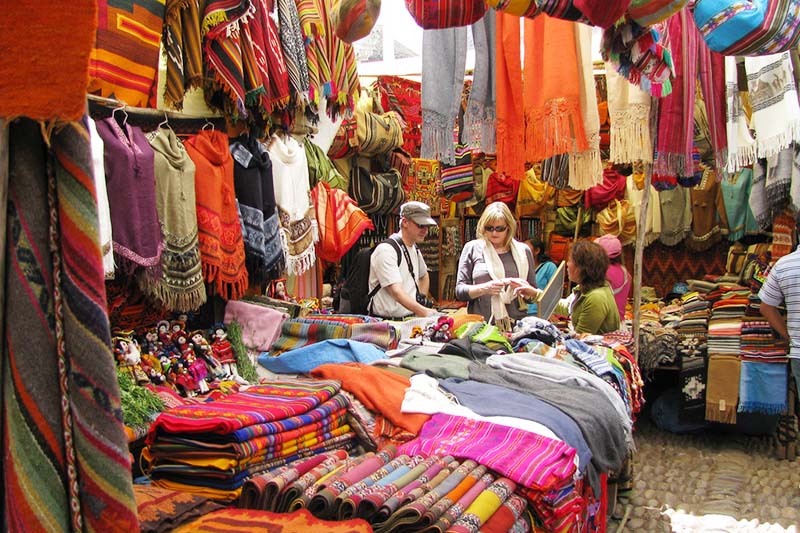
Tourists shopping at the Pisac marketUrubamba
Although it may seem relatively free of tourists and, in fact, there are not many tourists—the “foreigners” you see there are mostly not visitors, but people who decided to leave their home countries and settle in this beautiful town in the Sacred Valley. It seems lost in time, and people go about their daily lives without rushing. This is a must-visit destination for anyone looking for the best handicrafts in the valley and fine pottery inspired by Andean culture. From here, you can visit the Maras salt mines and the agricultural laboratory of Moray.
The Maras Salt Mines
Just a few minutes from the town of Urubamba, you will find the town of Maras, where you can visit the Maras salt mines. Salt has been extracted here since Inca times, making it one of only four places in the world where pink salt can be harvested. Some of the most impressive views of the valley can be seen from this mountain, where you can admire more than 5,000 salt evaporation ponds. The pools are fed by a natural saltwater spring that the Incas diverted to flow through the salt pans. As the water evaporates, the salt crystallizes and is harvested. You can reach the Maras salt mines via an unpaved road from the town of Urubamba. It is a winding route that descends along the mountain slopes. Several stops along the way offer a perspective of the vast size of the Maras salt pans.
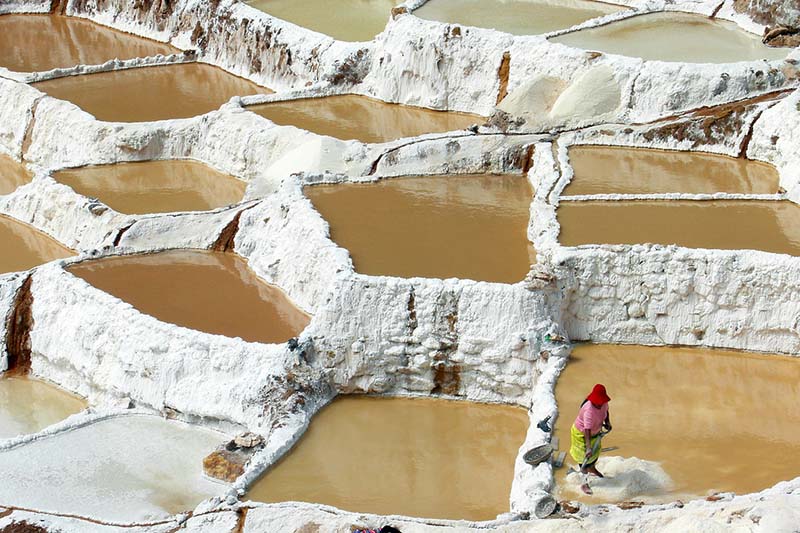
Woman harvesting salt from one of the pools at the Maras salt minesThe Agricultural Laboratory of Moray
You do not need to be interested in agriculture or history to find the symmetrical circular terraces of Moray fascinating. The site is impressive. Located just outside the town of Moray, it initially looks like a giant green amphitheater—a vast bowl formed by layer upon layer of flat terraces. There are actually two bowls at Moray, but one is much larger and better preserved than the other. Stone stairways built into the terrace walls allow you to descend to the lower levels. Each terrace level has its own microclimate, and it is believed that the Incas used the site as a kind of laboratory to experiment with the optimal growing conditions for their crops. Using this knowledge, the Incas could determine which areas were best suited for their various crops. Moray is not part of the usual Sacred Valley tour route, but we recommend adding it to your itinerary. Its proximity to the Maras salt mines makes it possible to visit both sites on the same trip.
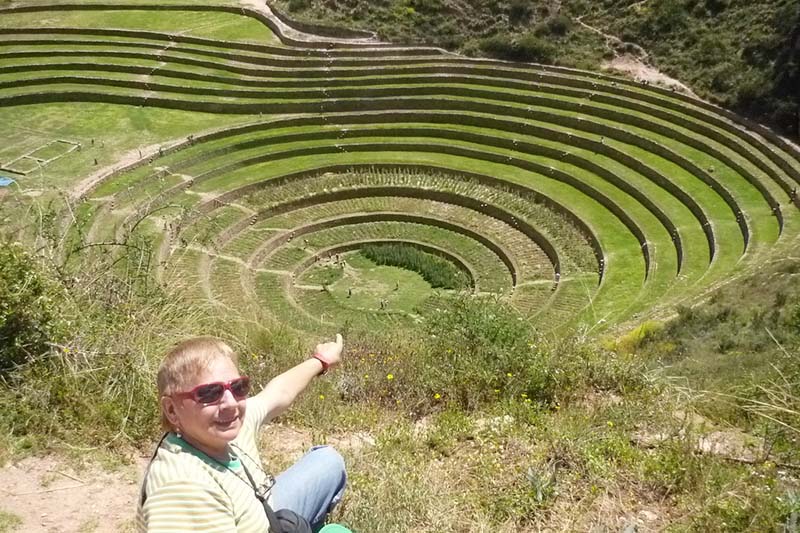
Agricultural research terraces located at MorayChinchero
It is much higher than the other towns in the valley, even higher than the city of Cusco. The town of Chinchero is located at 3,800 meters above sea level. As you might expect, the views of the surrounding mountains from here are spectacular, and you can see some of the valley’s snow-capped peaks. One of the best days to visit Chinchero is Sunday, when you can explore the market. Although it is smaller than the one in Pisac, it offers a more authentic cultural experience, as in addition to finding beautiful handmade products, you can barter with local vendors, and this is likely one of the few places in the world where you can still do so. Be sure to also visit the Plaza de Armas and its 17th-century colonial church.
| MAIN PLACES TO VISIT IN THE SACRED VALLEY | |||
|---|---|---|---|
| Attraction | Main attraction | Recommended time | Ideal for |
| Pisac | Archaeological complex, agricultural terraces, and traditional market. | 1 to 2 hours | History, culture, and handicrafts. |
| Urubamba | Valley landscapes, gastronomy, and natural surroundings. | 1 hour | Gastronomy, relaxation, and nature. |
| Ollantaytambo | Important archaeological complex and Inca-founded town. | 2 to 3 hours | History and connection to Machu Picchu. |
| Maras | Ancient salt mines made up of hundreds of salt ponds. | 1 hour | Landscapes and photography. |
| Moray | Circular terraces used by the Incas for agricultural experimentation. | 1 hour | Archaeology, history, and photography. |
| Chinchero | Andean traditions, textiles, market, and archaeological remains. | 1 to 2 hours | Culture, handicrafts, and traditions. |
Tips for visiting the Sacred Valley
- Book in advance: especially during the high season, it is recommended to book your tour and check the availability of tickets for archaeological sites.
- Choose your itinerary wisely: if you are short on time, prioritize places such as Pisac and Ollantaytambo, or consider a route that also includes Maras and Moray.
- Wear comfortable clothing: bring lightweight clothing, comfortable walking shoes, and a jacket to protect yourself from temperature changes throughout the day.
- Bring sun protection: the sun can be intense in the Sacred Valley, so it is recommended to bring sunscreen, a hat or cap, and sunglasses.
- Stay hydrated: bring a bottle of water during your tour, especially if you plan to walk around the archaeological sites.
- Consider the altitude: although some places in the Sacred Valley are at a lower elevation than Cusco, it is advisable to take your time and avoid unnecessary physical exertion.
- Check what your tour includes: before booking, verify whether the service includes transportation, a guide, entrance tickets, meals, and other services to avoid additional expenses.
- If you are going to Machu Picchu afterward: consider ending your tour in Ollantaytambo, as you can continue from there by train to Aguas Calientes without returning to Cusco.
Frequently asked questions about Machu Picchu tickets
1) Is it worth visiting the Sacred Valley before Machu Picchu?
Yes. Visiting the Sacred Valley before Machu Picchu allows you to explore important archaeological sites, traditional towns, and Andean landscapes. Places such as Pisac and Ollantaytambo also provide a better understanding of Inca history and culture.
2) What places can you visit in the Sacred Valley?
Some of the main attractions in the Sacred Valley include Pisac, Ollantaytambo, Urubamba, Maras, Moray, and Chinchero. How many places you can visit will depend on the time you have available and the route you choose.
3) How much time do you need to visit the Sacred Valley?
To see the main attractions of the Sacred Valley, it is recommended to set aside at least one full day. If you have more time, you can plan a two-day itinerary to explore the sites at a more relaxed pace.
4) Can you visit the Sacred Valley on your own?
Yes, it is possible to visit the Sacred Valley independently using public transportation and local services. However, you will need to organize your schedules, transportation, entrance tickets, and route between the different attractions.
5) Is it better to take a Sacred Valley tour or travel independently?
It depends on your preferences. A tour allows you to make better use of your time and provides organized transportation and a guide, while traveling independently gives you more freedom to decide how long to stay at each place.
6) What does a Sacred Valley tour usually include?
A traditional tour usually includes tourist transportation and a guide, as well as visits to several attractions along the route. Depending on the service you book, it may also include lunch or other services, so it is important to check the itinerary before booking.
7) Do I need the Tourist Ticket to visit the Sacred Valley?
To enter several of the main archaeological sites in the Sacred Valley, you need the corresponding ticket. Before your visit, it is a good idea to check which attractions are included in the ticket you plan to purchase.
8) What is the best place in the Sacred Valley to visit before Machu Picchu?
Ollantaytambo is particularly convenient if you are traveling to Machu Picchu afterward, as you can continue from there to the train station. You can also include Pisac, Maras, or Moray depending on how much time you have available.
9) What should I bring to visit the Sacred Valley?
It is recommended to bring water, sunscreen, a hat or cap, comfortable clothing, and suitable walking shoes. It is also a good idea to bring a lightweight jacket, as weather conditions can change throughout the tour.
10) Can I visit the Sacred Valley and Machu Picchu on the same trip?
Yes. Combining both destinations is one of the best ways to explore the region. A practical option is to visit the Sacred Valley and end your tour in Ollantaytambo, then continue by train to Machu Picchu.
Advice from people who have been there
 By: Laura H
“Impressive ruins“
“I can't put the majesty of the valley into words; you have to experience it for yourself. Did you think you could only see incredible structures in Machu Picchu? Think again. What you can see in many places throughout the valley will amaze you just as much as this wonder.“
By Ticket Machu Picchu – Last updated, August 31, 2026