Qenqo: 8 facts about the mysterious Inca archaeological site
Located at 3,580 meters (11,745 feet) above sea level, Qenqo is one of the most fascinating archaeological complexes in Cusco. It is situated just 2 kilometers from the city and very close to other major Inca sites such as Sacsayhuamán, Tambomachay, and Puca Pucara. During pre-Hispanic times, this enclosure held great ceremonial and religious importance, as demonstrated by the stone structures that still remain standing despite the destruction caused during the Spanish invasion. Researchers believe that Qenqo served as a worship center dedicated to Andean deities such as the sun, the moon, the earth, and the sacred mountains. Even today, the site continues to be surrounded by mystery and symbolism. Discover below the 8 most interesting facts about this remarkable archaeological site in Cusco.
- The ceremonial labyrinth of Qenqo
- The mysterious underground galleries
- Camino Chico and Camino Grande: the sacred Inca routes
- The amphitheater where ceremonies were held
- Blood or chicha? The mystery of the stone channels
- The Intihuatana and its connection to the sun
- The Temple of the Monkeys and its Andean symbolism
- Human sacrifices in Qenqo: myth or reality?
- How to get to the Qenqo archaeological site, opening hours, and tickets
- Frequently asked questions about the Qenqo archaeological site

Qenqo archaeological site in Cusco
Organized tour to the Qenqo archaeological site
Qenqo is part of the classic Cusco City Tour, a half-day experience (5 hours) that visits the city’s main attractions, including the Cathedral, the Qoricancha Temple, and the archaeological sites of Qenqo, Sacsayhuamán, Puca Pucara, and Tambomachay. The tour also includes full transportation and a professional guide.
1) The ceremonial labyrinth of Qenqo
- Qenqo (also spelled Kenko) is a Quechua word (Q’inqu) that means ‘labyrinth.’
- This name refers to the various underground galleries and zigzag-shaped stone channels found throughout the site.
- The distinctive name was given by the Spanish after the conquest. The original Inca name remains unknown.
- Although many of its remains (aqueducts, terraces, enclosures, storehouses, and ritual baths) were destroyed during the invasion period, visitors can still admire the extraordinary stone-carving skills of the Inca civilization.
2) The mysterious underground galleries
- The Qenqo archaeological complex is located on Socorro Hill, on the outskirts and upper area of Cusco city.
- This site covers an area of approximately 3,500 square meters of rocky terrain.
- The rocky geography of the area allowed the Incas to build mysterious underground galleries that continue to amaze visitors today.
- These underground passages lead to several different sectors within Qenqo.
- Like Puca Pucara and Sacsayhuamán, the existence of underground tunnels or ‘chincanas’ held great importance during Inca times.
- It is even believed that the Sacsayhuamán fortress contains a tunnel connected to the Qoricancha (Temple of the Sun).
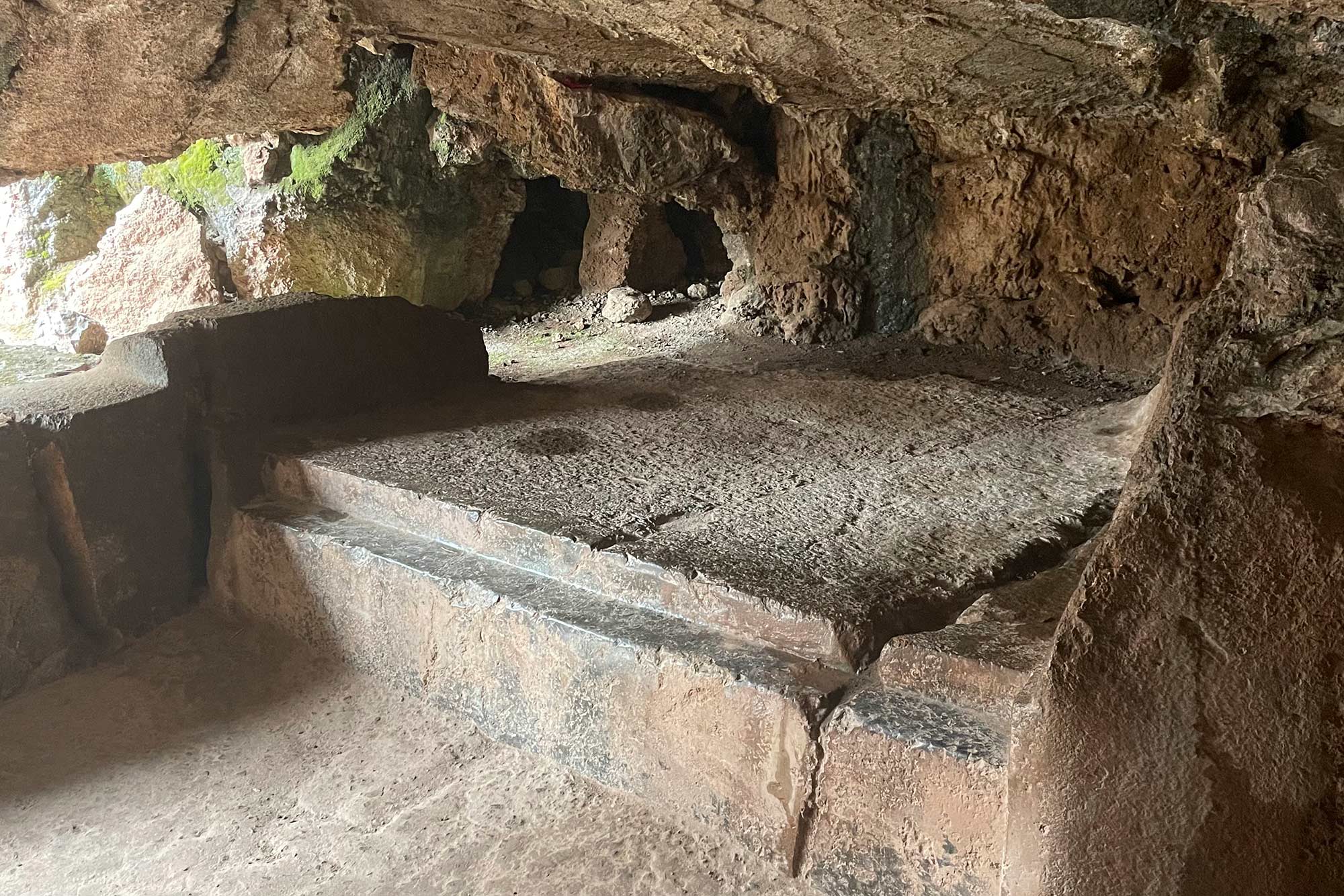
Underground galleries of Qenqo
3) Camino Chico and Camino Grande: the sacred Inca routes
- Qenqo is divided into two important sectors depending on the route leading to it: Camino Chico and Camino Grande.
- The first route crosses a slope of Socorro Hill, while the second is longer, located at the foot of the hill and connecting Sacsayhuamán with Pisac.
- The rocky geography of the site allowed the Incas to create mysterious underground galleries that still impress visitors today.
- Qenqo Grande includes most of the current tourist structures, including the underground galleries.
- Qenqo Chico, on the other hand, is almost completely destroyed, except for a few carved stone walls and parts of the original urban layout.
- In this latter case, admission is free, and it is located next to the Qenqo Forest, a place known for its panoramic views of Cusco city.
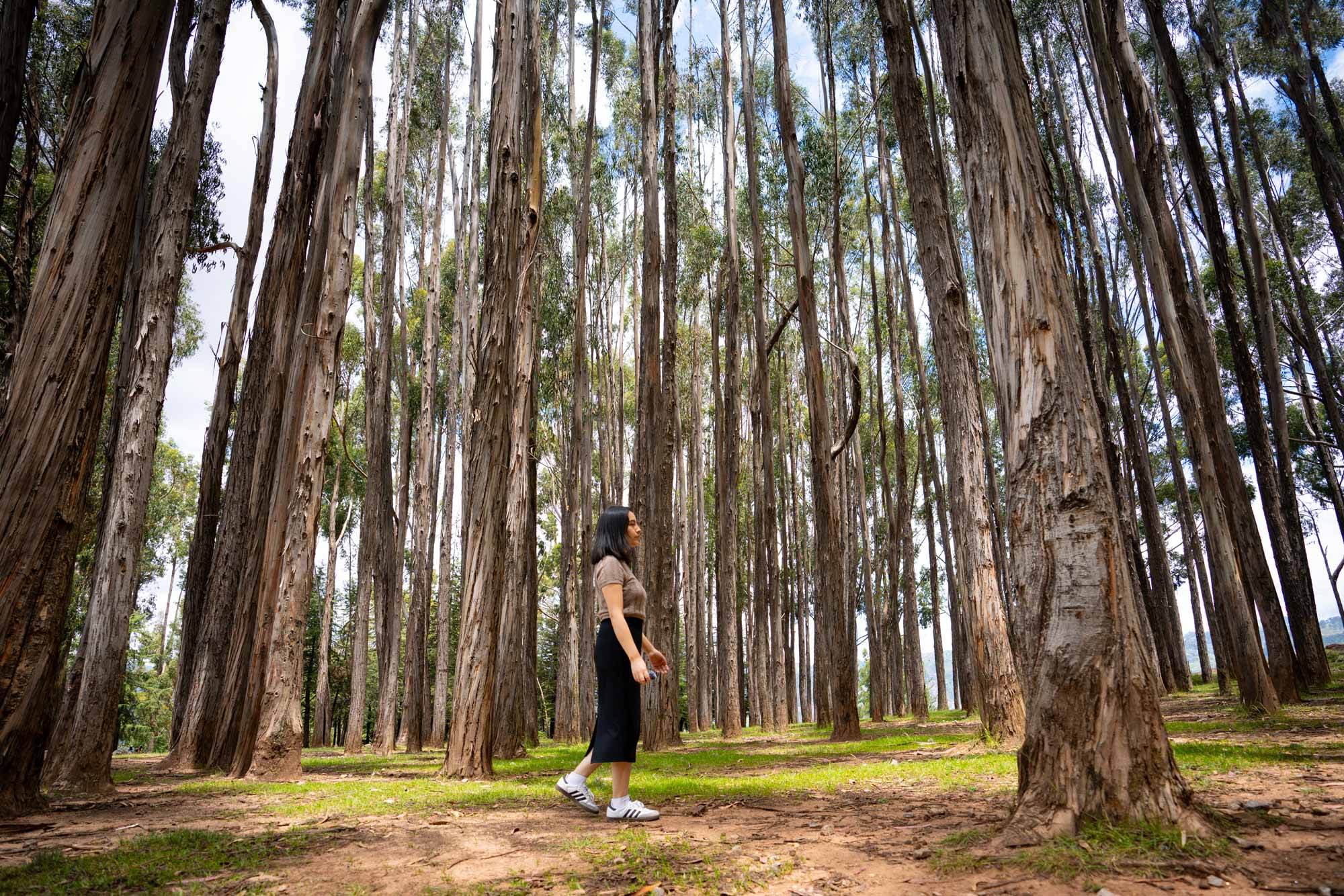
Qenqo Chico Forest
4) The amphitheater where ceremonies were held
- Similar to Roman amphitheaters, the Incas built a semicircular platform at Qenqo measuring 55 meters in length and surrounded by unfinished niches.
- At the center stands a huge irregularly shaped stone block (6 meters high) erected on a rectangular platform. This is where the carved passage leading to the underground galleries is located.
- Although it is popularly known as an amphitheater, its true purpose remains uncertain. It is believed that this place served as a ceremonial center where offerings were made.
- The destruction caused during the conquest prevents visitors from fully appreciating the original majesty of the Inca site, which, due to its ceremonial spaces and proximity to Sacsayhuamán, reveals its great historical and spiritual importance.
5) Blood or chicha? The mystery of the stone channels
- Like many ancient civilizations, the Incas offered the blood of different animals to honor their gods. They even carried out human sacrifices.
- Among the most commonly used elements for these rituals were the blood of llamas, alpacas, and even chicha, a traditional fermented corn beverage (discover the giant corn of the Sacred Valley).
- At Qenqo, there is a rocky elevation that leads to a carved stone staircase ascending to the top. There, the Incas carved a channel descending in a zigzag pattern before splitting into two sections: one leading toward the underground galleries and the other continuing downhill.
- It is believed that this structure was used to offer animal and human blood, as well as ancestral beverages such as chicha.

Carved stone where blood and chicha offerings were made
6) The Intihuatana and its connection to the sun
- One of the main attractions of the Inca Citadel of Machu Picchu is the Intihuatana (a Quechua word meaning “place where the sun is tied”), a possible astronomical observatory used to calculate the position of the sun.
- A similar structure exists in several important archaeological sites such as Ollantaytambo and Qenqo.
- At Qenqo, a possible Intihuatana is located on the base of a rock featuring two small cylindrical formations.
- This stone structure may have functioned as an astronomical observatory used to determine seasonal changes.
- It is also associated with the representation of the most important mountains in the surrounding territory, serving as a type of Huaca (ceremonial sacred rock) of great spiritual importance.

Qenqo monolith
7) The Temple of the Monkeys and its Andean symbolism
- About 500 meters from the Qenqo archaeological site stand a series of irregularly carved rock formations known as Cusillachayoc, a Quechua word translated as Temple of the Monkeys.
- This enormous rock features zoomorphic relief carvings, especially figures of snakes and monkeys, which gave the remarkable site its name.
- Due to the destruction of the site, many of its main structures are deteriorated. Visitors can also see the remains of a water channel and a rock whose shape was probably intended to represent a puma.
- In the Inca worldview, there were three highly important animals: the puma, representing Kay Pacha (the earthly world); the condor, representing Hanan Pacha (the celestial world); and the serpent, representing Uku Pacha (the inner or underworld).
8) Human sacrifices in Qenqo: myth or reality?
- Human sacrifices were also practiced in Inca culture and were known as ‘capacocha’.
- At Qenqo, there is believed to have been a mortuary chamber known as the ‘Sacrifice Room.’
- This platform, carved into a massive rock formation, resembles a seat and is located within the underground galleries.
- Floors, walls, ceilings, niches, and other carved forms were shaped into this structure, where it is believed that human and animal sacrifices, as well as embalming rituals, took place.
- The mortuary chamber of Qenqo is one of the best-preserved spaces within the archaeological complex.

Sacrifice Room at Qenqo
How to get to the Qenqo archaeological site, opening hours, and tickets
- The Qenqo archaeological monument is located 2 kilometers from Cusco city.
- There are several ways to get there. The easiest option is to take a taxi, which reaches the Inca site in approximately 15 minutes.
- Another alternative is to take a public bus that passes along Avenida La Cultura and Rosaspata Street, making it the most budget-friendly option.
- It is also possible to walk from the city, although the route is uphill the entire way (approximately 1 hour on foot).
- Finally, visitors can also book the Cusco City Tour, which offers a much more comfortable and organized experience.
- Entrance to Qenqo is included with the Cusco Tourist Ticket, which can be purchased at the entrance gate.
- The Qenqo archaeological site in Cusco is open Monday through Sunday from 7:00 a.m. to 6:00 p.m.
Frequently asked questions about the Qenqo archaeological site
1) Where is the Qenqo archaeological site located?
The Qenqo archaeological site is located just a few kilometers from the historic center of Cusco, in the upper areas near Sacsayhuamán. Due to its proximity to the city and its historical importance, it is part of the traditional Cusco City Tour along with other nearby Inca archaeological sites.
2) How can I get to Qenqo from Cusco city?
You can reach Qenqo by taxi, public transportation, or on foot. The fastest and most comfortable option is to take a taxi from downtown Cusco, although many visitors also explore it as part of the Cusco City Tour.
3) What does the word Qenqo mean?
Qenqo comes from the Quechua word “Q’inqu,” which can be translated as “labyrinth.” The name refers to the carved stone channels and passages that characterize this fascinating Inca archaeological site.
4) What can I see at Qenqo?
At Qenqo, visitors can explore underground galleries, ceremonial channels, carved rock structures, a semicircular amphitheater, and spaces associated with Inca religious rituals. The site also features impressive stone formations and panoramic views of Cusco.
5) Was Qenqo part of an Inca religious center?
Yes, many researchers believe that Qenqo was an important ceremonial center where the Incas carried out rituals and offerings related to the worship of the sun, the earth, and other Andean deities.
6) Is it true that human sacrifices were performed at Qenqo?
There are theories and archaeological studies suggesting that ritual sacrifices may have taken place at Qenqo. However, many aspects are still under investigation due to the limited available evidence.
7) How long does a visit to Qenqo take?
A visit to Qenqo usually lasts between 30 minutes and 1 hour, depending on the pace of the tour. If you visit Qenqo as part of the Cusco City Tour, the time is generally organized together with nearby archaeological complexes.
8) Do I need an entrance ticket to visit Qenqo?
Yes, admission to Qenqo is included with the Cusco Tourist Ticket, which also grants access to other tourist attractions and archaeological sites in the region.
9) What are the opening hours of Qenqo?
The Qenqo archaeological site is open every day from 7:00 a.m. to 6:00 p.m.
10) What other tourist attractions are near Qenqo?
Near Qenqo, visitors can explore major tourist attractions such as Sacsayhuamán, Tambomachay, Puca Pucara, and the White Christ statue. Many travelers take advantage of the short distances to visit several sites in a single day.
Advice from people who have been there
 By: Héctor Daniel.
“Excellent visit close to the city!“
“Qenqo offers one of the best panoramic views of Cusco city. It features a rocky passage with an inner chamber and a table-like stone that may have been used for sacrifices or embalming rituals.“
By Ticket Machu Picchu – Last updated, May 25, 2026